
Stefanson should set aside addictions ideology
Advertisement
Read this article for free:
or
Already have an account? Log in here »
We need your support!
Local journalism needs your support!
As we navigate through unprecedented times, our journalists are working harder than ever to bring you the latest local updates to keep you safe and informed.
Now, more than ever, we need your support.
Starting at $15.99 plus taxes every four weeks you can access your Brandon Sun online and full access to all content as it appears on our website.
Subscribe Nowor call circulation directly at (204) 727-0527.
Your pledge helps to ensure we provide the news that matters most to your community!
To continue reading, please subscribe:
Add Brandon Sun access to your Free Press subscription for only an additional
$1 for the first 4 weeks*
- Enjoy unlimited reading on brandonsun.com
- Read the Brandon Sun E-Edition, our digital replica newspaper
*Your next Free Press subscription payment will increase by $1.00 and you will be charged $20.95 plus GST for four weeks. After four weeks, your payment will increase to $24.95 plus GST every four weeks.
Read unlimited articles for free today:
or
Already have an account? Log in here »
Hey there, time traveller!
This article was published 03/07/2023 (1203 days ago), so information in it may no longer be current.
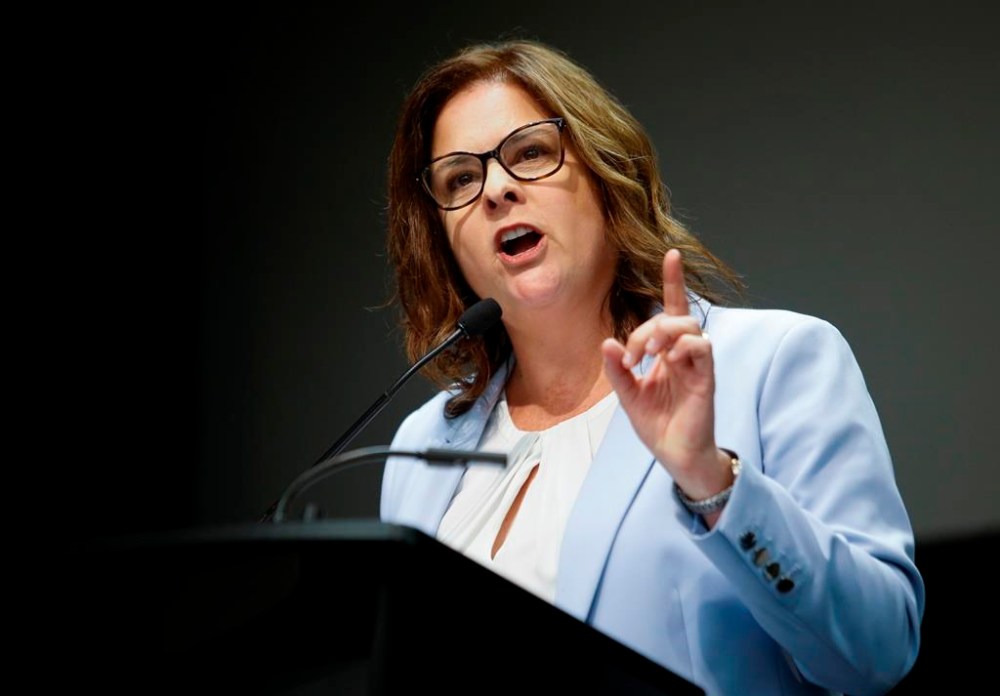
Manitoba Premier Heather Stefanson favours a “recovery approach” to treating addictions in our province. She argues that evidence, not ideology, is behind her government’s rejection of safe consumption sites.
“This has nothing to do with ideology,” Stefanson told the Brandon Sun last November. “People who look at supervised consumption sites as the panacea to end addictions issues, it’s just not right, it’s not true, and I would argue that perhaps some of those people are taking an ideological approach.”
She added that “I am taking a very practical and evidence-based approach when it comes to these very, very serious challenges.”
When she was asked why her government would not include safe consumption sites as part of its addictions strategy, Stefanson referred to California, which she claimed is backing away from the idea due to “unintended consequences” such as increased crime and drug activity around the sites.
In an interview the next day with radio station CJOB, she claimed that “there’s zones where there’s people that prey on vulnerable people with addictions, and that increases crime around those areas, and we’ve seen that in other jurisdictions and we just don’t want to see that here in Manitoba.”
She repeated her argument that treatment facilities are the superior, safer way to proceed, saying that her government favours a “recovery-oriented” system of care, including treatment and long-term recovery.
That same day, Stefanson told CBC radio that “I look at places like California that had these types of sites in place for decades, and they’re not working,” she said. “It’s the unintended consequences of an increase in crime around these areas. We’ve seen that in other jurisdictions, and I don’t think we want to see that here.”
“In California that’s exactly what happened…and that’s why they reversed their decision in those areas, and they’ve been doing this for decades.”
At face value, the premier’s arguments were compelling. After all, who would want an addictions strategy that makes things worse? On further review, however, and with the benefit of additional evidence, the strength of her claims and preferred approach are far less persuasive.
The day after the premier’s radio interview, CBC reported that there are in fact no government-sanctioned safe consumption centres in California.
The report quoted Dessa Bergen-Cico, a professor of public health at Syracuse University, who said many places in California provide clean syringes and “have people who unofficially use their facilities to inject in the bathroom or elsewhere,” but those unregulated sites “do not meet the criteria for safe injection/drug consumption sites.”
The professor argued there may be more crime near such sites because they don’t have protective measures that government-sanctioned consumption sites would have. She told the CBC that increased crime in those areas is “not due to the injecting of drugs,” but rather “an indication of areas with limited public safety oversight.”
In other words, Stefanson had her facts wrong regarding (non-existent) safe consumption sites in California. Ironically, she may have strengthened the argument that such sites could reduce criminal activity in areas where addicts currently gather.
As to the premier’s preference for a “recovery-oriented” approach that includes prevention and treatment — and her government’s frequent references to the same approach being taken in Alberta — data released last week by the Alberta government revealed that more people in that province died of drug overdoses in April than in any single month on record.
The overdose death toll in that province for the first four months of 2023 — the most up-to-date data provided — was a staggering 613 Albertans.
Despite the rising number of deaths, Alberta premier Danielle Smith says her government will not implement safe consumption programs as a way of tackling her province’s addictions crisis. She told the media last week that her government will continue with its recovery-based approach.
“We’re not doing safe supply in Alberta,” she said “We just need to make sure that people have access to treatment.”
Stefanson says her government is taking “a very practical and evidence-based approach” to our province’s addictions problem, but she’s fudging her facts and ignoring the tragic evidence from Alberta that the recovery-oriented approach isn’t working.
With overdoses also mounting here in Manitoba, it’s time for our premier and her government to set ideology aside, follow the real facts and adopt an addictions strategy that will save lives, not cost them.