
Energy scare shows cold, hard realities
Advertisement
Read this article for free:
or
Already have an account? Log in here »
We need your support!
Local journalism needs your support!
As we navigate through unprecedented times, our journalists are working harder than ever to bring you the latest local updates to keep you safe and informed.
Now, more than ever, we need your support.
Starting at $15.99 plus taxes every four weeks you can access your Brandon Sun online and full access to all content as it appears on our website.
Subscribe Nowor call circulation directly at (204) 727-0527.
Your pledge helps to ensure we provide the news that matters most to your community!
To continue reading, please subscribe:
Add Brandon Sun access to your Free Press subscription for only an additional
$1 for the first 4 weeks*
*Your next subscription payment will increase by $1.00 and you will be charged $20.00 plus GST for four weeks. After four weeks, your payment will increase to $24.00 plus GST every four weeks.
Read unlimited articles for free today:
or
Already have an account? Log in here »
Hey there, time traveller!
This article was published 16/01/2024 (840 days ago), so information in it may no longer be current.
Alberta’s energy scare that fell during what amounted to an historic cold snap this past weekend should give all Canadians pause to consider what may be a difficult period of adjustment in the years ahead when it comes to our nation’s future energy needs.
At around the supper hour on Saturday, the Alberta Emergency Management Agency issued a provincewide alert calling on customers to limit their electricity use as high power demand was placing the grid at a “high risk” of rotating power outages.
As the Globe and Mail reported, the government agency urged Albertans to turn off lights, minimize the use of space heaters and delay the charging of electric vehicles. The AESO issued another grid alert on Sunday, asking Albertans to again conserve electricity during the peak hours of 4 p.m. to 8 p.m. This time the Alberta government suggested delaying the use of dryers and dishwashers, recommended cooking with a microwave instead of stove, and using a laptop instead of a desktop computer.
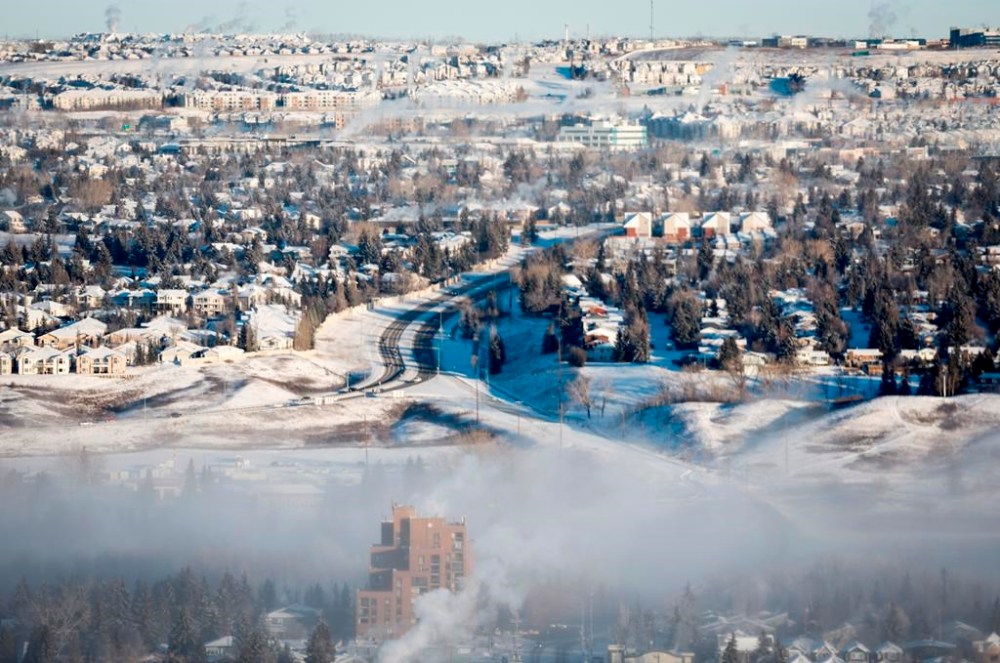
In an interview with Postmedia on Sunday morning, Alberta Electric System Operator spokesperson Leif Sollid blamed the extreme cold in the province driving a “very, very high demand” for electricity, combined with the fact the organization had one natural gas plant offline for maintenance and another operating at reduced capacity.
Thankfully, Albertans responded to the government warning by reducing electrical use by up to 200 megawatts within an hour of the alert, preventing the need for blackouts and brownouts.
Like Alberta, other provinces are feeling the increased energy consumption on their own grids as the temperatures plummet. On Saturday, for example, Saskatchewan and B.C. were unable to provide extra power to Alberta for several hours during the emergency notice as they had their own high energy demands to deal with.
There are, of course, political concerns at play here. Alberta Premier Danielle Smith is currently at odds with the federal government — when isn’t she, really? — regarding federal draft clean electricity regulations, even as Alberta has put on hold any applications for wind and solar projects in the province. The decision to halt new development was made last summer so that the province could review where they can be built and how these projects would affect Alberta’s electrical grid.
Had construction moved such initiatives forward more swiftly, there’s a chance the province might have prevented a near-grid collapse this past weekend. But then, it’s unfair to point fingers at Alberta, when Manitoba has its own issues to deal with.
Last summer, the former Stefanson government announced its “clean energy road map” that was long on platitudes on the need for renewable energy, but short on details. The plan called on the need for Manitoba to introduce private power producers to help Manitoba Hydro double or triple its generating capacity over the next 20 years to meet the demand of industrial and residential customers.
As CBC reported last month, the Manitoba report did not give a dollar figure regarding how much all this new capacity would cost, or provide “specific targets for wind turbines, solar farms, energy storage facilities and transmission lines required to make it all work.”
Buried in the details of that document was the fact that Manitoba Hydro admitted this province doesn’t have enough generating capacity to service large new customers that want to bring their projects to Manitoba — let alone deal with the increasing energy demands that will come from existing customers in the years to come.
Just two months ago, Finance Minister Adrien Sala announced that Manitoba Hydro would experience a net loss of $161 million for the 2023 fiscal year, following its original forecast of a $450-million surplus. This $610-million swing was apparently due to widespread drought conditions across the Lake Winnipeg watershed, which also forced Manitoba Hydro to operate its natural gas-fired generating station in Brandon last October.
At the moment, it seems, we don’t have the fiscal wherewithal to deal with our future electrical capacity needs. And if we continue to experience drought conditions on the Prairies, which is entirely possible given global concerns over climate change, we’re looking at increasing costs just to keep the lights on.
Keep in mind that the federal Environment Minister Steven Guilbeault last month unveiled the federal government’s electric vehicle sales mandate regulations that call for 100 per cent zero-emission vehicle sales in 11 years. That, too, will put further strain on electrical grids across the country should that goal remain unchanged.
Our new NDP government has to begin taking a long, hard look at what we can realistically accomplish over the next decade in terms of increasing Manitoba Hydro’s electrical capacity. No doubt, some of those decisions will be costly — and not particularly popular.
But they will be necessary if we want to avoid emergency alerts — like Alberta’s — that include terms like “peak hours” and “blackouts.”