
Premier popularity is a transient thing
Advertisement
Read this article for free:
or
Already have an account? Log in here »
We need your support!
Local journalism needs your support!
As we navigate through unprecedented times, our journalists are working harder than ever to bring you the latest local updates to keep you safe and informed.
Now, more than ever, we need your support.
Starting at $15.99 plus taxes every four weeks you can access your Brandon Sun online and full access to all content as it appears on our website.
Subscribe Nowor call circulation directly at (204) 727-0527.
Your pledge helps to ensure we provide the news that matters most to your community!
To continue reading, please subscribe:
Add Brandon Sun access to your Free Press subscription for only an additional
$1 for the first 4 weeks*
- Enjoy unlimited reading on brandonsun.com
- Read the Brandon Sun E-Edition, our digital replica newspaper
*Your next Free Press subscription payment will increase by $1.00 and you will be charged $20.95 plus GST for four weeks. After four weeks, your payment will increase to $24.95 plus GST every four weeks.
Read unlimited articles for free today:
or
Already have an account? Log in here »
Hey there, time traveller!
This article was published 12/03/2024 (944 days ago), so information in it may no longer be current.
“If you can meet with Triumph and Disaster
And treat those two impostors just the same …”
— A quote from Rudyard Kipling’s poem “If”
Mind the clickbait.
You know those annual Angus Reid polls reporting on the popularity of this country’s many premiers? However well they explain their scientific methodology, for me they feel akin to a misleading enticement.
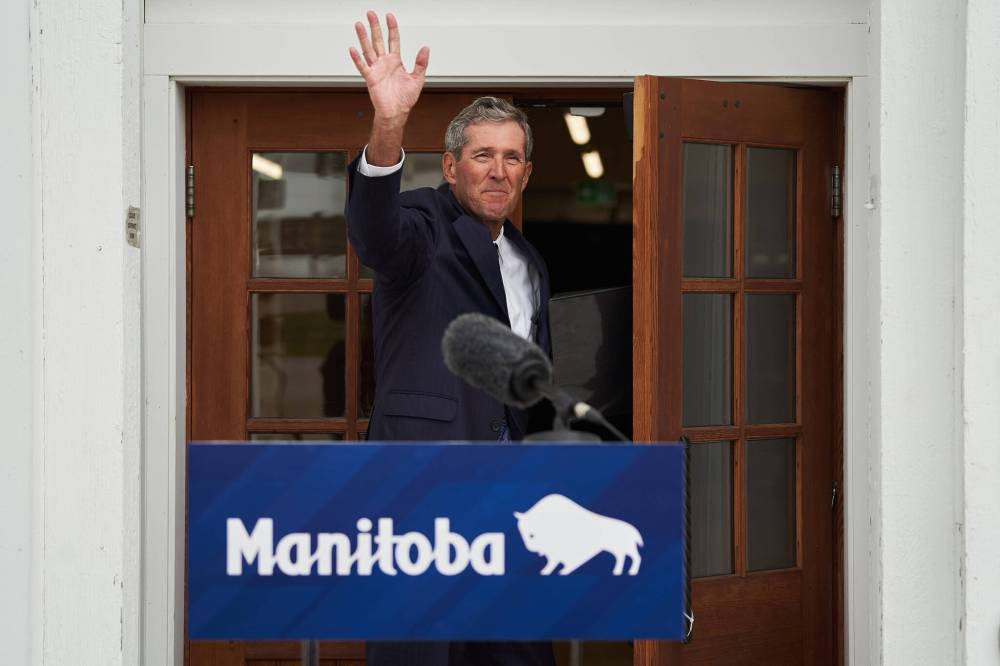
Take the latest one that took our province from zero to hero with one fall election. Instead of having the least popular premier in the country in Progressive Conservative Premier Heather Stefanson as reported in 2023 by Angus Reid, Manitoba now has Wab Kinew, who somehow managed to garner the overall approval of 63 poll respondents — the highest of any provincial leader in the country.
It’s an unusual number for the NDP leader and Manitoba premier to attain, given that the New Democrats didn’t exactly win a landslide victory last October — 34 seats with 45.5 per cent of the vote, and the Tories close behind with 42.1 per cent voter support.
All things considered, it’s possible, of course. The Stefanson government didn’t exactly endear itself to the electorate by going down the far right rabbit hole with their asinine policy decisions. Remember those racist-edging “stand firm” billboards? That unnecessary expansion of parental rights that took a shot across the bow of Manitoba’s LGBTTQ+ citizens? There was a lot of room there to fall.
But have the Tories really fallen that far out of favour with Manitobans? Perhaps they should have, but I do question exactly what Mr. Kinew has done to earn such high regard from Manitobans.
It can’t just be the fact that he’s not Heather Stefanson or Brian Pallister. Well, there is Kinew’s removal of the fuel tax from Jan. 1 of this year … Just wait until he brings it back.
Keep in mind, when Pallister became Manitoba’s premier in 2016 after coming to power with the largest seat gain in Manitoba’s history, he too was riding a wave of popularity.
One month after the 2016 election, Pallister was ranked the second-most popular premier in Canada by none other than Angus Reid with a 46 per cent approval rating — second only to Brad Wall of Saskatchewan.
Yes, the once-mighty have fallen. But no one can argue against the fact that Brian Pallister put his stamp on the provincial government. He had a vision for the province — love it or hate it — and a will to see it through. The first 100 days of the Brian Pallister administration had its own set of 15 priorities that he intended to “immediately deliver.” They included, according to the CBC, reducing the size of cabinet, starting the process of repealing a vote tax subsidy for political parties and tabling the proposed protecting children act.
They trimmed ambulance fees by five per cent and started a “value for money” audit of government operations. And in spite of the fact that it was the Pallister government that froze municipal grants, there had been a commitment to municipalities to give them a fair say on infrastructure investments. And there were plenty of “working on” files too.
But this was all in the first 100 days. Just three months.
We are now nearly six months into Wab Kinew’s mandate and there doesn’t seem to have been as much urgency to get things accomplished. That’s not to say there hasn’t been some NDP-friendly policy changes in the works. Just this month, the NDP gave more power back to unionized workers by bringing back project labour agreements in the construction industry. As well, there have been two sweeping changes to established boards, including Manitoba Hydro and Manitoba Public Insurance.
So far, there’s been only promises made to those demanding that the province dig a Winnipeg landfill for the bodies of missing and murdered Indigenous women who are presumed buried there.
There are a few policy oddities too, including Wab Kinew’s pledge to retain a 50 per cent provincial property tax rebate on education taxes and to index provincial income tax brackets to inflation — two initiatives pushed forward by the previous government.
Perhaps, as some pundits have suggested, the government is trying to better occupy the political centre and crowd out their opponents. But these changes — or lack of change, as the case may be — don’t seem to denote an overall vision on behalf of the Kinew administration. This government doesn’t seem to be in a rush, and I have to ask if that smacks of a little overconfidence on their part. Not being the Heather Stefanson government will only get you so far.
On April 2, Wab Kinew and his caucus will have a solid chance to offer a fully fleshed-out vision for the province that will serve to guide them over the next few years. And if Mr. Kinew really wants to accomplish something worthwhile and lasting, he may want to risk a little voter irritation.
He apparently has political capital to spend. Now’s the time to start cashing in, before the honeymoon period is fouled by inaction.
» Matt Goerzen, editor