
Pandemic left legacy of hurt, misunderstanding
Advertisement
Read this article for free:
or
Already have an account? Log in here »
We need your support!
Local journalism needs your support!
As we navigate through unprecedented times, our journalists are working harder than ever to bring you the latest local updates to keep you safe and informed.
Now, more than ever, we need your support.
Starting at $15.99 plus taxes every four weeks you can access your Brandon Sun online and full access to all content as it appears on our website.
Subscribe Nowor call circulation directly at (204) 727-0527.
Your pledge helps to ensure we provide the news that matters most to your community!
To continue reading, please subscribe:
Add Brandon Sun access to your Free Press subscription for only an additional
$1 for the first 4 weeks*
*Your next subscription payment will increase by $1.00 and you will be charged $20.00 plus GST for four weeks. After four weeks, your payment will increase to $24.00 plus GST every four weeks.
Read unlimited articles for free today:
or
Already have an account? Log in here »
Hey there, time traveller!
This article was published 15/03/2024 (732 days ago), so information in it may no longer be current.
I come from a community of believers.
People of faith who call Manitoba’s Bible belt home. Generally kind and caring people who believe in the need for religious freedom, and hold dear their right to gather for worship and community.
And while not all of us feel this way, for various reasons, some of my family too hold that faith very strongly. It’s not just a suit they wear, but a part of their being.
While I don’t have the same belief, I can respect it.
I grew up within the unique religious atmosphere of southern Manitoba’s Christian community, and while I am hardly the poster boy for “Christianity Today,” I still live within the spirit of those ideals as I know and understand them. I teach those morals to my kids.
Yet to be honest, I’ve not been able to reconcile those religious beliefs and trust in the almighty with the scientific knowledge and reasoning that dominate our now mostly secular society. I’d say there’s a silent majority of people out there who likely feel the same.
That divide became all too real for me during the public health emergency that is now part of our recent history — the COVID-19 pandemic — and the social restrictions that were called forth by our federal and provincial governments as a result of it.
A majority of our country’s citizens believed these restrictions were justified as a means to limit the spread of the virus — restrictions that I too felt were justified, and still do.
For me, science was my guiding principle during the pandemic, and the need for accurate and timely information from our government officials, both elected and unelected, was obvious. As the editor of a news organization that seeks to provide people with accurate and timely information, I saw it as my duty to back the medical science behind the decisions by our governments, however imperfect it might have been. And quite frankly, I still do.
Whether it be for measles, polio, small pox or COVID, vaccinations save lives. Period. And so do objective health policies created in good faith with the best information available at the time, even though it may run roughshod over personal liberties.
As former Manitoba premier Brian Pallister said in April 2020, with the pandemic still in its infancy and restrictions on public gatherings of the day garnering opposition from dozens of churches in the province: “Churches won’t make health policy. Dr. Roussin and our health experts are making that health policy, and they have good reason for being careful about the restrictions that are necessary to keep us all safe. And I think it would be in the best interests of all of us to show respect for that.”
This was good policy, but poorly administered. Many faith organizations felt that religious organizations were being unfairly targeted compared to secular gatherings at restaurants or grocery stores.
While the restrictions have long since been lifted, as a nation we continue to experience the social upheaval that has become more pronounced in workplaces and homes as we see the pandemic in our rear-view mirror. We are, as a nation, seemingly more polarized, and our politics and our beliefs more extreme and agitated.
As a result, the relationships of so many families and friends across our country have been severely damaged by this polarization, much of it exacerbated by the pandemic. Some relationships have been on the mend as we learn to move past the difficult and awkward situations into which we were all forced, but many have not.
Family gatherings around the holidays can still be difficult as we look with disdain upon the other’s point of view across the dinner table. I think we all end up biting our tongues sometimes. Ramadan is in full swing right now. And Easter is coming.
So why, you ask, do I bring all this up?
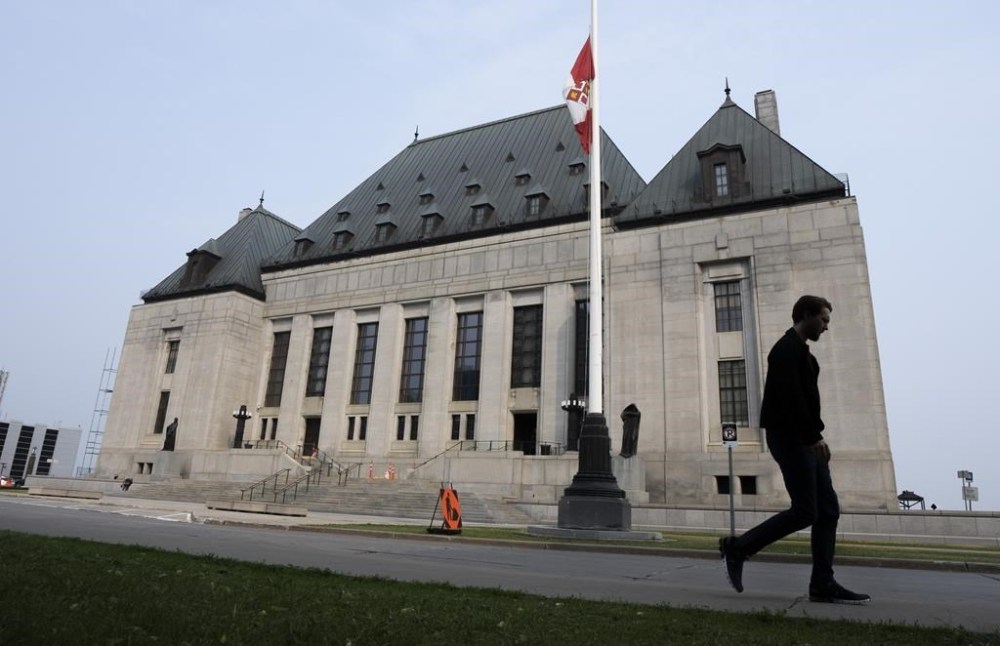
This week, the Supreme Court of Canada decided not to hear an appeal by several churches that had continued fighting against Manitoba’s COVID-19 restrictions, including one here in Brandon. The Bible Baptist Church on Fourth Street was named, along with a minister, a deacon and a restrictions protester, in an application that was filed last year to the Supreme Court of Canada requesting that Canada’s highest court grant an appeal of their case.
The case was first heard in May 2021 in Manitoba Court of King’s Bench, where the churches argued that public health orders in 2020 and 2021 that temporarily closed in-person religious services and later reopened them with caps on attendance, violated their Charter rights.
There’s no doubt that implementing restrictions violates Charter rights, but public health emergencies dictate the need.
Back in 2022, the Alberta Law Review Society published a law paper that argued governments have the right and duty to limit freedom of religion in a pandemic situation.
“Governments may appropriately subject religious gatherings to stricter regulations than certain secular activities precisely because religious gatherings pose risks that are different in degree and kind than those secular activities,” wrote the author, Misha Boutillier.
But she also said that governments needed to show greater transparency regarding the reasons for regulating religious gatherings more strictly, if at least to “address the perception that governments are … (privileging) restaurants, marijuana dispensaries and casinos over churches, mosques and temples.”
I would also suggest that a little more thoughtfulness and understanding could go a long way to tempering the lingering animosity among Canadians — whether around the dinner table, or of those tasked with implementing controversial health policy down the road.
» Matt Goerzen, editor
History
Updated on Friday, March 15, 2024 9:00 AM CDT: There has been a word change in the final sentence of this article. ('from' to 'of')