
Collaboration key to reversing moose population decline
Advertisement
Read this article for free:
or
Already have an account? Log in here »
We need your support!
Local journalism needs your support!
As we navigate through unprecedented times, our journalists are working harder than ever to bring you the latest local updates to keep you safe and informed.
Now, more than ever, we need your support.
Starting at $15.99 plus taxes every four weeks you can access your Brandon Sun online and full access to all content as it appears on our website.
Subscribe Nowor call circulation directly at (204) 727-0527.
Your pledge helps to ensure we provide the news that matters most to your community!
To continue reading, please subscribe:
Add Brandon Sun access to your Free Press subscription for only an additional
$1 for the first 4 weeks*
*Your next subscription payment will increase by $1.00 and you will be charged $20.00 plus GST for four weeks. After four weeks, your payment will increase to $24.00 plus GST every four weeks.
Read unlimited articles for free today:
or
Already have an account? Log in here »
Hey there, time traveller!
This article was published 10/09/2024 (601 days ago), so information in it may no longer be current.
In the 1960s, more than 45,000 moose roamed Manitoba’s woods. Today, it is estimated that the population has plunged to fewer than 20,000.
A document on the Manitoba government website, entitled “Hard to be a moose in a changing world,” says that “Moose populations are at an ecological tipping point in many parts of their southern, forested range. With climate and human changes, all people who care about moose will have to work together to ensure their survival.”
That concern is echoed by the Manitoba chapter of the Canadian Parks and Wilderness Society, which says that “moose numbers in some areas of the province have dropped so dramatically — as much as 57 per cent — that their ability to recover is unlikely without a strong and effectively implemented management plan.”
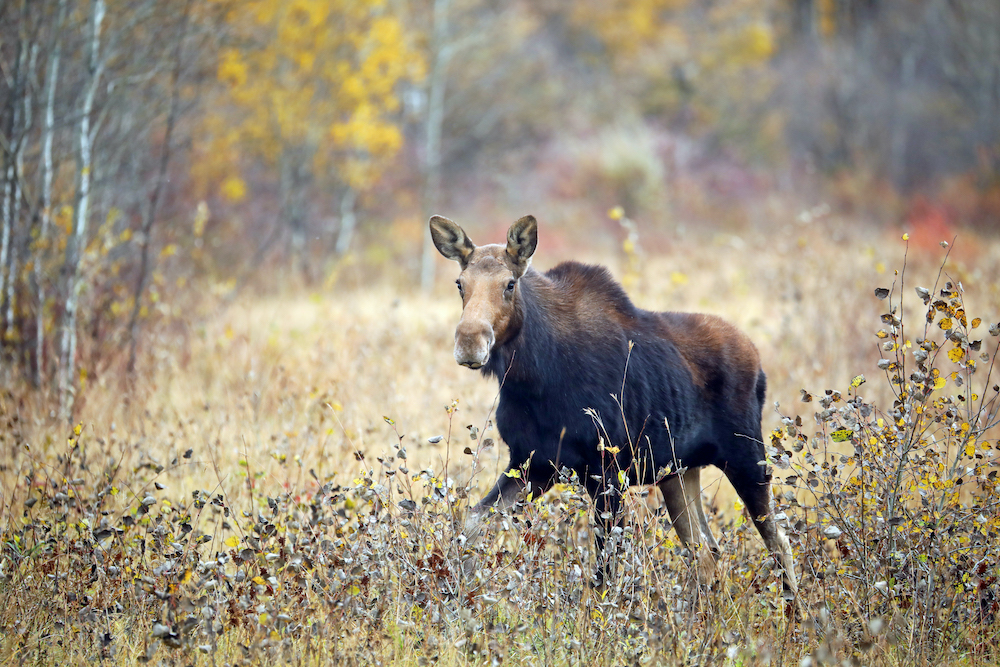
The Manitoba Wildlife Federation has expressed the same concern. In an article on its website, it warns: “Shared management is the last chance for the existence of moose in Manitoba. It is our chance to work collaboratively on the only thing that really matters — the protection and sustainability of Manitoba’s threatened moose population. Race and rights will not matter when the last moose is shot.”
With those dire warnings in mind, what are we to make of the latest shots fired in the escalating dispute over how many tags should be issued to hunt moose in Manitoba this fall, and whom they should be issued to?
In July, the province announced it was reducing the number of moose hunting licences available to non-Indigenous hunters in four game hunting areas in northern Manitoba. The number of tags for those areas was lowered from 400 to 100.
In response, the MWF complained the cut “will virtually strip non-Indigenous hunters of the chance to hunt moose in northern Manitoba.” The organization is now seeking judicial review in the Court of King’s Bench of the government’s decision to reduce the number of tags. A hearing is scheduled for November.
That’s just one side of the dispute. Several northern Manitoba first nations have taken the position that moose hunting by non-Indigenous people should be prohibited in their traditional territories, due to the drop in moose population.
In late August, Pimicikamak Okimawin (Cross Lake) First Nation also took legal action in the Court of King’s Bench, asking the court to cancel all licences that permit non-Indigenous moose hunting on its territory. That hearing will also be heard in November.
Last week, Pimicikamak placed advertisements in three Manitoba newspapers, advising non-Indigenous people to not hunt moose on their traditional territory and asking them to return moose tags to Natural Resources Minister Jamie Moses.
The ads also say that the first nation “does not provide any consent or permission for use of the licence” issued by the province, and that using the licence in that area violates Treaty No. 5 and the Northern Flood Agreement.
Complicating the situation even further, another northern first nation — Nisichawayasihk Cree Nation — has demanded that the Kinew government end an agreement that granted Métis persons harvesting rights on part of that first nation’s traditional territory.
So many disputes, so many lawyers. How does all the chest-thumping by all sides help to reverse the problem of our collapsing moose population?
It doesn’t. With moose hunting season set to run from Sept. 16 to Oct. 13, and from Dec. 2 to 15, the November court hearings will have no impact on the first part of the season. Given the time likely required for a decision to be rendered, the hearings probably won’t impact the second part of the season, either.
As a result, the problem will be kicked down the road for another year and the moose numbers will continue to fall.
The Manitoba government says that all people who care about moose must work together to ensure their survival. It’s well past time for those words to become action.
The province, the Manitoba Wildlife Federation, the Manitoba Métis Federation and all affected first nations must end their acrimony and start working together to create a viable long-term management plan that will protect and strengthen Manitoba’s threatened moose population.
The courts aren’t the answer to this problem. Collaboration is.