
Clear lake business losses require long-term solution
Advertisement
Read this article for free:
or
Already have an account? Log in here »
We need your support!
Local journalism needs your support!
As we navigate through unprecedented times, our journalists are working harder than ever to bring you the latest local updates to keep you safe and informed.
Now, more than ever, we need your support.
Starting at $15.99 plus taxes every four weeks you can access your Brandon Sun online and full access to all content as it appears on our website.
Subscribe Nowor call circulation directly at (204) 727-0527.
Your pledge helps to ensure we provide the news that matters most to your community!
To continue reading, please subscribe:
Add Brandon Sun access to your Free Press subscription for only an additional
$1 for the first 4 weeks*
- Enjoy unlimited reading on brandonsun.com
- Read the Brandon Sun E-Edition, our digital replica newspaper
*Your next Free Press subscription payment will increase by $1.00 and you will be charged $20.95 plus GST for four weeks. After four weeks, your payment will increase to $24.95 plus GST every four weeks.
Read unlimited articles for free today:
or
Already have an account? Log in here »
Hey there, time traveller!
This article was published 12/09/2024 (609 days ago), so information in it may no longer be current.
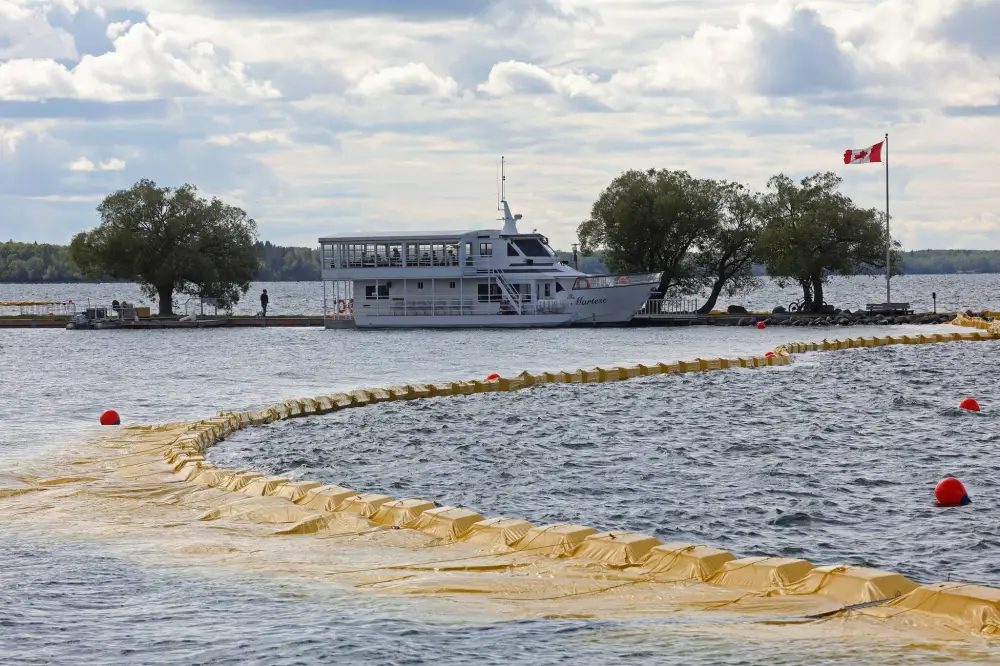
Kelsey Connor, the president of the Clear Lake Marina, says his business has incurred “significant damages” since watercraft were banned from the lake in May and the Martese tour boat was forced to cease operations in July.
He is seeking financial compensation from Parks Canada to keep his business afloat after this year’s season was swamped by efforts to contain invasive zebra mussels.
For those who haven’t been following the situation at Clear Lake, zebra mussel DNA was first detected in the lake in January of last year. Five months later, Parks Canada took initial steps to protect the lake by implementing regulations that required boat operators to not have used their craft in any other body of water that year, and to pass an inspection in order to receive a permit to use a trailered vessel in the lake.
That seemed like a reasonable approach under the circumstances, but the regulations were opposed by the Wasagaming Chamber of Commerce. It produced a petition bearing more than 1,000 signatures, demanding that Parks Canada rescind the restrictions for the year’s boating season.
In support of the petition, Chamber of Commerce president Carly McRae warned that “negative economic impacts resulting from banning of trailered watercraft on Clear Lake will be far reaching. Business valuations will plummet, and all business sectors will be impacted, from visitor accommodations to local contractors and service providers.”
It is unclear whether McRae’s dire predictions came to pass last year, but the situation in the lake continued to worsen.
A clump of 48 live zebra mussels was found in Boat Cove last November. That resulted in the federal government closing the lake to all watercraft this summer, in order to prevent the mollusks from establishing a permanent, irreversible presence in the lake.
There were just three exemptions to the no-watercraft rule: the commercial tour boat the Martese, a vessel from Keeseekoowenin Ojibway First Nation for cultural use, and boats used by Parks Canada for emergency or research activities.
Despite those measures, water samples taken in June tested positive for zebra mussel environmental DNA, and a live zebra mussel and several empty shells were found in July. Days later, zebra mussel DNA was discovered near the main marina, prompting Parks Canada to announce that the Martese would no longer be allowed to operate on Clear Lake.
That decision, combined with the earlier decision to close the lake to all watercraft, has literally sunk Conner’s business, and has very likely impacted many other businesses in Wasagaming, Onanole and surrounding area.
Those losses were entirely foreseeable, and that explains why the Tourism Industry Association of Manitoba, in collaboration with Indigenous Tourism Manitoba and local businesses in Riding Mountain National Park, requested in May that the federal and provincial governments provide $1 million to be split between a visitor experience fund and economic relief fund for local businesses.
In support of that request, TIAM board chair John Gunter argued that “federal and provincial governments have a duty to step up with support programs to ensure businesses can continue to serve visitors to the region.”
We agree. Business owners in Wasagaming area have put their financial security on the line in order to provide an enjoyable experience for visitors to Riding Mountain National Park. They are facing the possibility of economic harm — in Conner’s case, that possibility is now a reality — through no fault of their own.
We also agree with Jamie Moses, Manitoba’s minister of economic development, investment, trade and natural resources, who says that his government must “encourage collaboration (and) listen to community members impacted by the decision, then advocate for what they have been saying to the federal government.”
With summer season at Clear Lake now drawing to a close, the true scope of losses incurred by businesses as a result of the restrictions should be coming into clearer focus.
Now is the time for the federal and provincial governments to work with area business owners toward a solution that recognizes the losses those owners have suffered as a result of the restrictions, and toward a realistic plan for the future.
Difficult situations often require difficult solutions. Wasagaming area business owners need a viable, long-term plan to address what may be a long-term problem.
The sooner all parties begin working toward that solution, the better.