
The outcome that Canada needed
Advertisement
Read this article for free:
or
Already have an account? Log in here »
We need your support!
Local journalism needs your support!
As we navigate through unprecedented times, our journalists are working harder than ever to bring you the latest local updates to keep you safe and informed.
Now, more than ever, we need your support.
Starting at $15.99 plus taxes every four weeks you can access your Brandon Sun online and full access to all content as it appears on our website.
Subscribe Nowor call circulation directly at (204) 727-0527.
Your pledge helps to ensure we provide the news that matters most to your community!
To continue reading, please subscribe:
Add Brandon Sun access to your Free Press subscription for only an additional
$1 for the first 4 weeks*
*Your next subscription payment will increase by $1.00 and you will be charged $20.00 plus GST for four weeks. After four weeks, your payment will increase to $24.00 plus GST every four weeks.
Read unlimited articles for free today:
or
Already have an account? Log in here »
Hey there, time traveller!
This article was published 01/05/2025 (337 days ago), so information in it may no longer be current.
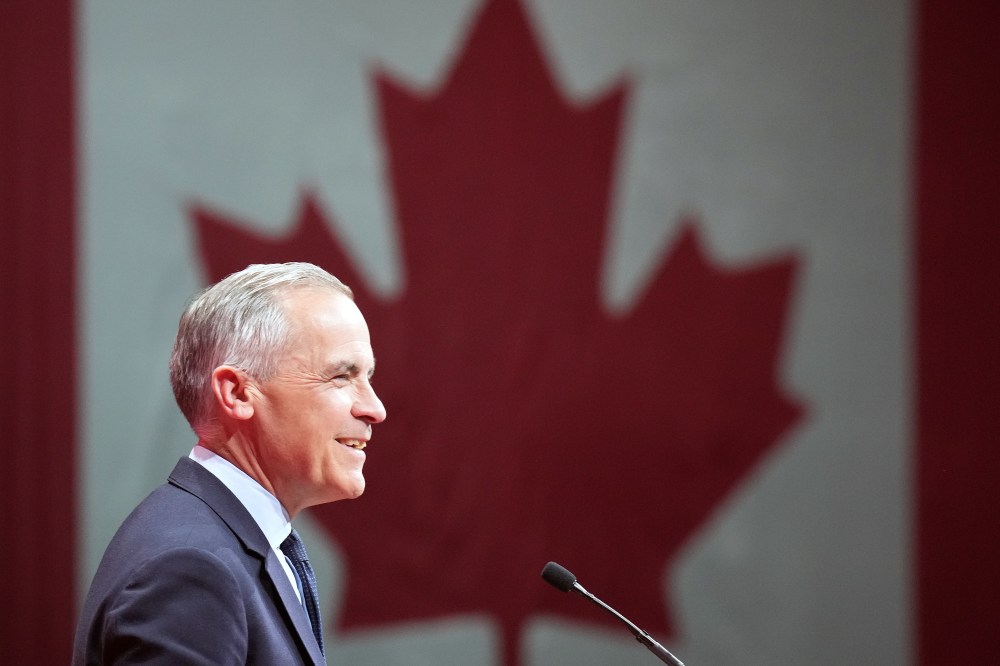
In the aftermath of Monday’s federal election, it is now clear that no party emerged as the true winner. Mark Carney’s Liberals won enough seats (currently 169, subject to recounts) to form a minority government, but fell just short of the 172 members needed to have a majority in the 343-seat House of Commons. For a party that was on the verge of an electoral wipeout just four months ago, that’s a huge accomplishment.
That said, given that many pollsters predicted that the Liberals would win 188 seats or more — some even mused about the possibility of a “super majority” of more than 200 seats — the fact the Liberals fell short of those lofty numbers, and are now three seats short of a majority, is viewed by many as a disappointment relative to the expectations that had been created.
For the Conservatives, there is much to celebrate, but also ample reason to be disappointed. On the positive side, they increased their party’s share of the popular vote to a higher percentage than in any election since 1988. Contrary to predictions that they would be crushed in Atlantic Canada and Ontario, they held their own on the East Coast and actually increased their seat total in Ontario.
On the negative side of the Tory ledger, however, the party squandered a huge 25-point lead, won 25 fewer seats than the Liberals (again, subject to recounts) despite a huge organizational and financial advantage, and Tory Leader Pierre Poilievre was defeated in his Ottawa-Carleton riding by a convincing margin. He says he wants to remain as opposition leader, but that would require a newly elected member of his caucus to resign his or her seat, and for Poilievre to win in a byelection. That’s humiliating.
For the NDP, the election was a disaster with a slim silver lining. Jagmeet Singh lost his seat and has resigned as NDP leader, the party has been reduced to just seven seats and it has lost the funding and power that comes with official party status.
Despite those very serious setbacks, the NDP still holds enough seats to have the balance of power in the House of Commons. That gives the NDP leverage over the Carney government and the opportunity to push for concessions in exchange for keeping the government safe from defeat on a confidence matter.
The Bloc Québécois also lost seats on Monday, yet still hold enough seats (22, subject to recounts) to also extract concessions from the Carney Liberals in exchange for support on confidence votes. The Green Party, on the other hand, lost one of its two seats and really has no leverage in the House of Commons. The Liberals may appreciate the support of Green Party co-leader Elizabeth May, but her lone seat isn’t enough to stave off a non-confidence motion.
With all of those realities in mind, where does the government go from here? How does it conduct business and implement its challenging agenda without a majority of seats?
The reality is that a budget still has not been introduced for the current fiscal year, and high-stakes trade and security negotiations with the Trump administration will commence in the near future. The new minority government must do that, and must also address a myriad of other challenging issues, despite being in constant danger of defeat on a confidence vote.
Many Canadians will view the situation as far from ideal, as it restricts the government’s flexibility on budget matters, and they may fear that it creates a perception of weakness and instability that Trump’s negotiators will likely attempt to exploit during negotiations.
Those are reasonable concerns, but the fact the Liberals fell short of a majority forces them to collaborate and compromise with other parties in order to get things done. That should not be regarded as a negative in our current circumstances, provided each of those parties are prepared to put the national interest ahead of their respective partisan interests.
Viewed from that perspective, Canadians did not give Carney and his Liberal caucus carte blanche to do as they please for the next four years. Instead, they have collectively forced the Liberals to seek common ground and build consensus in the House of Commons and among Canadians prior to acting.
At a time when our unity as a nation and, in particular, our unity in both vision and resolve are desperately needed, the result of Monday’s election may not be the outcome the political parties wanted, but it could be the outcome Canada needed.