
Clear Lake needs a new approach
Advertisement
Read this article for free:
or
Already have an account? Log in here »
We need your support!
Local journalism needs your support!
As we navigate through unprecedented times, our journalists are working harder than ever to bring you the latest local updates to keep you safe and informed.
Now, more than ever, we need your support.
Starting at $15.99 plus taxes every four weeks you can access your Brandon Sun online and full access to all content as it appears on our website.
Subscribe Nowor call circulation directly at (204) 727-0527.
Your pledge helps to ensure we provide the news that matters most to your community!
To continue reading, please subscribe:
Add Brandon Sun access to your Free Press subscription for only an additional
$1 for the first 4 weeks*
*Your next subscription payment will increase by $1.00 and you will be charged $20.00 plus GST for four weeks. After four weeks, your payment will increase to $24.00 plus GST every four weeks.
Read unlimited articles for free today:
or
Already have an account? Log in here »
Hey there, time traveller!
This article was published 24/05/2025 (306 days ago), so information in it may no longer be current.
In January of this year, following two years of unsuccessful efforts to prevent and/or reverse a zebra mussel infestation of Clear Lake, Parks Canada announced it had “determined that eradicating zebra mussels from Clear Lake in Riding Mountain National Park is not feasible.”
It said that “Going forward, the (prevention program) at Riding Mountain National Park should reduce the risk of spreading zebra mussels from Clear Lake to outlying water bodies and reduce the risk of introducing new invasive species.”
As part of that strategy, the organization indicated that it would initiate a new plan to bring boats back to the lake this summer via a “one boat, one lake” strategy. Under such an approach, motorized watercraft would be permitted on Clear Lake, but they could not be used on any other body of water for the rest of the season.
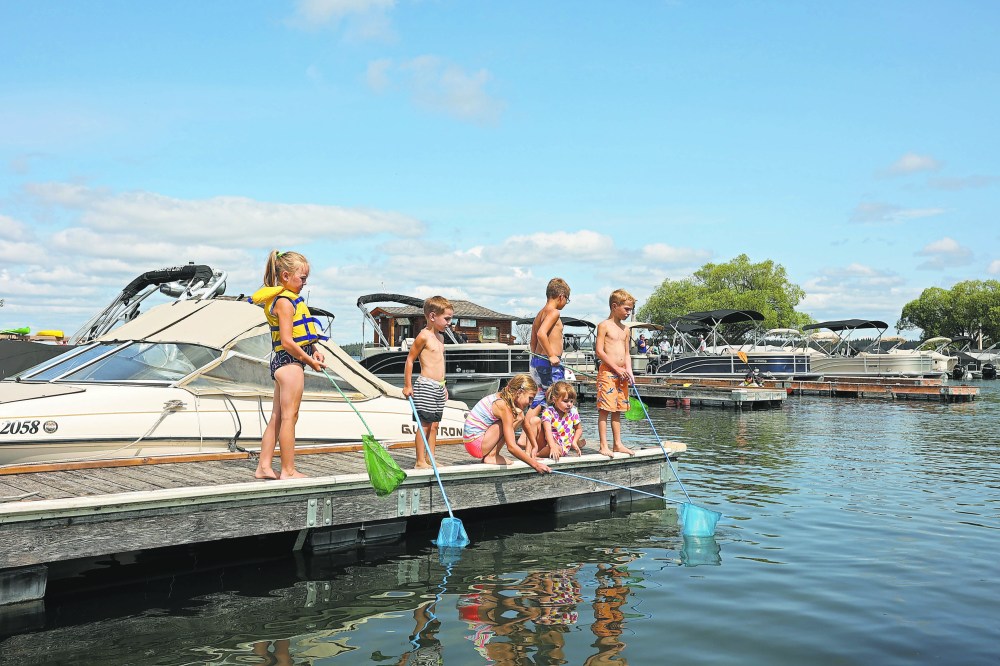
The new program would be similar to the “aquatic invasive species prevention program” that was implemented in 2023, and the announcement was generally regarded as good news by cottage and business owners in the Wasagaming area. As a result, they began to prepare for a 2025 season that would include boating on Clear Lake.
That is, until eight days ago, mere hours before the commencement of May long weekend.
On May 16, Parks Canada issued an “information bulletin,” in which it announced that it “will permit only non-motorized watercraft on Clear Lake in 2025.” The bulletin explained that the Parks Canada had “made the difficult decision to continue to restrict the use of motorized watercraft on Clear Lake in 2025” as a continuation of its efforts to reduce the spread of zebra mussels in Clear Lake and avert potential damage that could be caused by such an infestation to downstream waterbodies and related infrastructure.
From a scientific standpoint, that is a reasonable approach to take, given the serious threat posed by zebra mussels. From a fairness and timing perspective, however, the announcement was a communications failure that has caused needless harm, confusion and frustration for area residents, business owners and visitors to the park.
Conspicuously absent from the May 16 bulletin is any acknowledgment that the restriction contradicts the “one boat, one lake” plan that had been articulated by Parks Canada in January, let alone an explanation why the plan has changed so dramatically, and so quickly. Of even greater concern is the fact that cottagers, business owners and visitors the park were utterly blindsided by the sudden restrictions.
Why was there no prior notice or consultation with those who would be affected by the change in approach? Why did Parks Canada wait until the middle of May to announce that change?
Even more importantly, why is it that non-motorized watercraft such as kayaks and canoes are allowed on Clear Lake under a “one boat, one lake” system if they complete a Parks Canada inspection and possess a valid Seasonal Aquatic Invasive Prevention Permit? Why are motorized watercraft being treated so differently?
Those are questions that only Parks Canada can answer. In the meantime, business owners — the owners of the Martese tour boat in particular — face the risk of economic harm, and many cottage owners and visitors to the park will have their use and enjoyment of Clear Lake unexpectedly limited yet again.
This is no way to manage such a sensitive and important issue. It is certainly no way to treat people who have such a large interest and investment in the continued viability of the lake.
It’s time to replace confrontation with collaboration. We all share the desire for Clear Lake to be free of invasive species such as zebra mussels, so that future generations may continue to experience and appreciate its unique beauty. Given that reality, we call upon all stakeholders — Parks Canada, area cottage and business owners and Manitobans generally — to commit to working together, in a respectful and collaborative way, toward achieving that important objective.