
A small start is a start all the same
Advertisement
Read this article for free:
or
Already have an account? Log in here »
We need your support!
Local journalism needs your support!
As we navigate through unprecedented times, our journalists are working harder than ever to bring you the latest local updates to keep you safe and informed.
Now, more than ever, we need your support.
Starting at $15.99 plus taxes every four weeks you can access your Brandon Sun online and full access to all content as it appears on our website.
Subscribe Nowor call circulation directly at (204) 727-0527.
Your pledge helps to ensure we provide the news that matters most to your community!
To continue reading, please subscribe:
Add Brandon Sun access to your Free Press subscription for only an additional
$1 for the first 4 weeks*
*Your next subscription payment will increase by $1.00 and you will be charged $20.00 plus GST for four weeks. After four weeks, your payment will increase to $24.00 plus GST every four weeks.
Read unlimited articles for free today:
or
Already have an account? Log in here »
Hey there, time traveller!
This article was published 28/07/2025 (241 days ago), so information in it may no longer be current.
The Kinew government has taken its first concrete steps toward addressing one of the most visible and heartbreaking manifestations of poverty in Manitoba: the growing number of people living in encampments.
So far, 59 people have been moved from tent encampments into either social housing or private market rentals — a modest but significant start. But with an estimated 700 Manitobans living in encampments, the road ahead is long and fraught with challenges.
The reality is this: there simply isn’t enough social housing available to meet the current need. The province’s social housing stock has eroded over the years due to aging infrastructure, lack of maintenance and chronic underfunding.
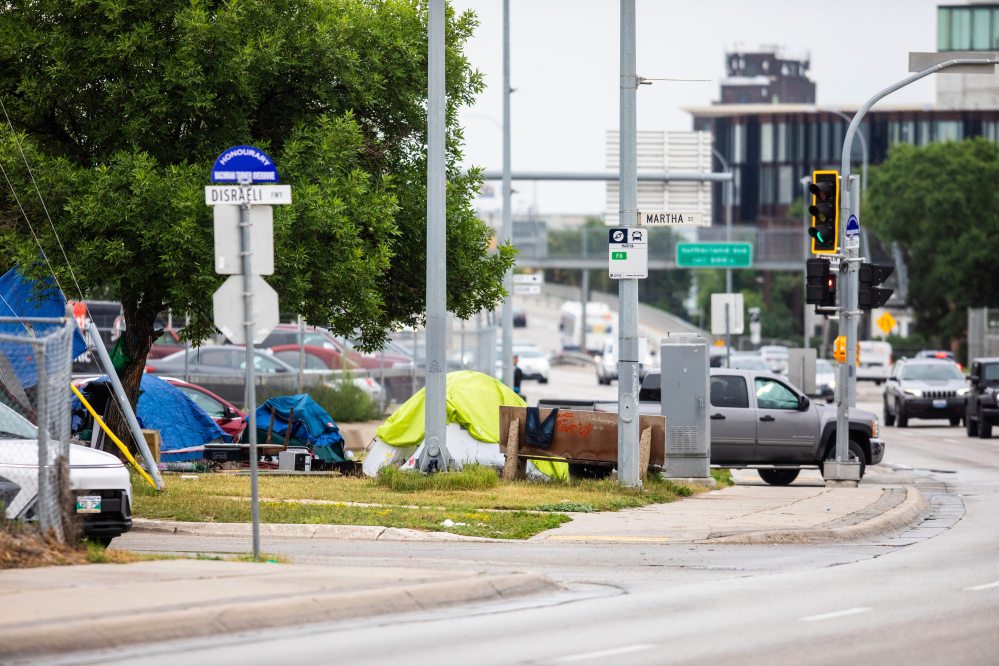
New social housing builds have not kept pace with the demand, and the waitlist for Manitoba Housing units continues to grow. That shortage leaves vulnerable people — many of whom are dealing with addiction, mental illness, trauma or all of the above — with no viable alternative but to pitch tents near riverbanks, in alleyways, or in downtown parks.
This is not just a housing crisis. It’s a poverty crisis, a mental health crisis, an addictions crisis and, ultimately, a policy crisis that stems from decades of neglect and underinvestment across multiple levels of government.
Premier Wab Kinew’s government has shown a willingness to take this issue seriously — something that was often lacking in previous administrations. Announcements of funding for transitional housing, wraparound supports and partnerships with community organizations are welcome. But even the most well-intentioned policies cannot fix this problem overnight.
The public needs to understand this will take time. Moving 700 people into stable housing is not just a matter of finding empty units and handing out keys. Many people living in encampments are dealing with deeply rooted issues — untreated trauma, mental illness and addiction.
For many, traditional housing won’t work unless it comes with long-term supports, including mental health counselling, harm reduction services and case management. Some may require transitional or supportive housing before they can live independently.
That’s why the Housing First model — which prioritizes stable housing as a foundation for recovery — has proven effective in other jurisdictions. But to succeed, Housing First requires an actual supply of housing. And Manitoba does not have it.
This is where the Kinew government faces a steep uphill climb. It must urgently increase the supply of affordable and supportive housing, not just to help those in encampments today, but to prevent others from ending up there tomorrow. That means investing in new social housing, refurbishing old stock and incentivizing private-market affordable rentals.
But more housing alone won’t be enough. If the upstream causes of homelessness aren’t addressed — the poverty that drives people to the streets, the addictions that destroy lives and the mental health crises that go untreated — then encampments will remain a tragic fixture in Manitoba’s urban landscape.
Governments must also expand mental health services, increase funding for addiction treatment and harm reduction, and overhaul income supports that currently leave many Manitobans living below the poverty line.
Minimum wage, disability supports and social assistance rates must be brought in line with the real cost of living. Without those reforms, efforts to reduce homelessness will be little more than a Band-Aid over a much deeper wound.
The Kinew government has been in office less than two years and no one should expect it to undo decades of systemic neglect in a matter of months. But progress, however incremental, must be sustained. Getting 59 people into housing is an important first step. But it must be followed by hundreds more.
The time for short-term fixes has passed. What’s needed now is a comprehensive, patient and compassionate approach — one that understands that housing is a human right.
» Winnipeg Free Press