
Investing in military a solid step forward
Advertisement
Read this article for free:
or
Already have an account? Log in here »
We need your support!
Local journalism needs your support!
As we navigate through unprecedented times, our journalists are working harder than ever to bring you the latest local updates to keep you safe and informed.
Now, more than ever, we need your support.
Starting at $15.99 plus taxes every four weeks you can access your Brandon Sun online and full access to all content as it appears on our website.
Subscribe Nowor call circulation directly at (204) 727-0527.
Your pledge helps to ensure we provide the news that matters most to your community!
To continue reading, please subscribe:
Add Brandon Sun access to your Free Press subscription for only an additional
$1 for the first 4 weeks*
- Enjoy unlimited reading on brandonsun.com
- Read the Brandon Sun E-Edition, our digital replica newspaper
*Your next Free Press subscription payment will increase by $1.00 and you will be charged $20.95 plus GST for four weeks. After four weeks, your payment will increase to $24.95 plus GST every four weeks.
Read unlimited articles for free today:
or
Already have an account? Log in here »
Hey there, time traveller!
This article was published 08/08/2025 (273 days ago), so information in it may no longer be current.
The Canadian Armed Forces just got a financial shot in the arm from the Canadian government, one that will not only make a career in the military more attractive to young Canadians, but also provide long-term benefits to communities like Brandon that are home to military families.
On Friday afternoon, Prime Minister Mark Carney announced a hefty pay raise for military service members by as much as 20 per cent, together with a series of benefit increases and bonuses that will roll out over the next year, retroactive to April 1, 2025.
Specifically, the decision will result in an eight per cent raise for colonels and above, a 13 per cent raise for lieutenant-colonels and below, and a 20 per cent increase in starting pay for privates in the Regular Force.
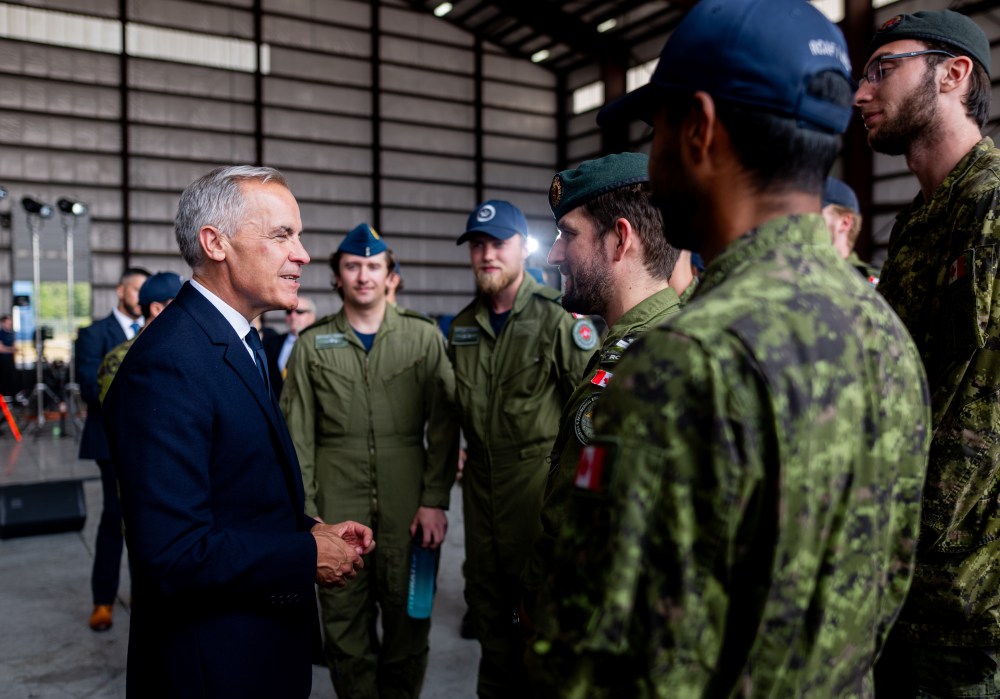
It was reported yesterday that reservists will receive a smaller pay increase of 13 per cent.
In addition, Canada will offer a new military service pay benefit that is specifically tied to a member’s time in service, as well as additional compensation initiatives that will help cover the costs of frequent moves and separation from families “to help attract and retain the best instructors at training schools.” There will also be raises to help CAF members training for combat, and additional pay for CAF members who are called to serve in natural disasters.
This $2-billion compensation package is part of a planned $9.3-billion budget boost that will help Canada meet NATO’s defence spending benchmark target of two per cent of GDP.
The government’s announced raise for military personnel comes on the heels of a report from Global News last month that recruitment in the Canadian Armed Forces had reached a 10-year high, with more than 6,700 new enlistees joining within the past year.
As the Global News report stated, the figure represents a 55 per cent increase over the previous year and exceeds the federal government’s target by more than 200 recruits, according to data obtained from the Department of National Defence.
Nevertheless, the CAF is still 12,722 soldiers short of the authorized 71,500 operational force called for by the DND, according to CTV News. And a report from The Canadian Press says staffing levels in 53 of 116 critical occupations — including vehicle and maritime technicians — are now below 75 per cent.
You only have to look on job sites like Indeed to find hundreds of open positions with the Canadian Armed Forces — everything from weapons engineering technician, military police and signal technician to intelligence specialists, gunners and aerospace control operators. There are even openings for a few good cooks.
But the military’s difficulties over the years in recruiting have been mounting, hastened by a lengthy and cumbersome recruitment process, inadequate pay, outdated and aging equipment, and reputational concerns regarding sexual misconduct in the military, racism and right-wing extremism within the ranks.
There has also been an ongoing perception within the military and among the general population that the federal government has not been prioritizing the needs of our armed forces. As a result, troop morale has taken a beating.
“The slow pace of modernization has created a force that struggles to compete with civilian careers offering better compensation and working conditions, making it difficult to convince young Canadians that a military career is worth pursuing,” wrote Andrew Latham, a professor of International Relations at Macalester College in an article published on 19fortyfive.com last February.
“Without serious reforms, the CAF risks becoming a force that exists more on paper than in reality, leaving Canada dangerously unprepared for the security challenges of the coming decade.”
Carney’s decision to reinvest in the Canadian Armed Forces comes at a difficult time in our country’s history.
The world is becoming less peaceful and more difficult to navigate, and in times of international turbulence it makes good sense to be able to not only defend our national interests, but also those of our allies.
Doing the right thing by the men and women in the CAF by paying them a living wage and properly compensating them for the unique difficulties inherent in military life is a necessary step toward stabilizing the forces we currently have, and for attracting new recruits in the years to come.
Better pay for Canadian soldiers will also offer a side benefit to communities like Brandon, which is home to hundreds of military personnel who work out of both CFB Shilo and are reservists with the 26th Field Regiment.
Soldiers and their families who find themselves with more money in their pockets will tend to spend more in the communities in which they live and work.
Our men and women in uniform wear the maple leaf proudly both here at home and in operations around the world. We’re glad to see the federal government show them more and better support.
While it’s not the only necessary investment that the federal government must make in order to address ongoing recruitment issues, providing financial support for the people who defend this country is certainly one of the most important.