
Banks must do more to help prevent scams
Advertisement
Read this article for free:
or
Already have an account? Log in here »
We need your support!
Local journalism needs your support!
As we navigate through unprecedented times, our journalists are working harder than ever to bring you the latest local updates to keep you safe and informed.
Now, more than ever, we need your support.
Starting at $15.99 plus taxes every four weeks you can access your Brandon Sun online and full access to all content as it appears on our website.
Subscribe Nowor call circulation directly at (204) 727-0527.
Your pledge helps to ensure we provide the news that matters most to your community!
To continue reading, please subscribe:
Add Brandon Sun access to your Free Press subscription for only an additional
$1 for the first 4 weeks*
*Your next subscription payment will increase by $1.00 and you will be charged $20.00 plus GST for four weeks. After four weeks, your payment will increase to $24.00 plus GST every four weeks.
Read unlimited articles for free today:
or
Already have an account? Log in here »
Hey there, time traveller!
This article was published 01/09/2025 (210 days ago), so information in it may no longer be current.
As anyone who has ever been smotheringly hugged, infallibly fussed over or fed a boundless supply of home-baked cookies can attest, there’s nothing quite like the love of a grandparent for a grandchild.
It’s an affection, and a commitment, that is simple, pure, direct and unwavering. Which is precisely why there have come into being such things as so-called “grandparent scams” — financial predations that seek to exploit the love and loyalty of seniors whose eagerness to help and willingness to believe might make them easy targets for manipulation.
Grandparent scams have been in circulation for years, but as technology evolves and developments such as artificial intelligence become more easily harnessed, they have become increasingly sophisticated and convincing.
As recent news reports have detailed, scammers have become quite adept at using information culled from social media and other online sources to create narratives which, when presented to a senior who might not be sufficiently aware of such frauds when the scammer’s call arrives, can convince a grandparent to hand over large amounts of money to what they believe is a grandchild in crisis.
Take, for example, the swindle that was perpetrated recently on an elderly Winnipegger. The octogenarian grandmother received an early-morning phone call from someone who sounded convincingly like her grandson, claiming he had been in a serious car accident, was facing criminal charges and needed bail money.
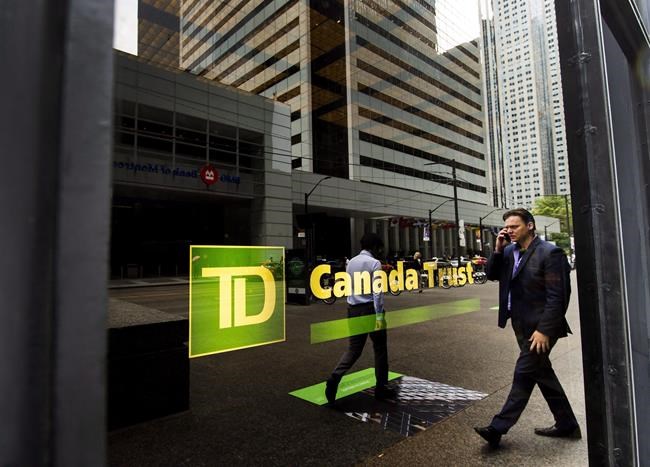
“It sounded like him 100 per cent,” said the woman, who added the “grandson” provided details of an upcoming family dinner and of his pilot training to lend credibility to his story. After speaking to a second person claiming to be the grandson’s lawyer, the woman went to her local TD Bank — at which she has been an account holder for 60 years — and arranged the transfer of $5,000. Another $5,000 transfer was requested and sent the following day, with no questions asked by the bank’s staff.
It was only after the second transfer was made, in a subsequent phone conversation, that the scam victim began to have doubts and asked to speak to the grandson and demanded further information.
The caller abruptly hung up. Fraud completed, money gone, in textbook grandparent-scam style.
In the aftermath, the grandparent’s daughter flew in from her out-of-province home, hoping to help them recover what had been lost. She says the bank should have done more to protect her parents.
“I want TD taken to task,” she said. “Nobody questioned it. Nobody thought twice about it. … I think they had an obligation (to help spot the scam). They keep saying they take it seriously and they look after their customers. It’s all a bunch of bulls–t.”
According to a bank spokesperson, the status of the case is under review. Whether a measure of relief will be offered remains to be seen, but one can’t help wondering if more could have been done in the moment, while the swindle was occurring. It’s true that every major bank has, on its website, prominently displayed information regarding grandparent scams and how to avoid falling victim to them; it’s also true that each of us is responsible for safeguarding our finances and, when necessary, for helping our elders avoid falling victim to financial flim-flam schemes.
But given all the personal information, spending-pattern data and advanced security measures at their disposal on an ongoing basis, one can’t help wondering if there isn’t more Canada’s banks could be doing proactively to alert and protect their most scam-susceptible customers from falling for what has quickly become one of the oldest and most obvious tricks in the financial-crime book.
» Winnipeg Free Press