
A step forward, but many steps remain
Advertisement
Read this article for free:
or
Already have an account? Log in here »
We need your support!
Local journalism needs your support!
As we navigate through unprecedented times, our journalists are working harder than ever to bring you the latest local updates to keep you safe and informed.
Now, more than ever, we need your support.
Starting at $15.99 plus taxes every four weeks you can access your Brandon Sun online and full access to all content as it appears on our website.
Subscribe Nowor call circulation directly at (204) 727-0527.
Your pledge helps to ensure we provide the news that matters most to your community!
To continue reading, please subscribe:
Add Brandon Sun access to your Free Press subscription for only an additional
$1 for the first 4 weeks*
*Your next subscription payment will increase by $1.00 and you will be charged $20.00 plus GST for four weeks. After four weeks, your payment will increase to $24.00 plus GST every four weeks.
Read unlimited articles for free today:
or
Already have an account? Log in here »
The Manitoba government’s plan to add physicians to Health Links–Info Santé announced last week, is a sensible improvement to a long-standing service.
For years, Manitobans calling the nurse-managed phone line have often received the same unsatisfying advice: “Go to the ER.”
Bringing two doctors into the mix — now available 8 a.m. to 6 p.m. in a six-month pilot project — will undoubtedly give some callers more precise assessments and, in many cases, better access to primary care.
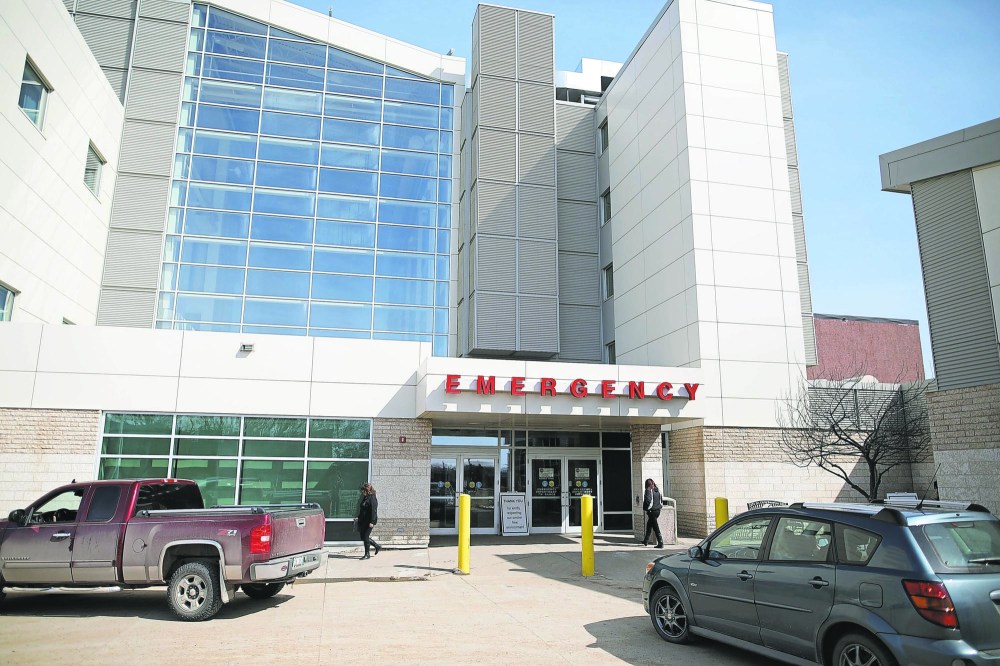
But the government’s accompanying claim that a few more virtual doctors will significantly reduce ER overcrowding is, at best, wishful thinking. At worst, it diverts attention from the real, entrenched causes of ER backlogs.
The early numbers make the province’s case sound compelling: in the first 10 days of the pilot, 160 callers were transferred to a physician, and only 10 were advised to go to the ER. On the surface, that seems like a major reduction in unnecessary emergency visits.
But research tells a different story. The Canadian Association of Emergency Physicians has repeatedly found that diverting low-acuity patients — the sore throats, minor sprains and fevers — has a negligible impact on ER congestion.
“CAEP would especially like to stress that low-acuity or what some deem “inappropriate” visits are NOT the cause of ED overcrowding,” wrote the authors of a CAEP report on the crisis in Canadian emergency departments in 2022. “This is a common misconception that needs to be debunked.”
These patients, while visible in waiting rooms, do not consume the resources that create gridlock. They are not the ones occupying ER hallways for days. They are not the reason paramedics cannot offload patients. And they are certainly not the reason some Manitobans, like 82-year-old Genevieve Price — who died last week after waiting 30 hours in a Grace Hospital ER hallway — can’t get timely medical treatment.
The province knows this because it has tried the “low-acuity” strategy many times before. It has expanded access to walk-in clinics, funded after-hours care, boosted urgent-care capacity and, more recently, invested heavily in virtual care.
In one of the most recent examples, the provincial government last year banked on the opening of a minor injury and illness clinic in Brandon to reduce ER wait times at the Brandon Regional Health Centre.
“It is very important that this … will reduce the number of folks presenting to the Brandon ER,” outgoing Prairie Mountain Health CEO Brian Schoonbaert said in March 2024. “We all know that the wait times have been long, but we will hope that there will be far fewer having to present to the ER, therefore reducing the waiting list.”
Yet ER and urgent-care wait times across the province — and particularly in Winnipeg hospitals — are at all-time highs.
The true drivers of ER congestion are far more complex to solve. ERs grind to a halt not because of the people who shouldn’t be there, but because of the people who should — the sickest patients who require admission but have nowhere to go.
Manitoba hospitals routinely operate at or above capacity. Medical and surgical wards are full. Staffed beds are in short supply. Long-term patients who no longer need acute care remain stuck in hospital beds because there are not enough personal care home spaces or home-care supports to safely move them out.
When no inpatient beds are available, admitted patients are kept in the ER, sometimes for days.
This blocks the flow of new patients, forcing many to wait in hallways or ambulances. The entire system backs up. This is not a low-acuity problem. It is a bed-availability problem and a patient-flow problem.
The government has acknowledged these issues in broad strokes, but it has not yet delivered the scale of investment or structural change needed to meaningfully address them. The Health Links pilot, while worthwhile, risks giving the public the impression that ER overcrowding can be fixed with incremental tweaks rather than fundamental reforms.
To truly address ER congestion, Manitoba needs more staffed acute-care beds, better hospital throughput, increased home-care support, faster placement into personal care homes and modernized discharge planning. It needs robust recruitment and retention of nurses, paramedics, physicians, and allied staff.
It requires a system-wide commitment to patient flow — not piecemeal pilots that nibble at the edges.
Adding doctors to Health Links is a step forward. But it is not the solution to Manitoba’s ER crisis.
» Winnipeg Free Press and The Brandon Sun