
Letter to the editor — Gas-fired power project is hardly a ‘risk-free’ choice for the climate
Advertisement
Read this article for free:
or
Already have an account? Log in here »
We need your support!
Local journalism needs your support!
As we navigate through unprecedented times, our journalists are working harder than ever to bring you the latest local updates to keep you safe and informed.
Now, more than ever, we need your support.
Starting at $15.99 plus taxes every four weeks you can access your Brandon Sun online and full access to all content as it appears on our website.
Subscribe Nowor call circulation directly at (204) 727-0527.
Your pledge helps to ensure we provide the news that matters most to your community!
To continue reading, please subscribe:
Add Brandon Sun access to your Free Press subscription for only an additional
$1 for the first 4 weeks*
- Enjoy unlimited reading on brandonsun.com
- Read the Brandon Sun E-Edition, our digital replica newspaper
*Your next Free Press subscription payment will increase by $1.00 and you will be charged $20.95 plus GST for four weeks. After four weeks, your payment will increase to $24.95 plus GST every four weeks.
Read unlimited articles for free today:
or
Already have an account? Log in here »
Hey there, time traveller!
This article was published 04/12/2025 (186 days ago), so information in it may no longer be current.
I read the Brandon Sun article on Nov. 19, “Brandon to get $3B turbine facility.” Ever since then I have been wanting to respond. But what to say?
Much could be said about currently available renewable energy resources that could be used to meet peak demand by 2030. The Climate Action Team, based in Winnipeg, just published a policy brief, “The Immense Potential of Wind, Solar and Storage in Manitoba: November 2025.” It lays out renewable options that have been used across our continent and around the world and which could be done cheaper than $3 billion.
But maybe it is most important for me to talk about the issue of risk. After all, the whole premise of the Nov. 19 article is that we are at risk of waking up some frigid January morning without enough electricity to heat our homes or brew our coffee. And, let’s be clear, that is not a welcome risk for anyone.
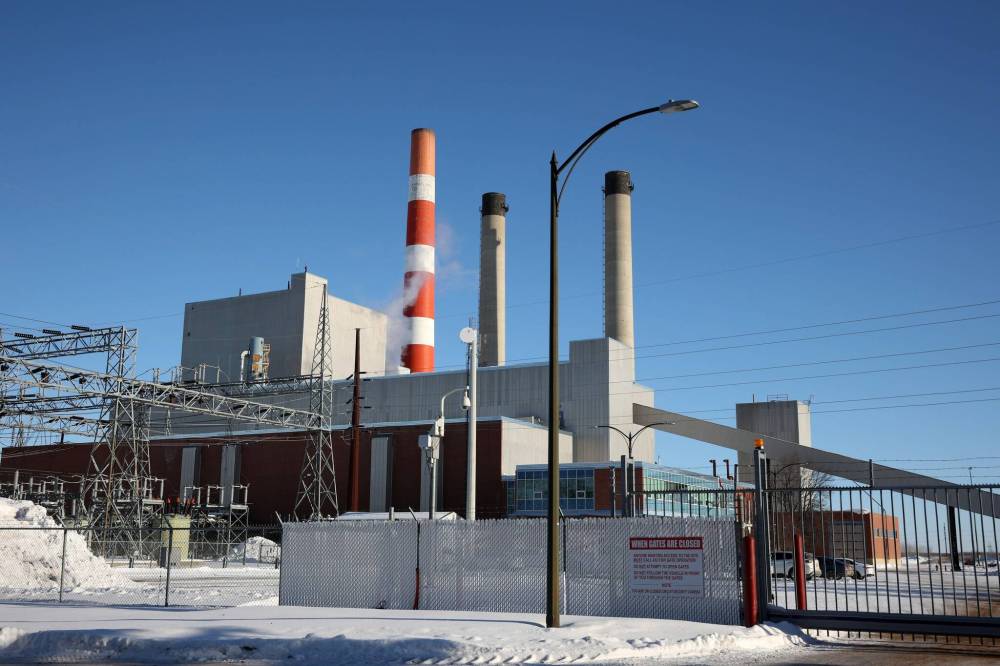
The Manitoba Hydro Brandon Generating Station off Victoria Avenue East. The provincial government is proposing a $3-billion combustion turbine facility at the site to meet the increasing demand for power. (Tim Smith/The Brandon Sun files)
The choice of gas-fired turbines implies that other options are too risky even if they are cost-competitive. Gas-fired power is a known technology, therefore no risk. I think that is the way the decision is being framed. Gas equals no risk. Renewable electricity options equal risk. And this framing of the issue needs to be challenged.
The Intergovernmental Panel on Climate Change (IPCC) has made it increasingly clear in the last five years that we need to cut our use of fossil fuels rapidly by 2030 and practically eliminate them by 2050. Carbon capture and sequestration may provide opportunity for limited fossil-fuel use by then. But without massive cutback in fossil fuel, halting climate change with carbon capture will be like trying to kill an elephant with a fly swatter. This is widely acknowledged by climate scientists.
What are the risks of more gas-fired power plants, and more fossil-fuel infrastructure in general? Let’s start close to home. Remember last summer? Remember practically choking on forest fire smoke for weeks on end? Being warned it may be dangerous just to go outside! There is a risk that becomes our new normal as increasing average temperature dries out our boreal forests, making fires bigger and more frequent. Is that a risk we want to take?
We know that the glaciers that feed most prairie rivers are melting at an increasing rate, getting smaller year by year. As they are depleted, the rivers and rainfall cycles on which we rely for our drinking water are at risk. Is that a risk we want to take?
What are the risks on a larger scale? A Nov. 19 NPR article by Rebecca Hersher and Lauren Sommer gives a concise snapshot of climate tipping points we are facing.
The first is that coral reefs, which support 25 per cent of all marine life and half a billion people globally, could disappear forever.
The ice sheets in Greenland and West Antarctica could collapse over coming decades, resulting in massive sea level rise and the displacement of hundreds of millions of coastal residents. In the closer term, by 2040, other researchers fear that unabated temperature increase could cause the Arctic ice cap to disappear completely in the summer. That would lead to less heat being reflected back out of our atmosphere, which would further increase the rate of temperature increase. Is that a risk we want to take?
The vast expanse of Arctic permafrost could melt. Not only does such thawing threaten to disrupt landscape and infrastructure in the North. When the ground thaws, thousands of years of frozen plant and animal material also thaws and starts to decompose. That becomes a potent source of the climate-killing gas methane — 70 times worse in the short term than CO2, according to Environment Canada. As with ice-cap melting, the effects of climate change lead to even more climate change. Is that a risk we want to take?
It should be clear that a gas-fired power plant is by no means a “risk-free” choice. Every new piece of fossil fuel infrastructure is like a bullet in the climate-change gun, the barrel of which we are all facing down now. By comparison to the many risks of continued fossil-fuel use, the transition to renewable energy looks more like a mere “challenge.”
There are legitimate technical challenges to integrating renewable energy more fully into our energy grid. But better those of us in this generation should set to work facing those technical challenges rather than let future generations face the existential risks of accelerating climate change.
Quentin Robinson
Brandon