
A waste of time and tax dollars
Advertisement
Read this article for free:
or
Already have an account? Log in here »
We need your support!
Local journalism needs your support!
As we navigate through unprecedented times, our journalists are working harder than ever to bring you the latest local updates to keep you safe and informed.
Now, more than ever, we need your support.
Starting at $15.99 plus taxes every four weeks you can access your Brandon Sun online and full access to all content as it appears on our website.
Subscribe Nowor call circulation directly at (204) 727-0527.
Your pledge helps to ensure we provide the news that matters most to your community!
To continue reading, please subscribe:
Add Brandon Sun access to your Free Press subscription for only an additional
$1 for the first 4 weeks*
*Your next subscription payment will increase by $1.00 and you will be charged $20.00 plus GST for four weeks. After four weeks, your payment will increase to $24.00 plus GST every four weeks.
Read unlimited articles for free today:
or
Already have an account? Log in here »
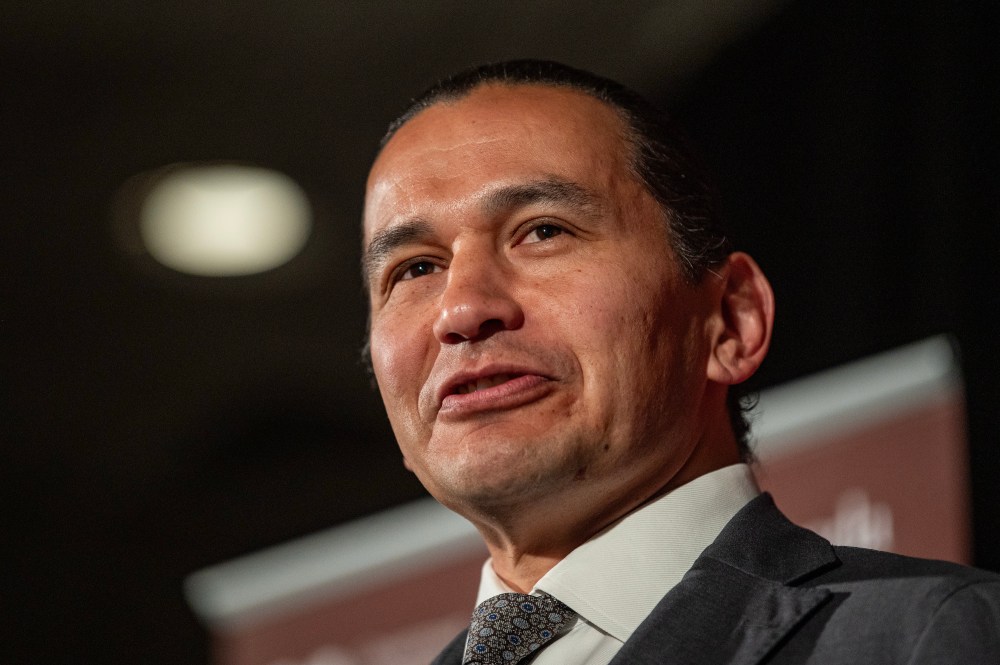
Manitoba Premier Wab Kinew says his government plans to order a public inquiry be held into the post-election actions of the former Progressive Conservative government regarding the failed Sio Silica sand mining proposal.
It’s a bad idea, dripping in partisan politics.
Manitobans will recall that former premier Heather Stefanson and two of her then-cabinet ministers, Cliff Cullen and Jeff Wharton, were accused in 2023 of exerting pressure on other government officials to have Sio Silica’s proposed environmental licence approved and issued during the “caretaker period” that existed between the Oct. 3, 2023 election and the swearing-in of the new NDP government led by Kinew two weeks later.
They will also recall that a member of the NDP caucus filed a complaint regarding the incident with Manitoba ethics commissioner Jeffery Schnoor regarding the matter and that, after conducting a lengthy investigation, Schnoor determined that Stefanson, Cullen and Wharton had each violated Manitoba’s conflict of interest laws by pushing to have the licence approved after losing the election.
In his highly detailed 100-page report released last spring, Schnoor wrote that “The facts clearly demonstrate that each of Ms. Stefanson, Mr. Cullen and Mr. Wharton, in their official capacities, made a decision and sought to influence someone else’s decision that they knew or ought to have known furthered the interests of Sio Silica, in breach of the caretaker convention.”
He added that “By attempting to have the Project License issued in the transition period without the consent of the incoming NDP government, Ms. Stefanson, Mr. Cullen and Mr. Wharton contravened the caretaker convention and thereby acted improperly. As such, Ms. Stefanson, Mr. Cullen and Mr. Wharton breached sections 2, 3 and 5 of the Act … All three knew the requirements of the caretaker convention and both Mr. Cullen and Mr. Wharton had been given specific warnings that approving the Project license during the transition period would breach the convention.”
As a consequence of those conclusions, Schnoor recommended that Stefanson be fined $18,000, that Cullen be fined $12,000 and Wharton be fined $10,000. Those fines were confirmed by the Legislative Assembly in October and have now been paid.
That should have ended the matter, but Kinew told the CBC last week that ethics questions remain that the Schnoor report could not answer. He wants the inquiry to investigate what motivated Stefanson, Cullen and Wharton to take the steps they did, and he notes that Schnoor was “not able to look into financial holdings” and other issues.
The premier also suggests the inquiry could lead to the strengthening of Manitoba’s lobbying laws, asking “Is our lobbying framework strong enough in Manitoba to make sure that you, the average person, know what’s going on with your government officials, the people that you affect in our democracy?”
That may be a valid question in the abstract, but Manitoba already has lobbying rules in place and a public inquiry isn’t required in order to strengthen those rules. All Kinew needs to do is have his officials review what other jurisdictions are already doing and adopt the best practices.
Similarly, if Kinew seriously believes that Stefanson, Cullen, Wharton and possibly others engaged in improper or illegal conduct that Schnoor was prevented from investigating — note his reference to “financial holdings” — there is a simpler, more-effective and less-costly option available: refer the matter to the police for investigation.
Public inquiries are expensive proceedings, often costing governments millions of dollars. The fact that Kinew believes this inquiry could take two to three years to complete means it would be a windfall for scores of lawyers who each charge hundreds of dollars per hour, but a bad investment for Manitoba taxpayers and for a government already running a huge deficit.
Given that reality, combined with the fact that Schnoor has already delivered detailed findings regarding the facts of the Sio Silica matter, it is impossible to view Kinew’s inquiry plans as anything other than an opportunistic, politically motivated scheme to dig up dirt on his political rivals during the lead-up to the next provincial election — and to do it at significant taxpayer expense.
It would be a waste of time and tax dollars.
The horse is dead, premier; it’s time to stop beating it. The facts have been determined, the fines have been paid and Stefanson and Cullen have left politics. Move on.