
Big borrower can’t risk losing lenders
Advertisement
Read this article for free:
or
Already have an account? Log in here »
We need your support!
Local journalism needs your support!
As we navigate through unprecedented times, our journalists are working harder than ever to bring you the latest local updates to keep you safe and informed.
Now, more than ever, we need your support.
Starting at $15.99 plus taxes every four weeks you can access your Brandon Sun online and full access to all content as it appears on our website.
Subscribe Nowor call circulation directly at (204) 727-0527.
Your pledge helps to ensure we provide the news that matters most to your community!
To continue reading, please subscribe:
Add Brandon Sun access to your Free Press subscription for only an additional
$1 for the first 4 weeks*
*Your next subscription payment will increase by $1.00 and you will be charged $20.00 plus GST for four weeks. After four weeks, your payment will increase to $24.00 plus GST every four weeks.
Read unlimited articles for free today:
or
Already have an account? Log in here »
Follow the money.
You hear that a lot, and it’s good advice: money, who gets it and where it goes is so often at the core of decisions which otherwise make no obvious sense.
Following the money often — well, sadly, almost always — takes you to the core of the decision-making process.
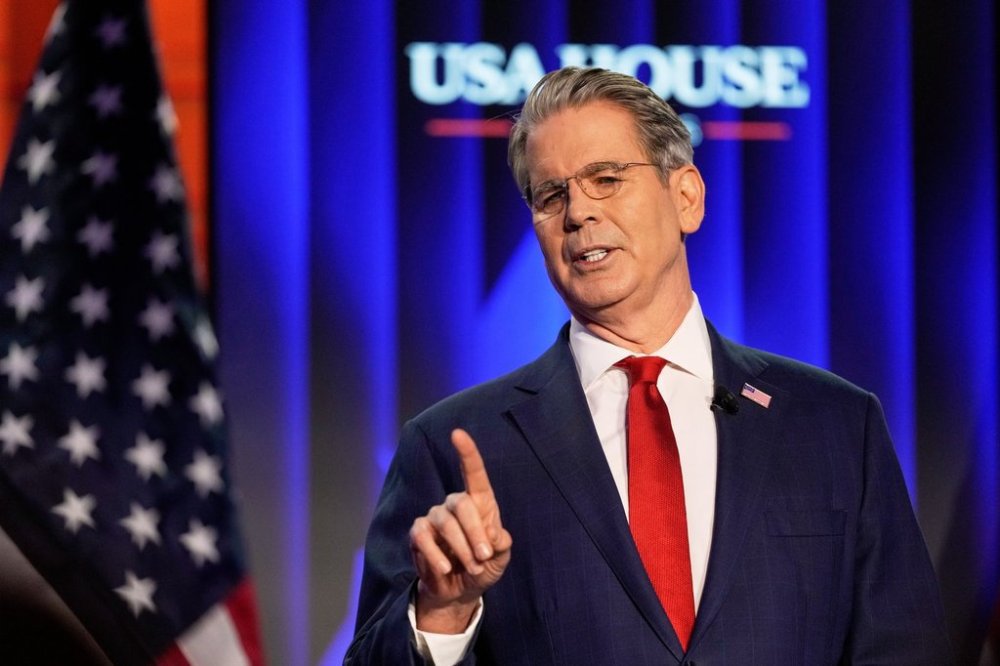
Pension funds in Denmark and Sweden announced this week they were getting out of U.S. Treasury bonds. The Danish AkademikerPension said it would move to other types of short-term U.S. funds, citing poor fiscal performance by the U.S. government and insisting that while the move wasn’t as a result of U.S. attempts to seize Greenland, “but of course that didn’t make it more difficult to take the decision.”
It was a relatively small investment, compared to the size of U.S. treasury bond debt, only US$100 million.
Sweden’s largest commercial pension fund, Alecta, also said this week it had moved out of U.S. treasury bonds, with chief investment officer Pablo Bernengo telling the New Republic in an emailed statement that “This is connected to the decreased predictability of U.S. policy in combination with large budget deficits and a growing national debt.”
Alecta had somewhere around US$8 billion in the bonds before it undertook what it described as a staged exit from the bonds.
Observers have argued that the pension funds were simply rebalancing their investments, not completely fleeing the U.S. bond and equity market, and that’s a fair comment.
But this past weekend, a Deutsche Bank analyst pointed out in a Sunday note that European countries own a huge block of U.S. bonds and equities.
“European countries own US$8 trillion of U.S. bonds and equities, almost twice as much as the rest of the world combined,” George Saravelos, Deutsche’s global head of FX research, wrote Sunday. “In an environment where the geo-economic stability of the Western alliance is being disrupted existentially, it is not clear why Europeans would be as willing to play this part.”
U.S. Treasury Secretary Scott Bessent quickly said that Deutsche Bank’s chief executive had called him to say that the opinion was one given by a single analyst. (A remarkably fast response to a single analyst’s report. Touchy, touchy …)
U.S. President Donald Trump is already threatening “big retaliation” if European governments take financial action, insisting to Fox News that “we have all the cards.”
But the international financial pressure might not end there.
Couple that with French President Emmanuel Macron’s speech in Davos on Thursday — saying that the EU had agreed to build a mechanism to move annual investments of around 300 billion Euro of bonds and equities investment out of the United States and into the EU instead, and you have to ask if the U.S. government might have a few fiscal worries ahead.
After all, the U.S. currently has US$37 trillion in debt, a number that is continually growing. Its treasury bonds help finance that debt — with about 33 per cent of those bonds held by foreign countries. The bonds are attractive, because they are considered to be reliable, low-risk investments that are easily sellable, so the U.S. doesn’t have to pay premium interest.
The bigger the risk and unpredictability, the higher the interest rate has to be to keep investors, shall we say, interested.
And what is Trump, other than risk and unpredictability?
Follow the money. There are good, pragmatic fiscal reasons to keep bonds that pay a good rate of return — as long as that rate of return isn’t leavened by unaccepted levels of risk, like having a president and government that continually changes the rules, levies new tariffs, abuses its trading partners and threatens military action against its allies.
» Winnipeg Free Press