
Critical incidents must lead to concrete action
Advertisement
Read this article for free:
or
Already have an account? Log in here »
We need your support!
Local journalism needs your support!
As we navigate through unprecedented times, our journalists are working harder than ever to bring you the latest local updates to keep you safe and informed.
Now, more than ever, we need your support.
Starting at $15.99 plus taxes every four weeks you can access your Brandon Sun online and full access to all content as it appears on our website.
Subscribe Nowor call circulation directly at (204) 727-0527.
Your pledge helps to ensure we provide the news that matters most to your community!
To continue reading, please subscribe:
Add Brandon Sun access to your Free Press subscription for only an additional
$1 for the first 4 weeks*
*Your next subscription payment will increase by $1.00 and you will be charged $20.00 plus GST for four weeks. After four weeks, your payment will increase to $24.00 plus GST every four weeks.
Read unlimited articles for free today:
or
Already have an account? Log in here »
The failure to recognize and intervene when a patient’s health has deteriorated remains one of the most troubling and persistent causes of death and serious injury in Manitoba’s health-care system.
The province’s latest critical incident report makes that grim reality impossible to ignore and underscores why nurse-to-patient ratios can no longer remain a theoretical discussion or a future aspiration.
Eight people died and 24 others suffered major medical consequences between Jan. 1 and March 31 of 2025 as a result of critical incidents in Manitoba’s health facilities.
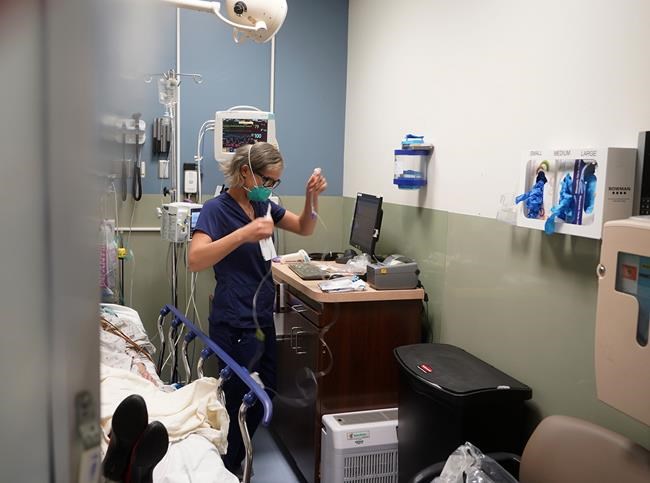
While the total number of incidents declined slightly from the previous quarter, the underlying causes are depressingly familiar. Too often, patients deteriorated without timely recognition. Too often, gaps in monitoring led to preventable harm. And too often, the common thread was staffing stretched beyond safe limits.
Manitoba legislation defines a critical incident as an unintended event resulting in serious and undesired consequences, outcomes not caused by a patient’s underlying condition or the inherent risks of treatment. In plain language, these are harms that should not have occurred.
The most recent report reveals that six patients died and six others were seriously injured because staff failed to quickly identify and treat changes in their condition. Other cases involved fatal falls due to inadequate monitoring, delayed diagnostics following clinical deterioration, medication errors and procedural complications.
These are not obscure or exotic failures. They are the kinds of risks nurses are trained to anticipate and prevent, when they have the time and capacity to do so.
The Manitoba Nurses Union has been blunt in its assessment. Chronic understaffing, union president Darlene Jackson says, is a major contributor to incidents which are increasingly preventable.
This is not a criticism of nurses or other front-line staff. On the contrary, it is recognition that even the most skilled professionals cannot safely care for an unreasonable number of patients at once. Early intervention requires time. Both are compromised when staffing levels are inadequate.
Health Minister Uzoma Asagwara is correct to note that critical incidents can involve multiple variables, and that incident summaries do not capture the full complexity of care provided. The goal is to learn from mistakes to prevent similar tragedies in the future.
But learning loses its value if the same structural problems are acknowledged quarter after quarter without decisive action.
Establishing minimum nurse-to-patient ratios is one such action and one Manitoba has studied extensively. A committee including representatives from the nurses union, Shared Health and government spent 18 months developing recommendations tailored to different facilities, units and patient needs. That report was delivered to the minister’s office earlier this year.
Ratios are not a silver bullet. They will not eliminate every error or adverse outcome. But evidence from other jurisdictions shows they reduce mortality, decrease complications, improve patient satisfaction and lower burnout among nurses. In other words, they address both patient safety and system sustainability.
They are also a powerful recruitment and retention tool. Nurses are far more likely to come to or remain in workplaces where they believe they can provide safe, quality care without constant fear that an avoidable tragedy is unfolding on their watch.
The NDP government has committed to legislating nurse-to-patient ratios and says a bill will be introduced in the next session. That commitment must now be honoured without delay or dilution.
Every critical incident represents a person and a family whose lives were altered forever. Preventing the next one requires more than sympathy and review panels. It requires ensuring nurses have the numbers — and the support — to do the job they are trained to do.
» Winnipeg Free Press