
Measles exposure rises amid vaccine hesitancy
Advertisement
Read this article for free:
or
Already have an account? Log in here »
We need your support!
Local journalism needs your support!
As we navigate through unprecedented times, our journalists are working harder than ever to bring you the latest local updates to keep you safe and informed.
Now, more than ever, we need your support.
Starting at $15.99 plus taxes every four weeks you can access your Brandon Sun online and full access to all content as it appears on our website.
Subscribe Nowor call circulation directly at (204) 727-0527.
Your pledge helps to ensure we provide the news that matters most to your community!
To continue reading, please subscribe:
Add Brandon Sun access to your Free Press subscription for only an additional
$1 for the first 4 weeks*
*Your next subscription payment will increase by $1.00 and you will be charged $20.00 plus GST for four weeks. After four weeks, your payment will increase to $24.00 plus GST every four weeks.
Read unlimited articles for free today:
or
Already have an account? Log in here »
In a province that now bears the ignominious title of having the most measles cases in the country, it was only a matter of time before the city of Brandon got its own exposure to the disease.
Earlier this month, the Kinew government confirmed that Manitoba has Canada’s highest number of reported measles infections in 2026, just one year after the province’s outbreak began.
And it would appear that public misperception of both the disease and the safety of the measles vaccine have been fuelling this outbreak — not just here in Canada but around the world. Never mind the fact that the vaccine is safe and 97 per cent effective with two doses, according to public health officials.
Just last week, Manitoba’s public health lead on measles, Dr. Davinder Singh, told our sister paper, the Winnipeg Free Press, that the prevalence of measles cases in certain southern Manitoba communities — particularly in the Morden-Winkler area and surrounding communities — was largely attributed to lower vaccine uptake.
Singh also suggested that concerns over vaccine safety and efficacy, and the misled belief that measles isn’t a serious disease, were among the most common reasons that some people do not want to vaccinate themselves or their children.
And yet, measles is very contagious and can be highly dangerous, particularly to children. Data from public health show a total of 22 people have been hospitalized, with 16 being children under the age of 10, since Feb. 1, 2025.
As we reported yesterday, measles can lead to complications such as ear infections, diarrhea, pneumonia and encephalitis (brain inflammation). And in extreme cases it can cause death, as it did with a pair of infants last year in Ontario and Alberta. It’s not something that any parent should take lightly.
Thus far, thankfully, no children or adults have died from measles in Manitoba over the last year, based on available health data. Officially, there have been 319 confirmed cases of measles and 29 probable cases in Manitoba. But the actual number of infected individuals is really just a shot in the dark.
“We can estimate that there may be about 10 times as many infections as we have that get reported to us or that get detected,” Dr. Singh said last week.
Unfortunately, for the rest of us, the growing vaccine hesitancy means that we have to face the consequences of other people’s poor decisions.
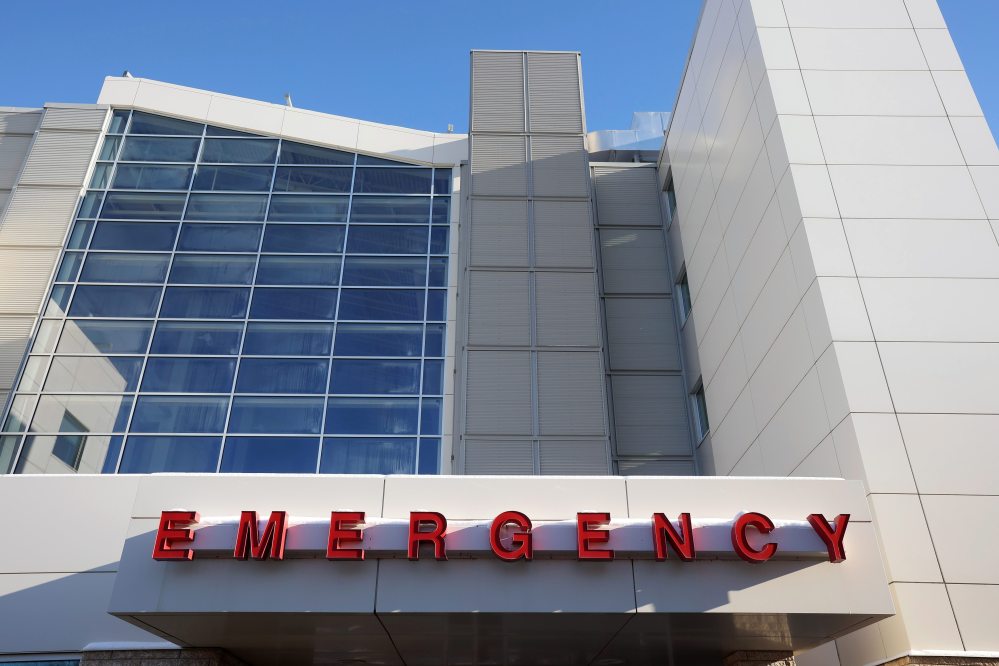
Case in point — Brandon has been the location of a number of measles exposure sites in the province in the last 20 days, including the Brandon Regional Health Centre’s emergency department waiting room between Feb. 5 and Feb. 7 and the Keystone Centre, which hosted Ag Days from Jan. 20 to 22. The Ag Days exposure also includes the Great Western Roadhouse within those dates. On Tuesday, three more sites were identified with a Feb. 5 exposure date — the Brandon University Healthy Living Centre, the Corral Centre Liquor Mart and Boston Pizza on Richmond Avenue.
Not surprisingly, provincial health officials — who would not say how many cases have been linked to each site — say they have “significant concerns” about the spread of measles, particularly as big events like Ag Days draw in people from other provinces and outside the country.
Health officials have pointed to the recent holiday season as being responsible for the bump in measles cases. These mass gatherings, however, usually are among close family members and friends. It becomes more worrisome that we are still hip-deep in hosting large indoor events here in Brandon.
From Potato Days at the Ag Centre of Excellence, to this month’s two-weekend Tournament of Champions, and the Royal Manitoba Winter Fair coming up in March, just to name a few, we’ve got a lot of large indoor events in Brandon that attract audiences from well outside our city.
And as we bill ourselves as a host city, it’s fair to ask that reasonable steps are being taken to keep the public safe.
The province, for its part, is handling the most significant measles outbreak in decades by expanding vaccine eligibility, improving public tracking and monitoring through its online measles page, conducting hospital screening and community outreach, and issuing public health directives to measles carriers to isolate themselves from the public.
However, given the rise of anti-vax sentiment within certain segments of the population following the COVID-19 pandemic, it’s not surprising that the province is reluctant to enforce stricter methods of containment.
And as Brandon Mayor Jeff Fawcett said yesterday, city administration relies on the direction of public health officials when it comes to taking health-related actions.
“Unless we get word from public health that there’s something we should be doing, we’re going to continue business as usual,” Fawcett said.
The irony here is that, until very recently, measles had essentially been eliminated from the public consciousness through historically high vaccination rates and rapid response by health officials.
While the province continues its efforts to limit further spread of the disease, these steps will likely be unsuccessful if those who don’t trust the science — or Manitoba Health, for that matter — continue to ignore the efficacy of vaccinations and the need to protect the most vulnerable in public.