
Canada must fight U.S. climate decisions
Advertisement
Read this article for free:
or
Already have an account? Log in here »
We need your support!
Local journalism needs your support!
As we navigate through unprecedented times, our journalists are working harder than ever to bring you the latest local updates to keep you safe and informed.
Now, more than ever, we need your support.
Starting at $15.99 plus taxes every four weeks you can access your Brandon Sun online and full access to all content as it appears on our website.
Subscribe Nowor call circulation directly at (204) 727-0527.
Your pledge helps to ensure we provide the news that matters most to your community!
To continue reading, please subscribe:
Add Brandon Sun access to your Free Press subscription for only an additional
$1 for the first 4 weeks*
*Your next subscription payment will increase by $1.00 and you will be charged $20.00 plus GST for four weeks. After four weeks, your payment will increase to $24.00 plus GST every four weeks.
Read unlimited articles for free today:
or
Already have an account? Log in here »
In an opinion piece published in today’s paper, Sun columnist Deveryn Ross discusses a recently released scientific report that blames climate change for a decreasing supply of water in the Assiniboine-Red River basin. If the report is correct, communities in southern Manitoba and Saskatchewan are at risk of drinking water shortages, as well as significant economic harm.
There is substantial cause for concern here in Westman, and that anxiety is further elevated by the Trump administration’s decision to strip the U.S. Environmental Protection Agency’s authority to regulate greenhouse gas emissions in that country.
On Thursday afternoon, U.S. President Donald Trump announced that the EPA has rescinded a 2009 “endangerment finding” that carbon dioxide and other greenhouse gases — caused by burning fossil fuels such as coal, oil and gas — endanger public health and welfare.
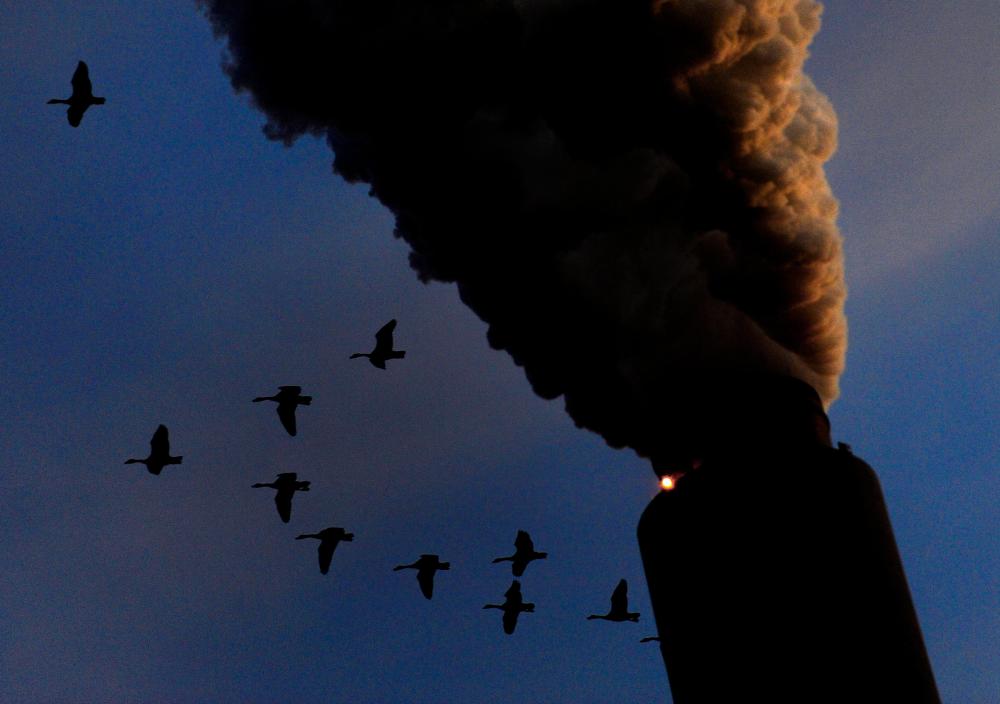
The decision effectively repeals rules that have reduced greenhouse gas emissions from vehicles. Regulations that limit greenhouse gases emitted from power plants and oil and gas operations will reportedly also be revoked soon.
To make matters even worse, Trump also signed an executive order this week that directs the U.S. Department of Defense to work directly with coal-fired power plants toward new long-term power purchasing agreements. The order states that “It is the policy of the United States that coal is essential to our national and economic security.”
Those decisions will undoubtedly worsen air quality in the U.S., while both accelerating and exacerbating the pace and impact of climate change. That harm will not be limited to America, however.
Greenhouse gases do not respect international borders. Winds from the U.S. blow into Canada and, as we saw during last summer’s wildfires, often blow from Canada into the U.S. Given that reality, this week’s decisions by the Trump administration will inevitably cause greenhouse gas levels to rise in Canada, further worsening the impact of climate change in our country.
As is often the case, however, the Trump administration appears to have taken action without first considering the facts and ramifications. In particular, this week’s reckless decisions may violate the 1991 Canada–United States Air Quality Agreement, a treaty that seeks to reduce trans-boundary air pollution.
The agreement originally targeted precursors to acid rain and smog, but has since evolved into a framework for joint Canada-U.S. environmental action on issues such as reducing methane emissions, aligning net-zero goals between the two nations, harmonizing standards for zero-emission vehicles and, most importantly, a shared commitment to a net-zero electricity sector by 2035.
Beyond that, the two nations announced in December 2023 that they had entered into an agreement “to renew and accelerate their joint efforts to combat the climate crisis and to increase economic benefits from collaboration.”
Those aren’t just words. They form part of a binding, long-term commitment between Canada and the U.S. to fight climate change and, in particular, reduce greenhouse gas emissions. The Trump administration’s decisions to abandon regulations aimed at accomplishing that important objective, and to instead revitalize the U.S. coal industry, appear to violate that Canada-U.S. agreement and partnership.
Beyond contravening America’s treaty obligations to Canada, however, the Trump administration’s decision to gut GHG regulations may also violate international law.
The “no-harm” rule of international law is codified in Principle 21 of the Stockholm Declaration and Principle 2 of the Rio Declaration. It requires nations to ensure that activities within their jurisdiction or control do not cause significant environmental harm to other nations and, secondly, to take all appropriate measures to prevent such damage from occurring.
The rule has been increasingly applied to global environmental issues such as climate change, where emissions in one country affect other nations. That appears to apply to the situation at hand, in which increased greenhouse gas emissions in the U.S. will inevitably cause an increase GHGs over Canada, thus worsening the consequences of climate change here.
That includes, as Ross points out, the depletion of our drinking water supply.
Canada cannot passively allow that to happen. We must stand our ground and protect our nation.
For that reason, we urge Canada’s federal, provincial and territorial governments to use all available legal and diplomatic tools to fight this dangerous decision of the American government. Canada’s future and the global fight against climate change depend on it.