
Trump moves to disrupt, corrupt fair U.S. elections
Advertisement
Read this article for free:
or
Already have an account? Log in here »
We need your support!
Local journalism needs your support!
As we navigate through unprecedented times, our journalists are working harder than ever to bring you the latest local updates to keep you safe and informed.
Now, more than ever, we need your support.
Starting at $15.99 plus taxes every four weeks you can access your Brandon Sun online and full access to all content as it appears on our website.
Subscribe Nowor call circulation directly at (204) 727-0527.
Your pledge helps to ensure we provide the news that matters most to your community!
To continue reading, please subscribe:
Add Brandon Sun access to your Free Press subscription for only an additional
$1 for the first 4 weeks*
*Your next subscription payment will increase by $1.00 and you will be charged $20.00 plus GST for four weeks. After four weeks, your payment will increase to $24.00 plus GST every four weeks.
Read unlimited articles for free today:
or
Already have an account? Log in here »
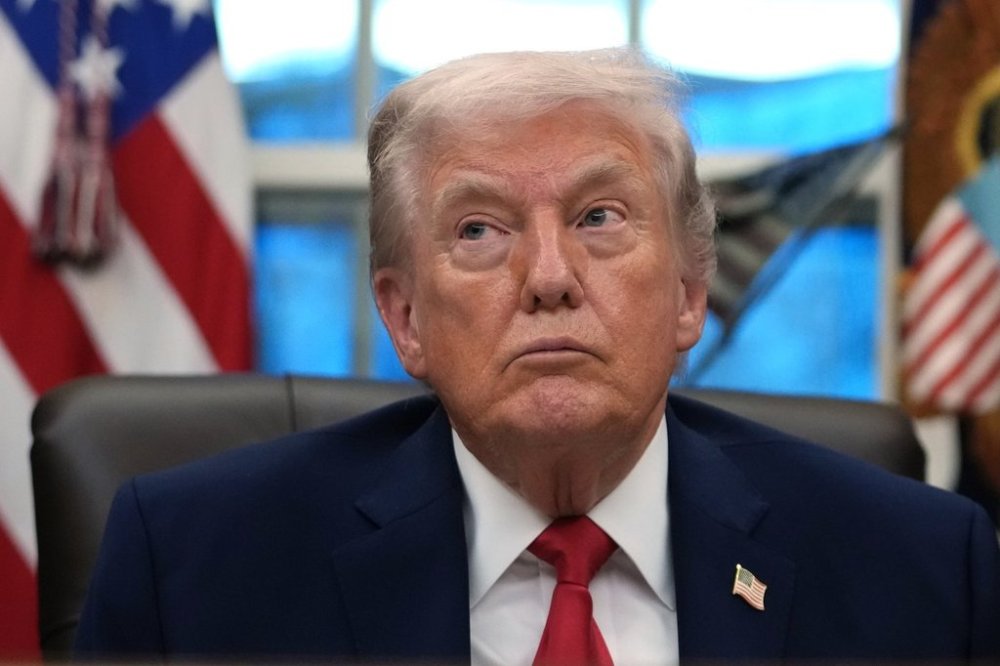
U.S. President Donald Trump has waged an unrelenting war on democratic institutions since beginning his second term in January 2025. So much so that many observers have warned that he is trying to install an authoritarian government in the place of the current democracy.
If that is his ultimate goal, then the next and perhaps final stage in that transition would be a seismic disruption of elections.
Trump has mused in recent weeks about cancelling midterm elections scheduled for this November and “nationalizing” the oversight of elections — effectively giving the federal government authority for how elections are conducted — that are traditionally the purview of state and local governments. These proposals are predicated on Trump’s continued but disproven allegations that voter fraud cost him the election in 2020.
At the same time, his administration has used FBI and Department of Justice resources to seize ballots from a Democratic stronghold jurisdiction in Georgia in a bid to revive long-since-disproven allegations of voter fraud, and sought broad access to voter-registration data.
Although it is quite clear Trump wants to disrupt elections, there is some disagreement about exactly how he would do it: cancel elections outright; or corrupting the process of counting votes and restricting the ability to vote.
Increasingly, informed observers believe it is the latter option. In a commentary published by The New York Times last week, Sean Morales-Doyle, director of the Brennan Centre’s voting rights and elections program, argued that Trump does not want to cancel elections, because he needs to maintain appearance that he can still win elections.
“But more to the point, it’s election subversion, not cancellation, that is the real authoritarian move,” Morales-Doyle wrote. “The goal is to keep elections going but without unseating those in power.”
Morales-Doyle also noted that some of the world’s most notorious authoritarian regimes are sustained not by cancelling elections, but by rigging them. “Elections — even if they’re rigged — give rulers legitimacy.”
Could the Trump administration actually game the electoral system to elect Republicans and vanquish Democrats? Many alarmed electoral experts believe that systematic intrusion into the inner workings of elections has already begun.
There seems to be two fronts on Trump’s war on elections.
The first is the efforts by both the House of Representatives and the Senate to pass laws imposing allowing the federal Department of Homeland Security unfettered access to voter rolls while imposing strict new voter identification requirements. While it is unclear whether Congress has the legal right to impose new voter identification requirements, the Trump administration is not waiting for Congressional approval to seize voter records.
Starting last year, the Department of Justice formally told every state that it wanted unredacted voter rolls; 11 states have complied, but most others have refused. In response, the DOJ has sued 20 states, all of which have Democratic governors.
Those lawsuits have not worked, at least not to date.
A federal judge in Michigan recently rejected a federal demand for voter registration data. Another federal judge in Oregon said the DOJ’s wild and unsupported allegations of voter fraud meant the courts could no longer trust assertions made by the federal government. In California, yet another federal judge said efforts to obtain voter data were designed to “abridge the right of many Americans to cast ballots.”
Although the pushback from federal judges is encouraging, it may be too late. With some states already capitulating to the demand for voter rolls, a nightmarish scenario is coming into view.
Namely, that Trump may have already gained enough of an advantage to corrupt elections this fall and, lamentably, beyond.
» Winnipeg Free Press