
A plan for war, but none for peace
Advertisement
Read this article for free:
or
Already have an account? Log in here »
We need your support!
Local journalism needs your support!
As we navigate through unprecedented times, our journalists are working harder than ever to bring you the latest local updates to keep you safe and informed.
Now, more than ever, we need your support.
Starting at $15.99 plus taxes every four weeks you can access your Brandon Sun online and full access to all content as it appears on our website.
Subscribe Nowor call circulation directly at (204) 727-0527.
Your pledge helps to ensure we provide the news that matters most to your community!
To continue reading, please subscribe:
Add Brandon Sun access to your Free Press subscription for only an additional
$1 for the first 4 weeks*
*Your next subscription payment will increase by $1.00 and you will be charged $20.00 plus GST for four weeks. After four weeks, your payment will increase to $24.00 plus GST every four weeks.
Read unlimited articles for free today:
or
Already have an account? Log in here »
“Wars begin when you will, but they do not end when you please.” – Niccolò Machiavelli
Those words were written more than five centuries ago and yet, as we will likely see in the coming days and weeks, they are just as relevant today.
Friday night’s attack on Iran by American and Israeli military forces has killed several senior leaders of the nation that is regarded by many as the world’s leading sponsor of terrorism — politicians and clerics responsible for the deaths of thousands of people within Iran and around the world.
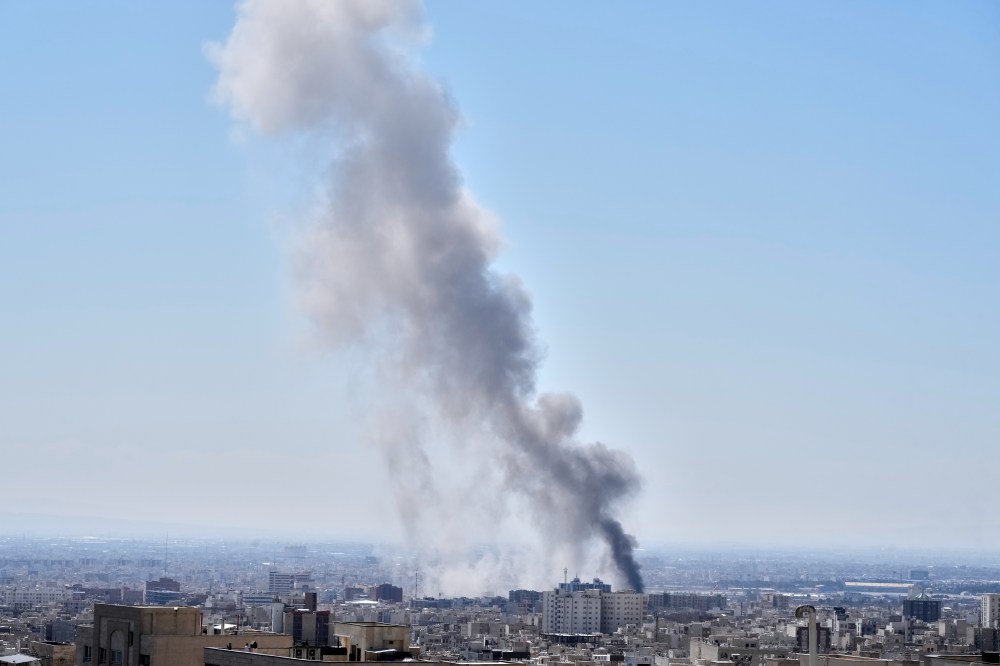
Few will be saddened by their deaths, but we should mourn the many civilians, including children, whose lives have reportedly been lost, both during and after the weekend’s attacks. And we should be gravely concerned that the conflict will continue, and perhaps even escalate, at the cost of even more lives.
Given that likelihood, the question that must now be determined is what happens next over the coming days and weeks. The answer is far from clear. On Friday night, U.S. President Donald Trump said the attack’s objective was regime change. “Now is the time to seize control of your destiny,” he told Iranians. “This is the moment for action. Do not let it pass.”
On Saturday, however, the U.S. ambassador to the United Nations, Mike Walz, told the UN Security Council that the strikes on Iran were intended to dismantle its ballistic missile capabilities, degrading its naval assets from being used to destabilize international waters, and disrupt the machinery that arms proxy militias. He emphasized that the aim of the attacks is to ensure that “the Iranian regime can never, ever threaten the world with a nuclear weapon.”
Other U.S. officials claimed yesterday that the Trump administration had information that Iran was preparing to potentially launch pre-emptive missile strikes against American targets. That assertion is denied by other U.S. sources, however, who say there was no evidence Iran planned to strike U.S. forces or assets first, nor that it even possesses missiles capable of reaching the U.S.
The justification for the timing of the attacks is the subject of debate, but there is no dispute that the Iranian regime posed an ongoing danger to world peace, both directly and through the many dangerous proxies, including terrorist groups, that it funded. We agree with UN Secretary General António Guterres, however, who told the Security Council on Saturday that the American and Israeli attacks created the risk of “igniting a chain of events that no one can control in the most volatile region of the world.”
Those events include the hundreds of missiles and drones that Iran has launched throughout the region in retaliation, along with the catastrophic impact the strikes are already having on the world’s oil markets and the global transportation network.
That will likely cause even more severe harm to the broader worldwide economy, including manufacturing and both food costs and supply.
That brings us back to the words of Machiavelli, set out above. Even if there is some rationale for the attack, what is the plan and timeline for bringing the conflict to an end? What will the reality be in the Middle East when that happens? A 2021 report by the Harvard University Kennedy School pointed out that “the shortcomings of the U.S. war on terror policies over the last twenty years have repeatedly prevented the U.S. from achieving its envisioned outcomes of defeating terrorism and reshaping fragile regions in its own image.”
Five years later, those words remain true. Trump may assume that Iranians will rise up, take control of their government and set their nation on a more peaceful and productive path. His assumption fails to acknowledge that while the attacks may have killed off the top level of Iranian leadership, the next group will likely share the same ideology and objectives as their predecessors.
What is urgently needed is a coherent, long-term plan aimed at helping Iranians build the progressive, democratic society so many of them appear to crave.
That plan does not appear to exist at the moment. Until it does, America will be reminded of the lessons that it should have learned in Iraq and Afghanistan — that it is far easier to start a war than it is to end one.
History
Updated on Monday, March 2, 2026 9:40 AM CST: Wording of a paragraph was edited post-publication for clarity.