
An opportunity for Canadian energy
Advertisement
Read this article for free:
or
Already have an account? Log in here »
We need your support!
Local journalism needs your support!
As we navigate through unprecedented times, our journalists are working harder than ever to bring you the latest local updates to keep you safe and informed.
Now, more than ever, we need your support.
Starting at $15.99 plus taxes every four weeks you can access your Brandon Sun online and full access to all content as it appears on our website.
Subscribe Nowor call circulation directly at (204) 727-0527.
Your pledge helps to ensure we provide the news that matters most to your community!
To continue reading, please subscribe:
Add Brandon Sun access to your Free Press subscription for only an additional
$1 for the first 4 weeks*
*Your next subscription payment will increase by $1.00 and you will be charged $20.00 plus GST for four weeks. After four weeks, your payment will increase to $24.00 plus GST every four weeks.
Read unlimited articles for free today:
or
Already have an account? Log in here »
It is often said that, in business, timing is everything. That may be the case for Canada, which appears poised to profit from the turmoil occurring elsewhere on the globe.
As the CBC reported yesterday, Canada is starting to receive inquiries from nations regarding Canadian energy companies’ ability to offset the looming oil and gas shortages caused by the conflict unfolding in the Middle East.
Canada’s energy minister, Tim Hodgson, told the CBC that “The world right now is feeling incredibly insecure as a result of this weekend … So we’ve already seen an uptick in inquiries about how quickly Canada can expand its clean and conventional energy exports.”
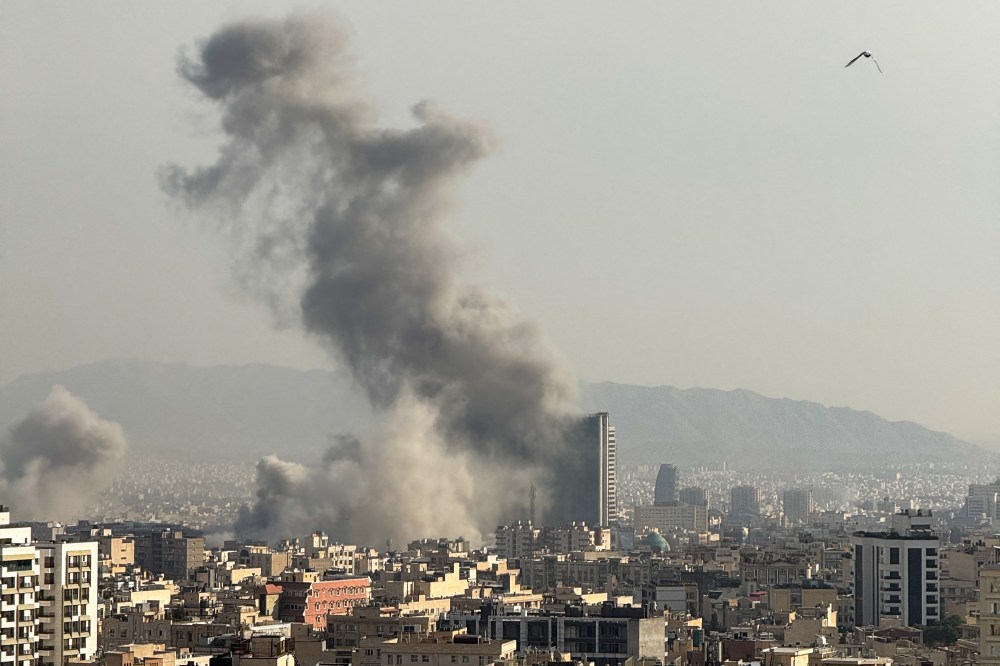
It’s easy to understand why those nations are calling. More than 20 per cent of the world’s oil supply moves via oil tankers through the Strait of Hormuz, but that route has been effectively closed as a consequence of last weekend’s attack of Iran by Israeli and U.S. forces, and by Iran’s retaliatory attacks upon several nations in the region.
That dangerous reality threatens the oil and natural gas supply for numerous nations throughout the world. The Financial Post reported yesterday that, as a consequence, oil and gas traders in several Asian nations are scrambling to find alternative, non-Middle Eastern sources of oil and liquefied natural gas (LNG).
For example, an NHK Japan report yesterday indicated that that nation obtains more than 90 per cent of its crude oil from the Middle East, but that it has just 250 days’ worth of oil reserves. Given that precarious position, Nikkei Asia projected yesterday that a prolonged conflict in the Middle East could cause serious harm to the Japanese economy, including a spike in the inflation rate and a drop in the nation’s gross domestic production level.
A similar impact could likely occur in several Asian nations, including South Korea, Taiwan and, most notably, China and India. The same is true in Europe, where several nations that had previously relied upon oil and gas from Russia and the Middle East are desperately searching for reliable new suppliers.
All that anxiety appears to create an ideal opportunity for Canada’s energy producers to sell their products to those markets and build the new, diversified trading relationships the Carney government is seeking. The problem, however, is that Canada presently has neither the production capacity nor the transportation infrastructure to get our oil and/or gas to those markets in the massive volumes that are required.
In short, a huge demand is there, but we lack the refineries, pipelines and ports that are needed in order to satisfy that need. Hodgson acknowledged that fact yesterday, saying that “You don’t change the amount of production of LNG or oil in days.”
He’s right, but the reality is that the demand for reliable, “no-drama” supplies of Canadian oil and gas will only continue to grow. That is because even if the Iran conflict ends today, nations that currently rely on Middle Eastern oil and gas now know how reckless it is to risk their respective economies by relying upon such a volatile region for their energy supply.
Viewed from that perspective, what is happening right now should be regarded as both an opportunity to create long-term economic growth via a new network of diversified trade relationships, and as an urgent call to action.
Mark Carney, Pierre Poilievre, Danielle Smith and Wab Kinew and others are right. The federal government, as well as the governments of the provinces and territories, must move faster to get our natural resources to Canadian tidewater, and from there to the many markets that are calling for Canadian energy products.
That means quickly building more pipelines and ports, including a revitalized Port of Churchill. And it means building more refineries and liquefied natural gas facilities, so that we can capitalize on the full, value-added potential of those products.
The opportunity for Canada to finally be an energy superpower has arrived. It’s time for our governments and corporate sector to seize that opportunity and, together, build a stronger, more secure and prosperous Canada.