
Should Manitoba consider ditching daylight time?
Advertisement
Read this article for free:
or
Already have an account? Log in here »
We need your support!
Local journalism needs your support!
As we navigate through unprecedented times, our journalists are working harder than ever to bring you the latest local updates to keep you safe and informed.
Now, more than ever, we need your support.
Starting at $15.99 plus taxes every four weeks you can access your Brandon Sun online and full access to all content as it appears on our website.
Subscribe Nowor call circulation directly at (204) 727-0527.
Your pledge helps to ensure we provide the news that matters most to your community!
To continue reading, please subscribe:
Add Brandon Sun access to your Free Press subscription for only an additional
$1 for the first 4 weeks*
*Your next subscription payment will increase by $1.00 and you will be charged $20.00 plus GST for four weeks. After four weeks, your payment will increase to $24.00 plus GST every four weeks.
Read unlimited articles for free today:
or
Already have an account? Log in here »
Saturday night will be the last time British Columbians change their clocks to “spring forward.” That is because the province has decided to permanently adopt daylight time. As a result, most of that province will no longer undergo the twice-yearly time change that most other Canadians experience.
With that decision, B.C. joins Saskatchewan and Yukon in rejecting bi-annual time changes, while Alberta Premier Danielle Smith announced earlier this week that her government is also considering following B.C.’s example.
A portion of eastern B.C., which is currently operating under “mountain time” — the time zone currently in place for cities such as Calgary and Edmonton, will not be impacted by the change. That creates the odd situation of a large portion of B.C. not having daylight time, while a smaller portion does. That will likely end, however, if Alberta also abandons the time changes.
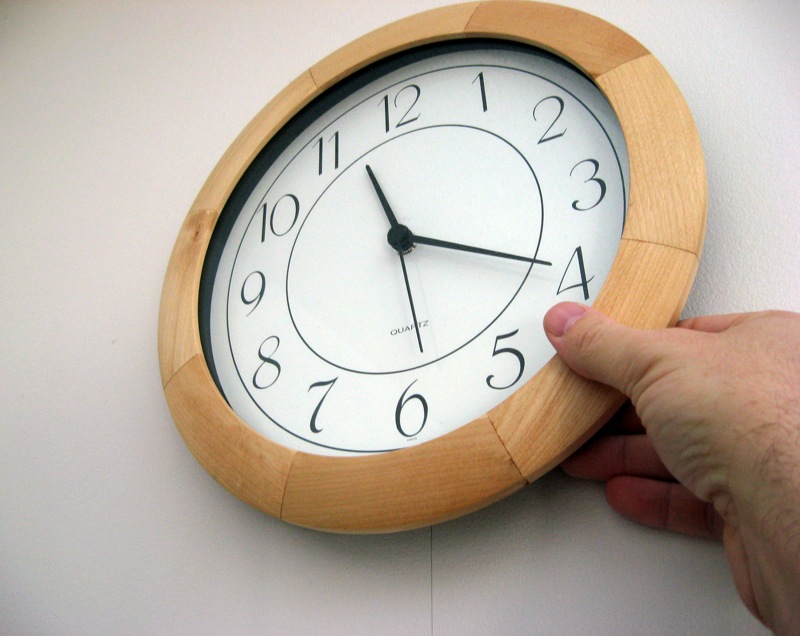
In defence of the new policy, B.C. Premier David Eby told reporters this week that changing the clocks causes “all types of problems,” including families losing sleep, increased car accidents and even dogs waking at the wrong time.
British Columbians appear to agree with him. A public engagement process conducted by the B.C. government in 2019 found that 93 per cent of respondents favoured switching to permanent daylight time. Sticking with permanent standard time was not a listed in that study as an option.
Despite the momentum in Western Canada moving toward switching to daylight time all the time, Manitoba should not expect our province to follow our neighbours’ example anytime soon.
Premier Wab Kinew was asked about that issue on Monday and responded with a terse “not right now.” He argued that the province has more important things to focus on at the moment and said that such a change would create the inconvenience of forcing travellers crossing the U.S. border into Manitoba to adjust their clocks.
Kinew’s position also appears to reflect the findings of a public consultation conducted by the NDP in 2019, which asked whether the province should stop springing forward to daylight time in March and falling back to standard time in November. He told reporters the study found that “Some people feel really passionately about daylight savings time,” but “Other people are just, like, ‘We’re already committed to the status quo.’”
That position may have reflected the mood of Manitobans six years ago, but it appears to be contrary to the science of the situation. A recent study by the Canadian Sleep Society concluded that switching to daylight time each spring causes “circadian misalignments,” and recommended that DST be eliminated in favour of permanent standard time. It associated standard time with “maintaining optimal sleep” and “optimal alignment of the human circadian clock.”
Similarly, a 2024 study published by the National Institutes of Health found that switching to DST each spring had a negative impact on physical and mental health throughout the DST period. It concluded that “The ideal practice for better sleep and harmony with the internal biological clock would be permanent ST.” It added that “In the long term, it should even be more important for the global health of Canadians with a potential reduction in burden of illness.”
Finally, a 2025 report by Forbes Magazine concluded that switching to DST contributed to increased workplace errors, injuries and absenteeism, while a 2020 study by the American Academy of Sleep Medicine recommended that “the United States should eliminate seasonal time changes in favour of permanent standard time, which aligns best with human circadian biology.”
Based on those and several other studies, it appears that neither maintaining the status quo of switching our clocks every spring and fall, as Kinew favours, nor switching to permanent daylight time — as will occur this weekend in B.C. — would be as beneficial as simply choosing to stick with standard time year-round.
This issue obviously requires further study and consultation here in Manitoba, but one thing is clear: the decision of B.C.’s government to adopt permanent daylight time, combined with the potential for a similar decision to be made in Alberta, creates the momentum, if not the necessity, for a decision that works best for Manitobans.