
Promises, rhetoric won’t bring solutions
Advertisement
Read this article for free:
or
Already have an account? Log in here »
We need your support!
Local journalism needs your support!
As we navigate through unprecedented times, our journalists are working harder than ever to bring you the latest local updates to keep you safe and informed.
Now, more than ever, we need your support.
Starting at $15.99 plus taxes every four weeks you can access your Brandon Sun online and full access to all content as it appears on our website.
Subscribe Nowor call circulation directly at (204) 727-0527.
Your pledge helps to ensure we provide the news that matters most to your community!
To continue reading, please subscribe:
Add Brandon Sun access to your Free Press subscription for only an additional
$1 for the first 4 weeks*
*Your next subscription payment will increase by $1.00 and you will be charged $20.00 plus GST for four weeks. After four weeks, your payment will increase to $24.00 plus GST every four weeks.
Read unlimited articles for free today:
or
Already have an account? Log in here »
Manitoba’s partisan politicking has become so mired in sophistry and empty promises, we have to wonder if voters really buy the rhetoric that our political leaders are peddling these days.
An email from the Progressive Conservative caucus earlier this week that criticized NDP Premier Wab Kinew for not doing enough to deal with rising food inflation is a great example of how party sniping has become little more than political background noise.
In December 2023 — only a few months after the NDP came back into power in this province — Kinew made a rather unwise promise to Manitobans as he stood in Brandon’s Keystone Centre.
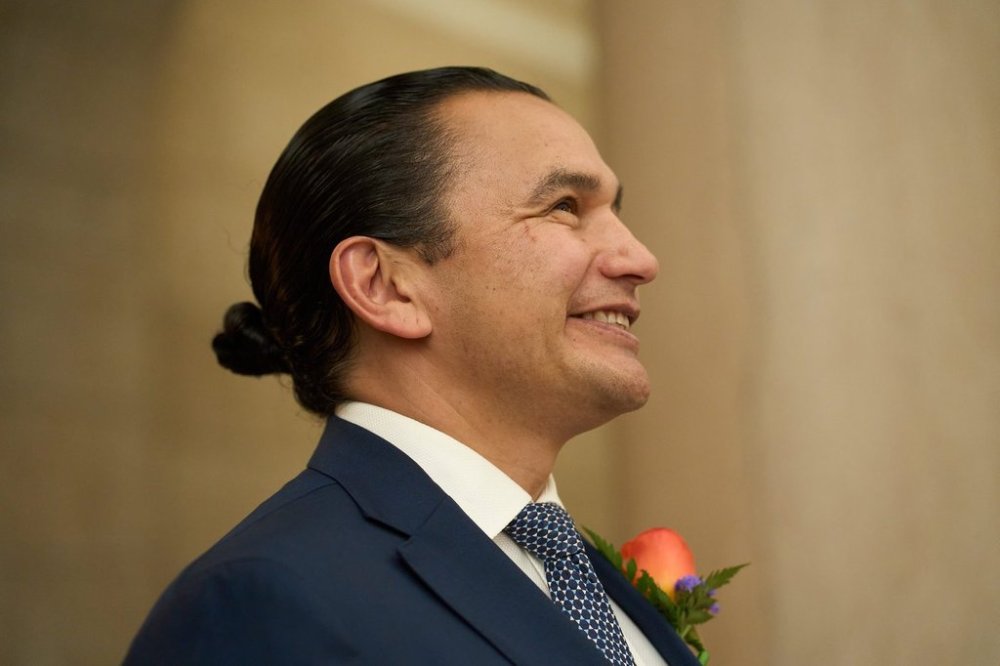
“You’ve heard the big chains, the billionaires owning these big chains talk about ‘Oh, it’s transportation costs that are the reason why grocery prices are going up. Well, guess what? We’re calling their bluff,” Kinew said, with a dollop of class warfare chest thumping. “Transportation costs will be reduced for the big grocery chains starting on Jan. 1, and if they don’t pass the savings to you, then we will take further action to follow up with that.”
As we noted before on this page, the premier’s comments had followed an election campaign promise to pause the 14-cent-per-litre provincial tax on gas, diesel and natural gas. While Kinew made good on the gas tax promise for the whole of 2024 — only to bring it back at a reduced rate at the start of 2025 — his government has had little influence on the cost of food at your local grocery store.
Not that he hasn’t tried to take on “big grocery” and its anti-competitive practices.
Last year, the NDP passed legislation to ban “restrictive covenants” used by big chains like Loblaws and Sobeys to block competitors from opening nearby stores — legislation prompted by a situation here in Brandon.
The NDP has also frozen the price of a carton of milk in Manitoba for all of 2026, as a means to keep dairy products affordable for families, even as costs rise for other items on store shelves. And just last month, the province launched a study aimed at keeping groceries affordable by looking at issues such as differential pricing.
According to The Canadian Press, the study is to further examine whether fees or taxes could be changed to reduce grocery bills and whether new restrictions are needed on expiration dates for loyalty points and gift cards.
Frankly, we remain skeptical about the power of the province to force grocery chains to lower prices for consumers in Manitoba, particularly as this provincial effort follows a far more comprehensive investigation by a federal committee last year, which resulted in the launch of a national and mandatory Grocery Code of Conduct in January of this year.
The national code was created to ensure fairness and transparency when it comes to the competitive practices of grocery chains. But as critics have noted, it remains to be seen whether it will be properly enforced.
From our standpoint, if the NDP could have forced private companies to lower their prices and trim their profit margins in Manitoba, they would have done it by now. That doesn’t mean that our politicians shouldn’t try to make life affordable for citizens. But making a promise you can’t possibly keep is cynical theatre.
And the proof is quite plain to see, as Manitoba had the second-highest inflation rate for store-bought food among the provinces — 5.9 per cent — during the 12-month period that ended in December.
That’s where the PC email from Tuesday comes in, as it blamed the Kinew government for rising inflation.
“While Wab Kinew has been premier, ground beef prices have shot up 39 per cent according to Statistics Canada,” wrote Midland MLA and PC finance critic Lauren Stone in a press release. “Everything is more expensive under the NDP.”
The Tory email asserted that Manitoba’s food inflation rate is up 6.1 per cent, that the cost of fresh or frozen beef is up by 16.8 per cent, children’s clothing is up 12.3 per cent (the highest rate in Canada, according to the PCs), and that coffee and tea is up 27.4 per cent, among other things.
Unsurprisingly, PC Leader Obby Khan called upon the NDP to “drastically reduce the tax burden” on Manitoba families so they could afford groceries.
While it’s true that Manitoba experienced large inflationary increases to grocery costs in 2025, the PC assertions are misleading. On top of rising input costs, strong demand and supply chain disruptions, beef prices are at record highs due to a severe, multi-year drought across Western Canada that has forced ranchers to liquidate herds.
Across the country, coffee prices have increased by an average of 31 per cent as of last December, due to droughts and volatile weather in coffee-producing nations, rising global demand, as well as the tariff dispute between the U.S. and Canada.
Certainly Kinew’s reinstatement of the gas tax, even at a lower rate, has had a measurable effect on inflation in this province, as we warned that it would. But it’s disingenuous to blame the NDP for a lack of effort.
Lack of good sense, perhaps.
But then, good sense is in such short supply these days, it must be costly too.