
Kinew gets his history wrong
Advertisement
Read this article for free:
or
Already have an account? Log in here »
We need your support!
Local journalism needs your support!
As we navigate through unprecedented times, our journalists are working harder than ever to bring you the latest local updates to keep you safe and informed.
Now, more than ever, we need your support.
Starting at $15.99 plus taxes every four weeks you can access your Brandon Sun online and full access to all content as it appears on our website.
Subscribe Nowor call circulation directly at (204) 727-0527.
Your pledge helps to ensure we provide the news that matters most to your community!
To continue reading, please subscribe:
Add Brandon Sun access to your Free Press subscription for only an additional
$1 for the first 4 weeks*
*Your next subscription payment will increase by $1.00 and you will be charged $20.00 plus GST for four weeks. After four weeks, your payment will increase to $24.00 plus GST every four weeks.
Read unlimited articles for free today:
or
Already have an account? Log in here »
Manitoba Premier Wab Kinew would be wise to familiarize himself with the history of the province he leads. According to a CBC report, the premier was asked last weekend to identify “the most important thing a Manitoba government has ever done.” His response was a surprise, to say the least.
The report quotes him as saying that his government’s decision to suspend the 14 cents per litre gasoline tax for all of 2024 was “the most important thing that a provincial government ever did in the history of Manitoba because it gave power back to the middle class and to the low-income folks.”
Really? That was the most important accomplishment by a Manitoba government in our province’s history?
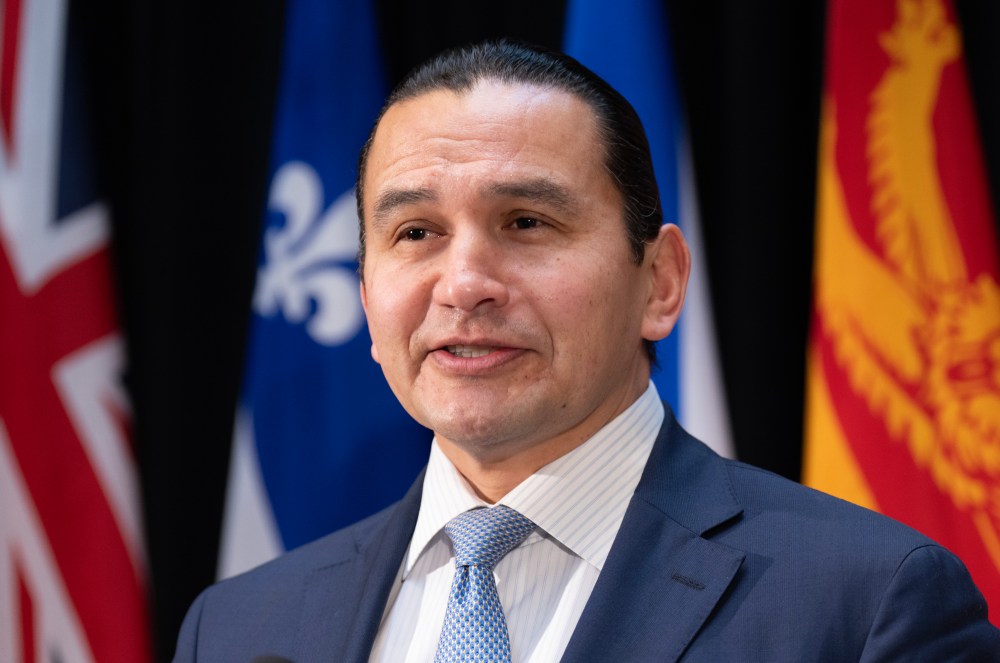
The premier is wrong. The gas tax holiday, as it was often characterized, was the target of criticism as a misguided, costly stunt that deprived provincial coffers of almost $350 million in revenue at a time when the province was facing a much larger than expected deficit of more than $1 billion.
The lost tax revenues, it was argued, could have been better used to reduce the budget deficit and/or applied toward addressing funding challenges in our beleaguered health and education systems. Beyond that, it was pointed out by many at the time, including on these pages, that the primary beneficiaries of the tax cut were not poor and middle-class Manitobans, many of whom could not even afford a car. Rather, it was owners of gas guzzlers and business fleets who saved the most money.
Even worse, the tax break was attacked for making car and truck travel less expensive which, it was argued, would result in higher greenhouse gas emissions. That, in turn, would increase the impact of global warming throughout the province, including severe wildfires and lower water levels in lakes, rivers and streams.
If the gas tax holiday wasn’t the most significant decision made by a Manitoba government, what was?
In our view, the vote by MLAs in 1916 to give the province’s women the right to vote and be elected to the Legislative Assembly stands out as the most important decision made by any Manitoba government throughout our province’s 156-year history.
The decision marked the culmination of many years of efforts by a committed group of Manitobans who were determined to have women treated as equals in the province’s democracy. The passage of the legislation here in Manitoba was a watershed moment in Canadian politics and society. It created momentum for the expansion of women’s rights across the country, as well as the passage of similar legislation by the federal government and each of the other provinces.
Other notable decisions by Manitoba governments of the past include the construction of the Winnipeg Floodway in the 1960s, the construction of hydro-electric projects in the province’s north, the expansion of the province to its current boundaries in 1912, and even the “Unicity” amalgamation of Winnipeg with surrounding municipalities in 1972.
If Kinew was determined to brag about the accomplishments of his own government, the decisions to search the Prairie Green Landfill site for the remains of Morgan Harris and Marcedes Myran, and to implement a provincewide school nutrition program, are each far more deserving of recognition than a short-term tax reduction.
In fact, if the premier believes populist measures like tax cuts should be lauded, he would have to admit that his temporary gas tax holiday was less significant in both impact and duration than the Pallister government’s decision to permanently cut the retail sales tax rate.
It is tempting to regard this issue as a “tempest in a teapot” and assume the premier would have given a more thoughtful answer if given more time, but the CBC report says that Kinew stands by his comments.
Does that mean Kinew places a higher value on tax cuts than women’s rights — a remarkable position for an NDP premier to take — or is this yet another case of a politician allowing his ego to cloud his judgment? Or, is he simply woefully uninformed about Manitoba’s history?
It’s hard to tell, but one thing is clear. Our Ontario-born premier would be wise to do some research that identifies the many things that have combined to make Manitoba the great province it is, because it isn’t tax cuts.