
A decision that crosses the line between church, state
Advertisement
Read this article for free:
or
Already have an account? Log in here »
We need your support!
Local journalism needs your support!
As we navigate through unprecedented times, our journalists are working harder than ever to bring you the latest local updates to keep you safe and informed.
Now, more than ever, we need your support.
Starting at $15.99 plus taxes every four weeks you can access your Brandon Sun online and full access to all content as it appears on our website.
Subscribe Nowor call circulation directly at (204) 727-0527.
Your pledge helps to ensure we provide the news that matters most to your community!
To continue reading, please subscribe:
Add Brandon Sun access to your Free Press subscription for only an additional
$1 for the first 4 weeks*
- Enjoy unlimited reading on brandonsun.com
- Read the Brandon Sun E-Edition, our digital replica newspaper
*Your next Free Press subscription payment will increase by $1.00 and you will be charged $20.95 plus GST for four weeks. After four weeks, your payment will increase to $24.95 plus GST every four weeks.
Read unlimited articles for free today:
or
Already have an account? Log in here »
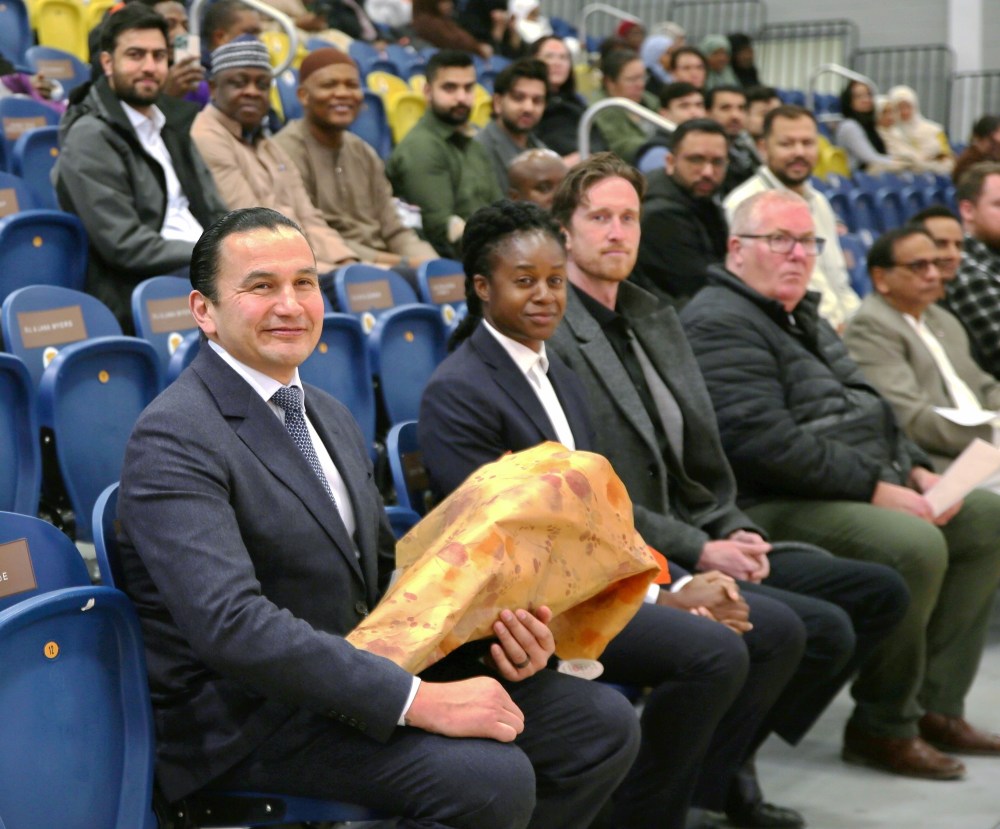
Manitoba’s NDP government is contributing $325,000 in taxpayer money toward the Brandon Islamic Centre’s proposed new worship building. The funding will reportedly go toward the cost of constructing a larger facility that will accommodate the centre’s growing congregation. The building, which will apparently be located just outside of the city, is expected to cost approximately $3 million.
The announcement of provincial support for the project comes after years of rejection at the local government level. In the summer of 2018, BIC representatives appeared before Brandon City Council to request the city’s assistance in finding a suitably sized piece of land for them to build a new facility on. They also discussed the idea of city council asking developers to allocate land for places of worship in future developments.
In response to those requests, this newspaper’s editors wrote (“Council must be careful how, where it spends money,” July 18, 2018) that Brandon is a better community for having the Islamic centre here, but governments at all level must be careful not to show favouritism when it comes to funding faith-based groups. They emphasized that if one religious organization receives financial help from the city, all religious organizations must be treated the same.
Former Sun columnist Kerry Auriat echoed those concerns, writing days later that “It is not the role of our city council to find low-cost property options for religious organizations, regardless of how important faith is in many of our lives. Showing preference for any religious organization is an absolute non-starter and should be rejected forthwith.”
The centre’s request for aid from the city appeared stalled at that point. Undeterred, the BIC requested in 2024 that the RM of Cornwallis donate a property it owned within the city for the proposed facility. That request apparently foundered because the RM had already contracted to sell the land to another party. The organization’s representatives subsequently met with provincial government representatives and, based upon last week’s announcement, appear to have finally found a receptive audience.
The government says the $325,000 in funding “is about helping a growing community access a larger space,” but it is fair to ask if our elected representatives have considered the ramifications of a government providing a direct contribution of public dollars toward the activities of a religious organization.
Unlike the United States, Canada does not have a constitutionally mandated separation of church and state. What we do have, however, is a long-held understanding that our governments do not provide direct financial support to religions of any denomination. That understanding, which has existed for decades if not since Confederation itself, is a key pillar of our secular society. Religious organizations are instead indirectly supported through charitable tax subsidies, property tax exemptions, as well as funding for schools, food banks, homeless shelters and security measures.
The province’s commitment to provide direct support for the purchase of land, or to cover a portion of construction costs for a religious worship facility, crosses the line between direct and indirect financial support and may well be unprecedented. The provision of such funding leads to a discussion of fairness and government neutrality with respect to religion. In that regard, the Supreme Court of Canada said more than a decade ago that “state neutrality is assured when the state neither favours nor hinders any particular religious belief.” The court has also said that secularism implies equal recognition and respect to all members of a community.
Given that judicial guidance, last week’s funding announcement may ultimately be viewed as a marked departure in the relationship between government and religious groups in this province and, in particular, in terms of governments’ rights and obligations to support those groups. By providing substantial funding to one religious group, the Manitoba government may now be required, as a matter of equity and neutrality, to provide similar funding to other religious groups who request it. Having said yes to one, they cannot say no to others.
Whether that new reality results in a flood of other religious organizations also requesting financial support remains to be seen. At a minimum, this funding commitment has set a troubling, and potentially divisive and costly, precedent that may prove difficult for future governments at all levels to ignore, let alone reverse.