
Bond-rating agencies send ominous signal
Advertisement
Read this article for free:
or
Already have an account? Log in here »
We need your support!
Local journalism needs your support!
As we navigate through unprecedented times, our journalists are working harder than ever to bring you the latest local updates to keep you safe and informed.
Now, more than ever, we need your support.
Starting at $15.99 plus taxes every four weeks you can access your Brandon Sun online and full access to all content as it appears on our website.
Subscribe Nowor call circulation directly at (204) 727-0527.
Your pledge helps to ensure we provide the news that matters most to your community!
To continue reading, please subscribe:
Add Brandon Sun access to your Free Press subscription for only an additional
$1 for the first 4 weeks*
*Your next subscription payment will increase by $1.00 and you will be charged $20.00 plus GST for four weeks. After four weeks, your payment will increase to $24.00 plus GST every four weeks.
Read unlimited articles for free today:
or
Already have an account? Log in here »
In a post-provincial budget opinion piece published two weeks ago (“Finding the facts on Budget 2026,” March 26), Sun columnist Deveryn Ross questioned the plausibility of the Kinew government’s plan to slash the deficit via a combination of much higher tax revenues and Manitoba Hydro’s return to profitability.
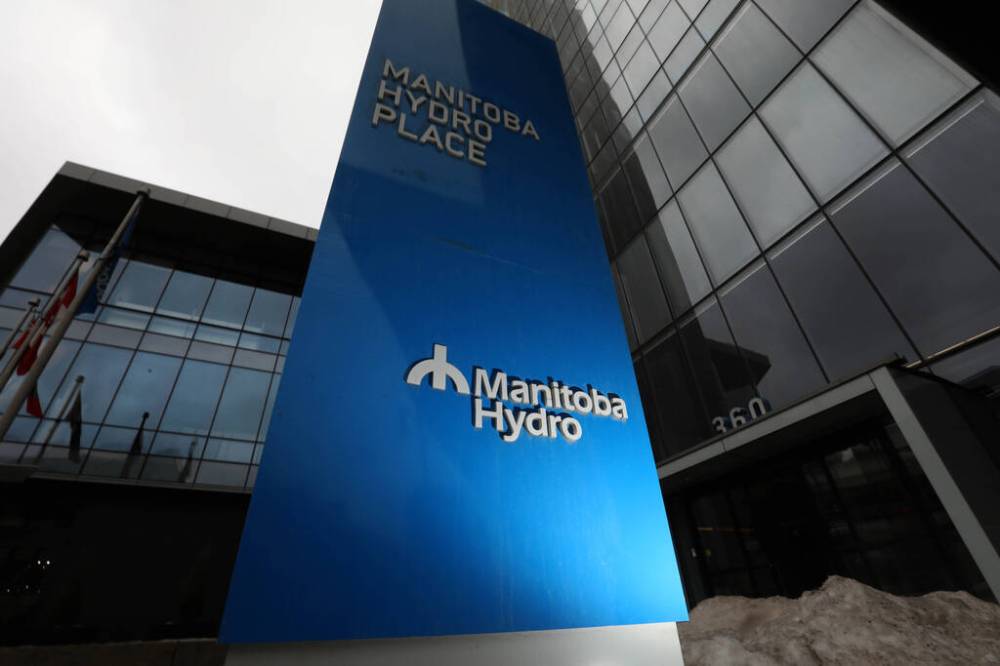
He challenged the budget’s assumption that Hydro will earn $140 million this year, given the reality that the utility has recently incurred large losses due to lower-than-normal water levels in the lakes and waterways that supply the water that powers Hydro’s electricity-generating turbines. He argued that the government is “recklessly relying on the weather” to protect the province from another larger-than-projected deficit.
Ross also noted that Budget 2026 anticipates that the government’s tax revenues will be almost $300 million higher than last year. He pointed out, however, that the assumption appears to ignore the economic turmoil unfolding in Canada, the U.S. and around the world, along with the fact the province fell $161 million short of last year’s tax revenue projection.
Those concerns were validated last Thursday, when the Moody’s bond-rating rating agency issued a report that also questions the province’s plan to slash the deficit this year and balance the budget next year. The agency said the province’s deficit-reduction plan is inconsistent with the government’s own economic growth projections, and specifically noted that the “rapid pace of projected fiscal improvement” set out in Budget 2026 is contradicted by the fact that the document estimates economic growth of less than two per cent for each of the next two years.
Moody’s was also skeptical about the budget’s projections for a quick return to profitability at Manitoba Hydro, saying that the budget’s lower deficit estimate for this year “relies in part on its expectation of a significant year-over-year improvement in Manitoba Hydro’s performance … However, recent forecast misses by the public utility indicate significant uncertainty around its fiscal contribution.”
Another major bond-rating agency, Morningstar DBRS, has also expressed reservations about the ambitious projections in Budget 2026. It said last week that the government’s plan to balance the budget next year “appears intact,” but cautioned “we believe that a softer economic outlook, extreme weather events, and trade disruptions could challenge the government’s ability to achieve its fiscal targets.”
If Finance Minister Adrien Sala is worried the budget’s projections might be too optimistic, he isn’t showing it. He acknowledges Manitoba is facing fiscal uncertainty due to the impact of tariffs, but insists the province has “a strong and resilient economy that’s very diverse and tends to fare well during these periods where we face headwinds.”
On Manitoba Hydro, he says that the profit projection “acknowledges that our reservoirs are low by historical standards, and then from there, builds a forecast based on average precipitation over the course of the year.” That sounds reasonable, but the two esteemed agencies are obviously concerned about the possibility that lower rainfall amounts may be the new normal in Manitoba. If that is the case, the government’s deficit projection for the current fiscal year, along with its hopes of balancing the budget next year, go out the window.
That possibility, and the specific concerns expressed by Moody’s and Morningstar, cannot be ignored. That is because the two agencies play an important role in setting the appropriate credit rating for bond issuers such as the Manitoba government, and that rating impacts the interest rate charged on the government’s debt. That, in turn, impacts the amount of debt serving costs paid by the province each year.
According to the budget document, the Kinew government plans to borrow almost $9 billion over the next three years, and refinance another $8.25 billion. That adds up to more than $17 billion, which translates into many millions of dollars in interest payments. The lower the credit rating, the higher the interest rate and debt payments. Most importantly, the more the province pays in debt costs — it paid almost $2.3 billion last year — the less money there is available for health care, education and other important needs.
Viewed from that perspective, the opinions of Moody’s and Morningstar are ominous. They may signal that a lower credit rating and higher debt payments are on the horizon for Manitoba.