
A better approach than gas-tax cuts
Advertisement
Read this article for free:
or
Already have an account? Log in here »
We need your support!
Local journalism needs your support!
As we navigate through unprecedented times, our journalists are working harder than ever to bring you the latest local updates to keep you safe and informed.
Now, more than ever, we need your support.
Starting at $15.99 plus taxes every four weeks you can access your Brandon Sun online and full access to all content as it appears on our website.
Subscribe Nowor call circulation directly at (204) 727-0527.
Your pledge helps to ensure we provide the news that matters most to your community!
To continue reading, please subscribe:
Add Brandon Sun access to your Free Press subscription for only an additional
$1 for the first 4 weeks*
- Enjoy unlimited reading on brandonsun.com
- Read the Brandon Sun E-Edition, our digital replica newspaper
*Your next Free Press subscription payment will increase by $1.00 and you will be charged $20.95 plus GST for four weeks. After four weeks, your payment will increase to $24.95 plus GST every four weeks.
Read unlimited articles for free today:
or
Already have an account? Log in here »
Less than two years after his year-long gas-tax holiday cost his government $340 million in lost revenues, 16 months after permanently lowering the rate for that tax, and just days after he characterized the 2024 gas-tax holiday as the most important decision ever made by a Manitoba government, Premier Wab Kinew is at it again.
During question period on Monday, as the premier was responding to the opposition’s questions regarding newly elected federal NDP Leader Avi Lewis, Kinew raised the idea of yet another fuel-tax cut. “All the member opposite can talk about is Avi Lewis,” he said, “but here in Manitoba, we’re focused on you. We cut the gas tax once. Maybe we’ll do it again.”
Neither the premier nor other representatives of his government have confirmed that another gas-tax cut is on the horizon, but he is not alone in floating the idea as a response to rapidly rising fuel costs. Last week, Conservative Party of Canada Leader Pierre Poilievre demanded that the federal Liberal government immediately suspend the fuel excise tax, clean fuel standard and GST surcharges from gas and diesel for the rest of the year. He estimates that doing so would save Canadian motorists approximately 25 cents per litre, while costing the federal government $5.25 billion in revenue.
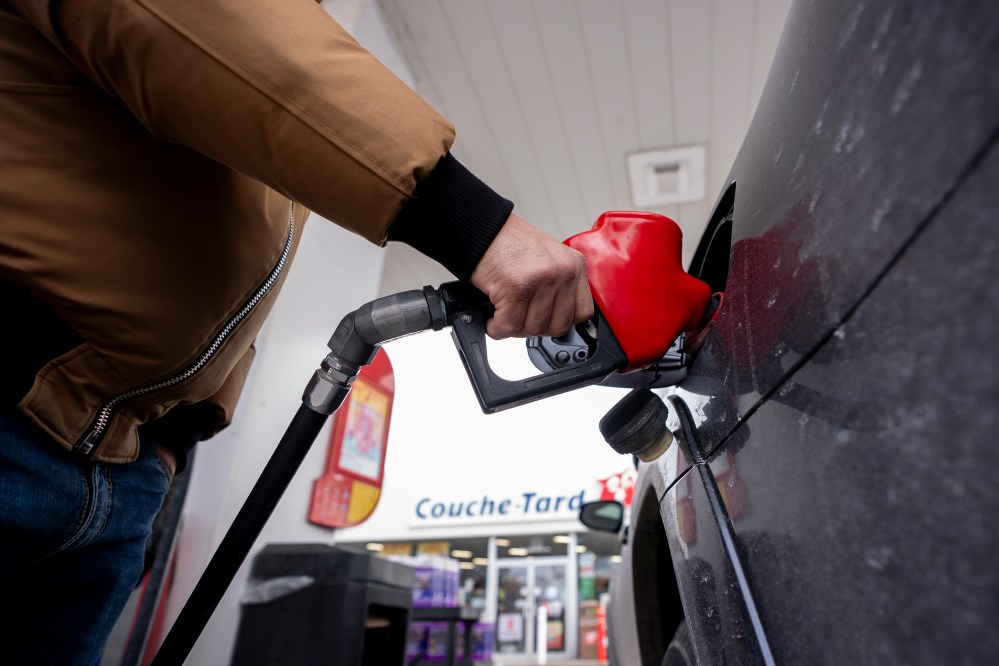
Similarly, Alberta NDP Leader Naheed Nenshi is demanding that Danielle Smith’s United Conservative government suspend that province’s gas tax and, as Poilievre has requested, that the federal government also suspend its fuel taxes. He complains that “Albertans are facing a cost-of-living crisis and the Alberta and federal governments are not helping.”
Gas-tax cuts may be seen by politicians as being the obvious and direct solution to rising gas prices, but at least two of the nation’s leading economists point to an alternative approach. In a Canadian Press report Wednesday, Desjardins deputy chief economist Randall Bartlett acknowledged that cutting federal taxes on gasoline would deliver relief to a large number of Canadians, but suggested that targeted relief through programs like the existing GST benefit could help low-income Canadians who are struggling the most with rising costs.
Those remarks were echoed in that same report by Olivier Gervais, Scotiabank’s director of forecasting and modelling. He told CP that mechanisms such as the GST benefit would help consumers vulnerable to higher prices at the pumps and at the grocery store. “They could take the extra money they’re getting from higher oil prices and redistribute that,” he said. That would be another lever that would be relatively easy to use.”
We agree. As the 2024 gas tax holiday demonstrated here in Manitoba, a simple gas-tax cut does not guarantee that those who need help the most will actually receive that help. Instead, we saw that people who could afford to drive gas guzzlers reaped the greatest benefit, while those who didn’t own a vehicle or rely on public transportation received little to no benefit. Even worse, gas stations often failed to lower their gas prices to reflect the full 14 cents per litre cut. Instead, they pocketed the difference.
On Wednesday, Prime Minister Mark Carney was asked about Poilievre’s request and responded that his government is working on a way to help consumers deal with the higher fuel costs. We suggest that he collaborate with provincial governments to craft a solution that quantifies the additional, unexpected revenues governments are earning because of higher oil prices and passes that windfall onto Canadian taxpayers who are feeling the pain the most. That could include consumers who are seeing their grocery bills rise due to higher transportation costs and farmers who are suddenly grappling with higher fuel and fertilizer costs.
The key to the success of such a plan is that it cannot be perceived as simply spraying money from coast to coast to coast. It must instead offer targeted relief aimed at helping the most vulnerable through the crisis, and it must be fully transparent as to how the relief is calculated and distributed.
Proceeding in that manner would be a far more thoughtful and effective approach than a simple, across-the-board tax cut. We encourage Kinew to work with Carney and Canada’s other premiers to make it happen.