
Liberals must deliver on great expectations
Advertisement
Read this article for free:
or
Already have an account? Log in here »
We need your support!
Local journalism needs your support!
As we navigate through unprecedented times, our journalists are working harder than ever to bring you the latest local updates to keep you safe and informed.
Now, more than ever, we need your support.
Starting at $15.99 plus taxes every four weeks you can access your Brandon Sun online and full access to all content as it appears on our website.
Subscribe Nowor call circulation directly at (204) 727-0527.
Your pledge helps to ensure we provide the news that matters most to your community!
To continue reading, please subscribe:
Add Brandon Sun access to your Free Press subscription for only an additional
$1 for the first 4 weeks*
- Enjoy unlimited reading on brandonsun.com
- Read the Brandon Sun E-Edition, our digital replica newspaper
*Your next Free Press subscription payment will increase by $1.00 and you will be charged $20.95 plus GST for four weeks. After four weeks, your payment will increase to $24.95 plus GST every four weeks.
Read unlimited articles for free today:
or
Already have an account? Log in here »
“This is a time to come together so we can build a Canada strong for all. That is how we will continue to govern. We will work with all parties and solicit all perspectives in Parliament … We will build a Canada that is not just strong, but good; not just prosperous, but fair; not just for some, most of the time, but for all, all of the time.”
— Prime Minister Mark Carney
With wins in all three byelections on Monday, Prime Minister Mark Carney’s Liberals now hold 174 of the 343 seats in the House of Commons. That gives them a razor-thin majority, but it dramatically changes both the political dynamics on Parliament Hill and the political reality across Canada.
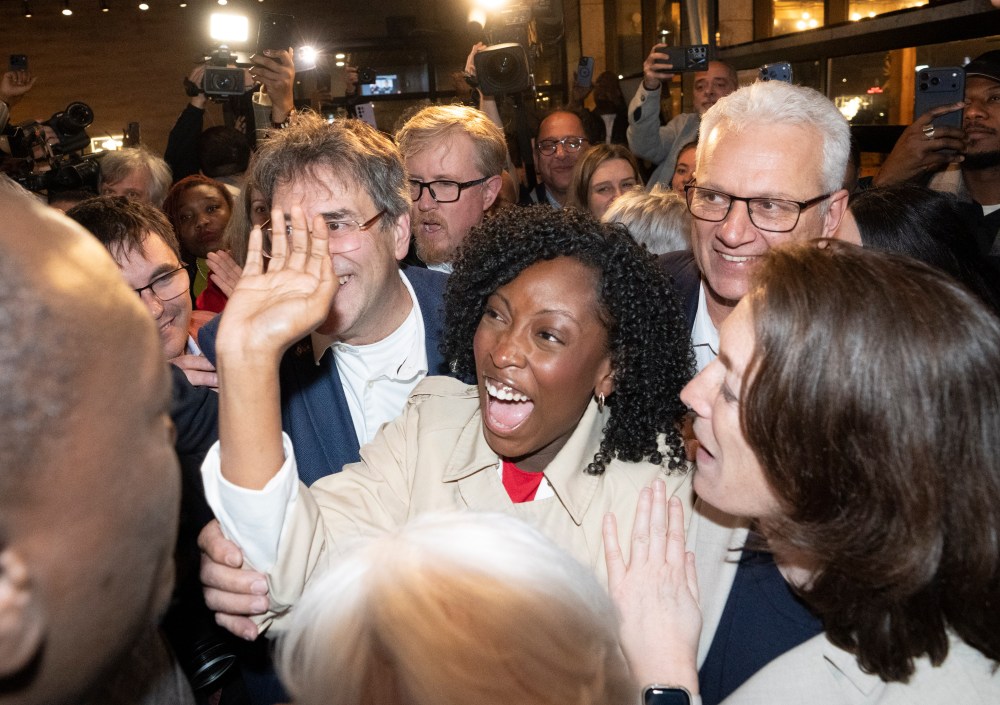
For starters, as long as the Liberals continue to hold that majority (no deaths, departures or defections), Carney and his team have until October 2029 to implement their agenda before the next general election must be held. That gives them time for their key priorities to bear fruit — for example, new international trade deals, the Major Projects Office and the Defence Industrial Strategy.
Monday night’s outcome also protects the Liberals from the prospect of being forced into an unplanned election. A minority government is in constant jeopardy of defeat via a non-confidence motion, which would then necessitate an election. The government now has enough MPs, however, to prevent such a motion from passing. Likewise, they have the votes they need to prevent a defeat on a money bill, which could also force an election, and their budgets and other spending plans are no longer vulnerable to opposition amendments that could derail government priorities.
That may sound like inside baseball, but the fact the Carney government now controls the electoral calendar is a massive luxury. It gives them breathing room to focus on their priorities and engage in long-term planning, along with the confidence they have time to implement those plans.
Beyond that, holding a majority of seats gives the Liberals control over the makeup of most House of Commons standing committees. That almost certainly means that opposition MPs will no longer be able to slow, let alone paralyze, the work of Parliament, as happened during the Trudeau (minority) government’s final term.
The new Liberal majority also impacts the other political parties in the House of Commons. For the Conservatives, it means they are able to avoid a general election this year, in which they would have likely lost dozens of seats. Having dodged that disaster, they have three years to decide whether they should stick with Pierre Poilievre as their leader and allow him to carry the party banner into the next election or, in the alternative, choose a new leader to rebuild and rebrand the party in preparation for the 2029 campaign.
Given that the Conservatives trail the Liberals by at least 10 points in most polls, that Carney is more than 20 points ahead of Poilievre on the “preferred prime minister” question, and that four members of the Tory caucus have already crossed the floor to join the Liberals (with rumours of more defections coming), Poilievre’s tenure as Tory leader appears to be on borrowed time.
For the NDP, the Liberal majority creates a risk that additional caucus members may defect to the Liberals, but it also gives newly elected NDP Leader Avi Lewis ample time to travel across the country, listening to Canadians and rebuilding his party. Similarly, the Bloc Québécois now has a three-year opportunity to remake its team and work to recover the support lost in the 2025 election. Under the current poll numbers, the Bloc would lose even more seats to the Liberals if an election was held now.
That brings us to the prime minister’s lofty words, set out above. For the past several months, Canadians have been telling pollsters they want a federal government that possesses the skill, temperament and values required to guide the nation at such a perilous time. They now believe they have that. Carney’s commitment to work with all Canadians, for all Canadians, has struck a receptive and hopeful tone among voters from coast to coast to coast, but it has also created expectations. With a majority now in hand, it is up to the prime minister and his colleagues to deliver on those expectations.