
Manitobans deserve some answers on nurse practitioners
Advertisement
Read this article for free:
or
Already have an account? Log in here »
We need your support!
Local journalism needs your support!
As we navigate through unprecedented times, our journalists are working harder than ever to bring you the latest local updates to keep you safe and informed.
Now, more than ever, we need your support.
Starting at $15.99 plus taxes every four weeks you can access your Brandon Sun online and full access to all content as it appears on our website.
Subscribe Nowor call circulation directly at (204) 727-0527.
Your pledge helps to ensure we provide the news that matters most to your community!
To continue reading, please subscribe:
Add Brandon Sun access to your Free Press subscription for only an additional
$1 for the first 4 weeks*
- Enjoy unlimited reading on brandonsun.com
- Read the Brandon Sun E-Edition, our digital replica newspaper
*Your next Free Press subscription payment will increase by $1.00 and you will be charged $20.95 plus GST for four weeks. After four weeks, your payment will increase to $24.95 plus GST every four weeks.
Read unlimited articles for free today:
or
Already have an account? Log in here »
With every region of Canada suffering from a doctor shortage, nurse practitioners are viewed by many as part of the solution to the problem. They are a category of nurses who have additional education and nursing experience, which enables them to autonomously diagnose and treat illnesses, order and interpret tests, prescribe medications and perform certain medical procedures.
They can play an important role in ensuring patients don’t fall through the gaps, and that is why the federal government directed in January of last year that Canada’s provincial and territorial health plans start covering the services of NPs, pharmacists and midwives who provide primary care to patients. Mark Holland, who was the federal health minister at the time, explained that he was “deeply concerned” about patients being charged for public health care, adding “That certainly isn’t in the spirit of the Canada Health Act, and this interpretation letter shuts that down.”
He set an April 1, 2026 deadline for the direction to be implemented and warned the provinces and territories that it would be enforced via deductions from federal health transfer payments if patients continued to be charged for medically necessary care. That deadline has now passed, however, and the CBC reported on Tuesday that Manitoba’s nurse practitioners are still not being paid via the province’s health plan.
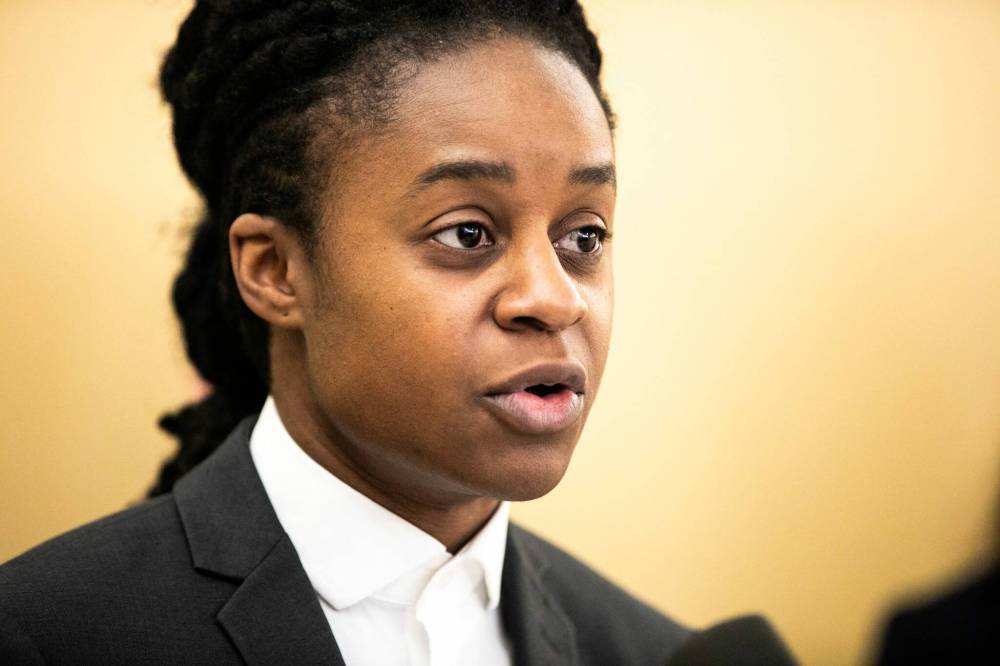
The report quotes Ashley Carruthers, CEO of the Nurse Practitioner Association of Manitoba, who says “It is unfortunate that the government does not value nurse practitioners to see or know that they have that ability to know where those gaps are and the services that they can provide for their patients.”
Manitoba is not the only province to experience this problem. The CBC also reported in late March that Ontario patients will likely have to wait another year for the new system to be implemented. That report suggests the delay in that province may be due to concerns voiced by the College of Family Physicians of Canada, which said it supports a single-payer, publicly funded health-care system offering universal access to essential medical services, but “family physicians are not replaceable … They are uniquely trained and trusted for major health concerns and replacing one role with another can create confusion and break care into pieces.”
In response, Valerie Grdisa, CEO of the Canadian Nurses Association, told the CBC that “We have to actually stop the turfism and protectionism and the diminishing of each other based on our entry-to-practice qualifications and build the right models of care.” She previously worked as an NP in hospitals and argues there is more than enough work to go around to meet the health-care needs of Canadians.
Here in Manitoba, a statement on the Doctors Manitoba website says “Doctors Manitoba believes public funding for health care should be directed to good quality care. That means connected and integrated team-based care that ensures physicians are part of the team, not fragmented and disconnected care where patients may fall through the cracks … [T]he pathway forward is using this framework to help expand team-based care in physician practices.”
That appears to suggest that Manitoba’s doctors believe nurse practitioners should only work under a doctor’s supervision, not independently. If so, it would impair the ability of NPs to reduce the impact of the province’s doctor shortage.
Does that explain why Manitoba is not following the federal direction to make NPs part of the province’s health plan? Are Manitobans caught in the middle of a turf war between health-care providers?
Manitoba Health Minister Uzoma Asagwara told the CBC the provincial government is complying with the federal direction, but NPs and patients say it isn’t. Asagwara says, “We know that nurse practitioners want to do more, not less, and so we’re going to keep this conversation going,” but this is neither a conversation nor a negotiation. The federal government has issued a clear directive that Manitoba isn’t following, yet the province won’t admit it is failing to comply, let alone provide the reasons why.
That’s unacceptable. Thousands of Manitobans do not have a family doctor, while many are paying out of pocket for care. Publicly funded nurse practitioners can help address the problem. The government must explain why it is standing in the way.