
A lethal situation that demands a response
Advertisement
Read this article for free:
or
Already have an account? Log in here »
We need your support!
Local journalism needs your support!
As we navigate through unprecedented times, our journalists are working harder than ever to bring you the latest local updates to keep you safe and informed.
Now, more than ever, we need your support.
Starting at $15.99 plus taxes every four weeks you can access your Brandon Sun online and full access to all content as it appears on our website.
Subscribe Nowor call circulation directly at (204) 727-0527.
Your pledge helps to ensure we provide the news that matters most to your community!
To continue reading, please subscribe:
Add Brandon Sun access to your Free Press subscription for only an additional
$1 for the first 4 weeks*
- Enjoy unlimited reading on brandonsun.com
- Read the Brandon Sun E-Edition, our digital replica newspaper
*Your next Free Press subscription payment will increase by $1.00 and you will be charged $20.95 plus GST for four weeks. After four weeks, your payment will increase to $24.95 plus GST every four weeks.
Read unlimited articles for free today:
or
Already have an account? Log in here »
According to Health Canada data, opioid-related deaths across the country fell by a startling 26 per cent during the 12-month period ending in September 2025. That followed a 17 per cent drop from 2023 to 2024. The general trend in Canada mirrors what has happened in the United States, where overdose fatalities fell by approximately 17 per cent nationally between 2023 to 2024.
The steep decline in overdose deaths is good news, but scientists and policy-makers in both nations are struggling to identify the precise reasons why it is happening. For example, why did fewer deaths occur in some jurisdictions, but not others? Why were deaths down in the western half of Canada in 2024, yet higher in the eastern half?
Some experts suggest the overall decline is due to the greater availability of naloxone medication in many provinces, along with the increased presence of addiction and harm reduction services. Others speculate that users may be becoming more educated and careful in their usage of the drugs, reducing their risk of death. It is also possible that law enforcement’s stepped-up war on fentanyl has caused shortages of that drug, resulting in it being mixed with other less-lethal drugs, thus resulting in fewer deaths.
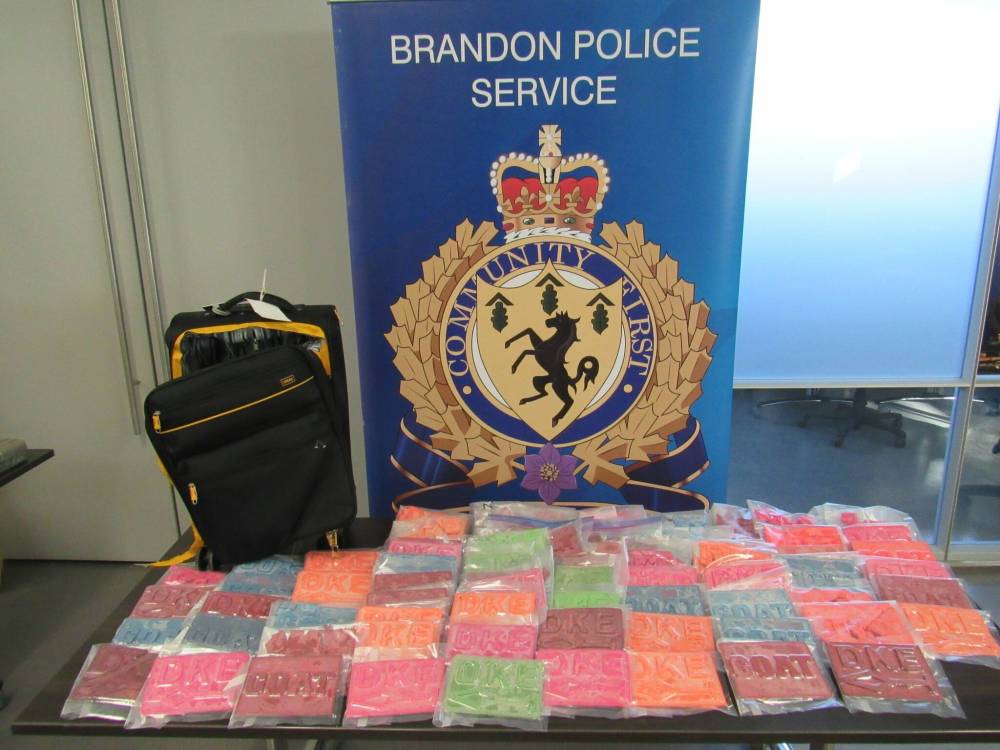
Fentanyl is displayed following arrests made in January 2024. Recent overdoses in Winnipeg are concerning and the option of calling a public health emergency should be considered. (Submitted)
Each of those factors may have contributed to the overall drop in overdose-related deaths, but some experts also suggest that fatalities are down because many of the opioid drug users who were at the greatest risk of dying from overdoses have already died.
Given the steep decline in the deaths over the past three years, what are we to make of what has happened in Winnipeg over the past month? It was reported yesterday in our sister paper, the Winnipeg Free Press, that at least 15 people have died in the city over the past two weeks due to drug toxicity. One organization said it had dealt with four overdoses on Monday alone.
Jamil Mahmood, the Main Street Project’s executive director, told the Free Press that the Easter weekend averaged six overdoses per day, and “This is the worst spring I’ve ever seen in my time, my work, in terms of the number of overdoses that we’re reversing.”
A CBC report yesterday suggested the increase in deaths may be due to the local drug supply having become contaminated with drugs that may be harder to detect with testing, along with other lethal drugs whose effects cannot be reversed by naloxone.
Some will suggest this is a Winnipeg problem that is not really relevant to Brandon, but drugs in Winnipeg eventually end up here, putting local lives at risk. Given that reality, what should the response be to the situation?
Beyond advising drug users to have their drugs tested before using them, front-line workers in Winnipeg are demanding that the provincial government declare a public health emergency to confront the problem. Mahmood agrees, saying that “I can’t think of any other situation where we would not call a public health emergency when 30 people per month are dying.”
He is also calling for more drug checking, longer hours for Sunshine House’s mobile overdose prevention vehicle in Winnipeg, clearer public communication and progress on opening a supervised consumption site in the city. Sunshine House said in a statement that harm-reduction efforts have helped, but supply disruptions have led to more unpredictable and potent drugs. They argue a supervised consumption site would improve safety by enabling people to use their drugs under the supervision of professionals, and to have them tested beforehand.
Addictions Minister Bernadette Smith says the province is monitoring the situation, but points out that the province’s chief public health officer decides whether to declare a public health emergency. That may be technically true, but it is no excuse for inaction on the part of the minister and her government.
Despite the recent success in reducing overdose deaths, lethal drugs now available on the streets are undoing that progress. Manitobans are dying at a startling rate. The situation demands a response that goes beyond the addictions minister “monitoring the situation.” If the declaration of a public health emergency would help reverse the trend, it should be considered.