
A half-baked idea for affordability
Advertisement
Read this article for free:
or
Already have an account? Log in here »
We need your support!
Local journalism needs your support!
As we navigate through unprecedented times, our journalists are working harder than ever to bring you the latest local updates to keep you safe and informed.
Now, more than ever, we need your support.
Starting at $15.99 plus taxes every four weeks you can access your Brandon Sun online and full access to all content as it appears on our website.
Subscribe Nowor call circulation directly at (204) 727-0527.
Your pledge helps to ensure we provide the news that matters most to your community!
To continue reading, please subscribe:
Add Brandon Sun access to your Free Press subscription for only an additional
$1 for the first 4 weeks*
- Enjoy unlimited reading on brandonsun.com
- Read the Brandon Sun E-Edition, our digital replica newspaper
*Your next Free Press subscription payment will increase by $1.00 and you will be charged $20.95 plus GST for four weeks. After four weeks, your payment will increase to $24.95 plus GST every four weeks.
Read unlimited articles for free today:
or
Already have an account? Log in here »
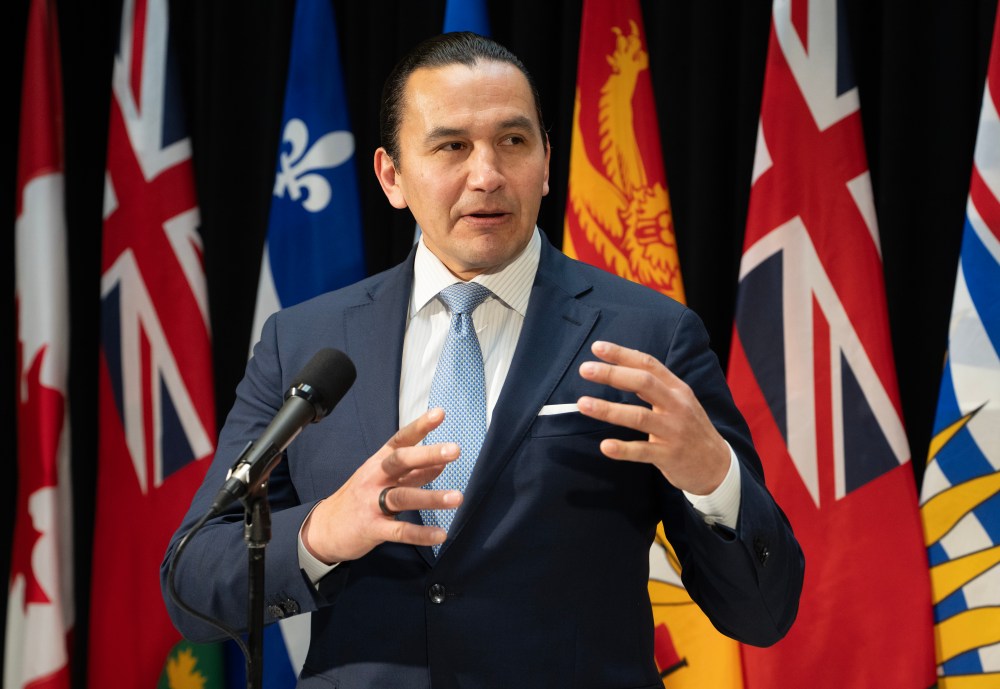
Premier Wab Kinew’s plan to remove the provincial sales tax from prepared meals, salads, snacks, candy and soft drinks sold at grocery stores is, by most reasonable measurements, a half-baked idea.
Included in the 2026-27 provincial budget, Kinew claimed the PST exemption was an affordability measure to help Manitoba families deal with the still-rising price of food. Instead, the proposal represents a bad idea introduced by a government that has admitted it does not fully understand the dynamics of retail food. The intention itself is problematic.
Broadly applied “affordability” measures — in other words, ones that are offered to all citizens regardless of income level — rarely help the people who most need it. Removing tax from any retail commodity provides the biggest dividend to those wealthy enough to make bigger and more frequent purchases; those who cannot afford to buy things get no help.
Apart from the concern that it won’t really help the people most ravaged by inflation, another significant problem arises: why is the PST exemption only being offered to items bought at grocery stores?
Restaurants and convenience stores were left out of Kinew’s plan, even though both sell all the things the NDP government wanted to make more affordable. When this was pointed out to the premier, he was at a loss for a salient explanation.
First, Kinew said he would be willing to extend the PST cut to smaller, “mom and pop” grocery stores, but noted there is no legal definition of what qualifies as a “grocery” retailer and what would be better described as a convenience store.
That is tantamount to admitting his government simply did not give this idea enough thought.
To make matters more muddled, Kinew then said he wasn’t interested in extending the breaks to convenience stores because the prepared foods offered there were less healthy. Kinew’s decision to make “healthy” a criterion for a PST exemption was confusing given that he was taking the tax off a whole range of unhealthy foods such as soft-drinks and candy.
Finally, we come to the issue of takeout.
Still reeling from the impact of the pandemic, restaurant owners and their lobby groups have rightly asked why the PST isn’t being removed from takeaway meals. Many restaurants earn important income from takeout and not including them in the tax exemption seems either cruel or incredibly short-sighted.
Of course, including restaurants would create a whole range of other problems for the NDP.
If you included takeout meals from a formal restaurant, you’d likely have to include fast-food outlets, food courts at malls and — to be completely fair-minded — food served at concerts and sporting events.
The very limited measure introduced by Kinew for this year’s budget is already expected to cost $32 million in lost revenue on an annual basis. If you expand it to smaller grocery stores, convenience stores and restaurants of all sizes and shapes, you would be blowing a huge hole in the provincial treasury at a time when government is struggling to get its deficit under control.
Put it all together, and this is the worst kind of government policy: a poorly conceived and designed tax break that is being unevenly applied at the retail level and which could be both very costly to government and very ineffective at helping the people most impacted by inflation.
If the Kinew government cannot walk back this deeply flawed idea, then it should apply it more fairly for all businesses that sell food. And then hope that somehow it can afford this act of misplaced generosity.