
Recommendations merely partisan politics run amok
Advertisement
Read this article for free:
or
Already have an account? Log in here »
We need your support!
Local journalism needs your support!
As we navigate through unprecedented times, our journalists are working harder than ever to bring you the latest local updates to keep you safe and informed.
Now, more than ever, we need your support.
Starting at $15.99 plus taxes every four weeks you can access your Brandon Sun online and full access to all content as it appears on our website.
Subscribe Nowor call circulation directly at (204) 727-0527.
Your pledge helps to ensure we provide the news that matters most to your community!
To continue reading, please subscribe:
Add Brandon Sun access to your Free Press subscription for only an additional
$1 for the first 4 weeks*
- Enjoy unlimited reading on brandonsun.com
- Read the Brandon Sun E-Edition, our digital replica newspaper
*Your next Free Press subscription payment will increase by $1.00 and you will be charged $20.95 plus GST for four weeks. After four weeks, your payment will increase to $24.95 plus GST every four weeks.
Read unlimited articles for free today:
or
Already have an account? Log in here »
The House of Commons standing committee on access to information, privacy and ethics has issued a lengthy report to Parliament that recommends the federal Conflict of Interest Act be amended to force Prime Minister Mark Carney and future Canadian prime ministers to divest their investment portfolios within 60 days of assuming office, as opposed to merely placing those assets them in a blind trust.
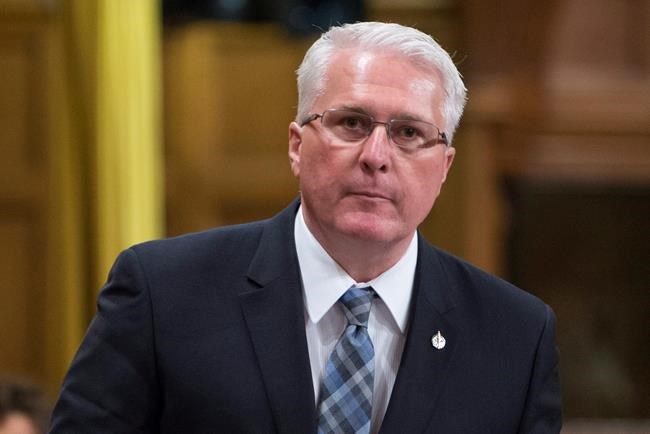
Committee chair John Brassard, a Conservative MP, told reporters on Thursday that “The committee considers that the act should be amended to establish separate rules for the position of prime minister because individuals with greater decision-making authority should be held, and must be held, to a higher standard.”
The report, which is not binding on the government, reflects the opinion of the opposition MPs on the committee, who currently hold the majority of committee seats. The Liberal MPs on the committee, who hold a minority of committee seats, have issued a dissenting report of their own. The two documents have re-ignited a long-simmering debate over the adequacy of measures intended to ensure that elected officials, high officials in particular, are free of conflicts of interests that could influence their decisions while serving in government.
Those on the “divestment” side of the argument contend that elected officials have an understandable interest in ensuring the value of their personal holdings are not harmed by their decisions. They contend that a blind trust isn’t genuinely “blind,” given that public office holders know what their assets were when they were turned over to a trustee for management.
Others argue, however, that decades of evidence from all over the world shows that blind trusts have been proven to be effective in ensuring that public officials make their decisions free of conflicts of interest. On that point, the Liberal MPs who authored the dissenting report claim that the experts who appeared before the committee testified that blind trusts were effective.
Beyond that, there is also the compelling argument that forcing individuals to sell their assets as a condition of holding elected office, and potentially exposing them to significant tax liability arising from those dispositions, is unfair and would absolutely dissuade good, qualified candidates from seeking elected office.
These arguments, both for and against blind trusts, are far from hypothetical. The opposition Conservatives raised the issue numerous times during last year’s federal election campaign, arguing that Carney’s interests in Brookfield Asset Management and other businesses would create an irreconcilable conflict of interest that could not be negated via a blind trust. The PM placed those assets in such a trust last year, however, and also has a “conflict of interest screen” that prevents him from being involved in any decisions that could affect those assets. The opposition MPs on the ethics committee say that’s not good enough, however. The disagreement has obviously not gone away, and this latest report repeats the assertions from last year’s campaign.
We agree with Brassard that Canada’s prime ministers must held to a very high ethical standard. We disagree, however, with his committee’s conclusion that Carney and all future prime ministers should be forced to sell their assets, and suffer the tax consequences of doing so, in order to be allowed to serve in an office they have been elected by Canadians to hold. Such an approach would be excessive, punitive and anti-democratic.
In our view, blind trusts are an adequate, internationally recognized mechanism to manage potential conflicts of interest involving public officials. That is because the official has no control over, nor information regarding, the management of the assets placed into the trust. We also note that Conservative MPs never attempted to force Stephen Harper to divest his holdings during the decade he served as prime minister, nor are they pushing for premiers such as Danielle Smith, Scott Moe, Doug Ford and Tim Houston to be subject to similar rules.
Viewed from that perspective — and given the reality that the opposition MPs are about to lose control of most Parliamentary standing committees, now that the Liberals hold a majority in the House of Commons — it is difficult to regard the recommendations contained in this latest report as anything but another sad example of partisan politics run amok. We encourage Carney and his government to ignore the recommendations and carry on with their work.