
Public transit worth a larger investment
Advertisement
Read this article for free:
or
Already have an account? Log in here »
We need your support!
Local journalism needs your support!
As we navigate through unprecedented times, our journalists are working harder than ever to bring you the latest local updates to keep you safe and informed.
Now, more than ever, we need your support.
Starting at $15.99 plus taxes every four weeks you can access your Brandon Sun online and full access to all content as it appears on our website.
Subscribe Nowor call circulation directly at (204) 727-0527.
Your pledge helps to ensure we provide the news that matters most to your community!
To continue reading, please subscribe:
Add Brandon Sun access to your Free Press subscription for only an additional
$1 for the first 4 weeks*
- Enjoy unlimited reading on brandonsun.com
- Read the Brandon Sun E-Edition, our digital replica newspaper
*Your next Free Press subscription payment will increase by $1.00 and you will be charged $20.95 plus GST for four weeks. After four weeks, your payment will increase to $24.95 plus GST every four weeks.
Read unlimited articles for free today:
or
Already have an account? Log in here »
“Will the premier reverse course and start to repair some of the damage that he’s done with his broken promises from the last election, and instead … restore the 50-50 funding arrangement for transit in our province?”
— Wab Kinew, March 12, 2018
“We need to restore funding to transit, 50-50 funding, we need to do that, and we need to ensure that we allow our municipalities to move toward functional transit so people can … rely on buses being there when they need to be there.”
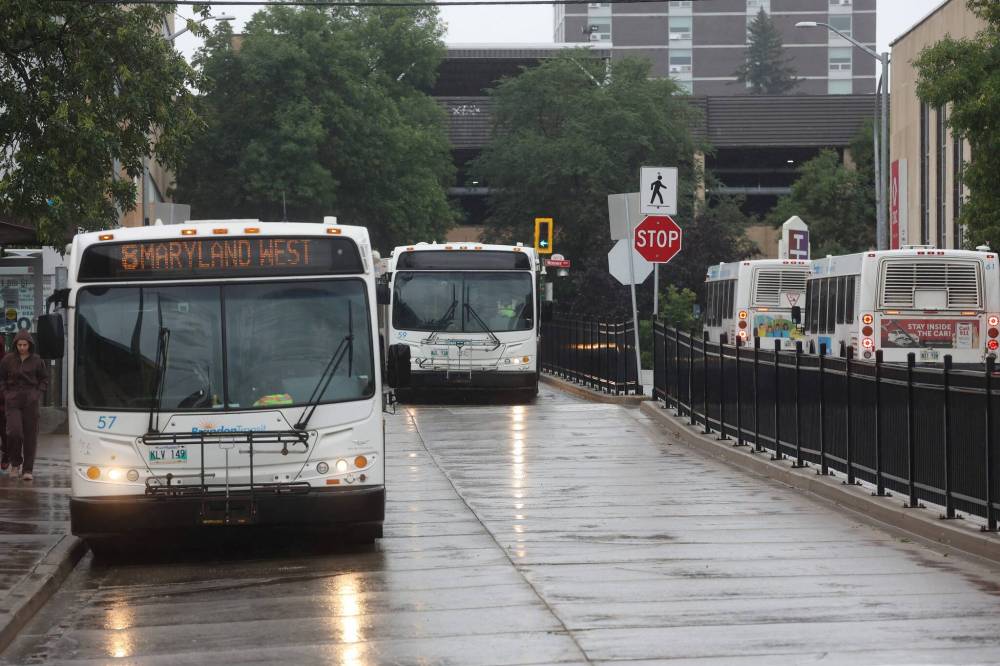
Brandon Transit buses cue at the downtown terminal. (Tim Smith/The Brandon Sun files)
— Adrien Sala, April 5, 2022
If the Manitoba government was serious about reducing our province’s environmental footprint and improving the lives of residents who face financial challenges, it would restore the 50-50 transit funding formula for cities in this province.
Last Saturday, more than 100 people stood on the stairs of the Manitoba legislature to call on the province to better support public transit by restoring dedicated funding.
The rally, which was organized by Climate Action Team Manitoba and the local Amalgamated Transit Union that represents transit drivers in Winnipeg and Brandon, called for a restoration of the 50-50 transit-funding agreement that would see increases in city transit spending split dollar-for-dollar with the province.
The previous funding formula was scrapped by the Progressive Conservative government in 2017, leaving growing cities like Winnipeg and Brandon to eat the costs of maintaining their respective transit systems.
“We have never really recovered from that spending loss,” Brandon Mayor Jeff Fawcett told the Sun this week. Fawcett joined a chorus of municipal and environmental leaders who are calling on the province to restore equal transit cost sharing with Manitoba cities such as Winnipeg and Brandon — but also for Thompson, Flin Flon and Selkirk as well.
Currently, the province provides just over $2 million toward Brandon Transit, an amount that has not changed since 2016. However, the costs of operation have risen substantially in the intervening years. Council approved spending more than $5.2 million in operating costs for Brandon Transit this year.
Fawcett says the city has been forced to cut services over the years, reducing the number of buses on some routes, and increasing the costs charged to riders.
A restored 50-50 funding arrangement would allow Brandon to spend more money on transit-related programs, or to invest in new equipment, routes and more drivers to accommodate planned growth, according to Greg Brown, the city’s acting director of transportation services.
In Winnipeg’s case, that city will spend about $128.6 million on transit operations this year, an amount forecast to increase to $133.8 million in 2027, not counting fare revenue. Like Brandon, provincial operating support for Winnipeg Transit has remained flat — at about $42 million since 2017.
All governments make choices about what programs they support, and what efforts they make to improve the lot of those who live and work in our communities. This government has seen fit to waste tax dollars on unhelpful populist promises instead of making obvious investments in essential infrastructure.
Kinew’s decision to suspend the Manitoba provincial gas tax is a prime example — that cut cost the province nearly $342 million in lost revenue, which could have instead been funnelled to cities like Winnipeg and Brandon to improve transit services.
And now the NDP government is trying to curry favour with voters by removing the seven per cent provincial sales tax from prepared food this coming July. This move will provide a very shallow benefit of a few dollars per household per month, rather than a targeted program that helps those who need it most. There are more pressing needs in this province than a tax cut or a gas tax holiday.
For many Manitobans who live in urban centres — particularly students, seniors, low-income residents and people with disabilities — public transit is their primary connection to jobs, education, health care and daily life. When buses are unreliable, those residents pay the highest price.
The province often talks about reducing greenhouse gas emissions. Transportation is one of the largest contributors to emissions in Manitoba. If government genuinely wants fewer cars on the road, it must provide people with realistic alternatives.
Our government needs to do more than offer token cost-saving measures that provide little benefit for ordinary Manitobans. Properly funding transit services in this province may not be as flashy, but it will be far more helpful — both for the environment, and household finances.
» The Brandon Sun and Winnipeg Free Press