
Indigenous treaty rights meet Alta. separation fight
Advertisement
Read this article for free:
or
Already have an account? Log in here »
We need your support!
Local journalism needs your support!
As we navigate through unprecedented times, our journalists are working harder than ever to bring you the latest local updates to keep you safe and informed.
Now, more than ever, we need your support.
Starting at $15.99 plus taxes every four weeks you can access your Brandon Sun online and full access to all content as it appears on our website.
Subscribe Nowor call circulation directly at (204) 727-0527.
Your pledge helps to ensure we provide the news that matters most to your community!
To continue reading, please subscribe:
Add Brandon Sun access to your Free Press subscription for only an additional
$1 for the first 4 weeks*
- Enjoy unlimited reading on brandonsun.com
- Read the Brandon Sun E-Edition, our digital replica newspaper
*Your next Free Press subscription payment will increase by $1.00 and you will be charged $20.95 plus GST for four weeks. After four weeks, your payment will increase to $24.95 plus GST every four weeks.
Read unlimited articles for free today:
or
Already have an account? Log in here »
It was more than a little ironic that the rogue Alberta separatists who are attempting to trigger a binding referendum were stopped in their tracks by Indigenous treaty rights. Ironic, but entirely justified.
The irony came to the fore in a decision handed down by Alberta Court of King’s Bench Justice Shaina Leonard, who found the province’s chief electoral officer erred in approving a citizen-led initiative to hold a referendum on Alberta independence because it ignored Indigenous treaty rights. The legal challenge to the referendum came from Alberta’s Athabasca Chipewyan First Nation.
Leonard found the separatist campaign — which relied on an Alberta law that compels the government to hold a referendum after collecting signatures from at least 10 per cent of the electorate — violated constitutional “duty to consult” First Nations on any measure that affects treaty rights.
That duty, contained in Section 35 of the Constitution Act, does not prohibit governments from making decisions that impact treaty rights, but it does require prior consultation with First Nations and makes any violations legally actionable.
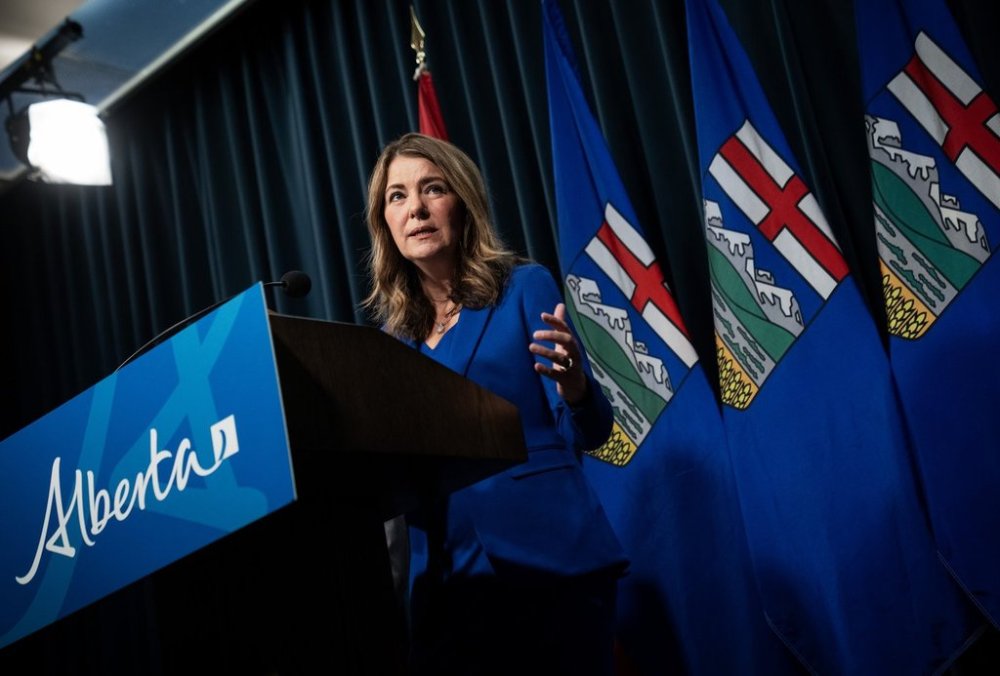
The reaction from Alberta Premier Danielle Smith has been nothing short of scandalous. Smith announced her government would appeal Leonard’s “anti-democratic” ruling to protect the sanctity of the citizens’ referendum law.
Smith occupies an untenable place in the debate over Alberta independence. It was the Smith government that amended the citizen referendum law to lower the number of signatures required to trigger a vote.
And while Smith and her government claim they want to remain in Canada, Alberta wields the threat of separation as a truncheon to get concessions from Ottawa on the approval of new pipelines and to weaken environmental regulations.
Smith apparently sees so much political value in the threat of separation that she has pledged to unilaterally add a question about independence to a roster of other questions she plans on putting before citizens in a special referendum this fall.
The Alberta premier’s posture on independence is erratic, disingenuous and sets the stage for a head-on collision with one of the most important legal concepts in our constitution.
Treaty rights have been given special status in constitutional law as an acknowledgment the land belonged to Indigenous people before Europeans settled here. And that the terms of the treaties remain foundational legal agreements that largely have not been fulfilled by the federal and provincial governments.
Could Indigenous leaders use treaty rights to stop Alberta separation? Failure to consult would create an insurmountable legal barrier to separation. Even if there was consultation, First Nation leaders in Alberta have already said they would use all available legal means to prevent the province from leaving Canada.
It’s important to note that support for Alberta separatism is, according to opinion polls, insufficient to win a referendum vote. It is quite likely Smith, who clearly enjoys needling Ottawa with the threat of separation, doesn’t want the referendum to succeed but also doesn’t want to deny separatist elements in her own party lest they rebel.
That leaves Smith in a weird and untenable position.
Smith has said she will appeal the decision. (Her favourite way to short-circuit Canada’s Charter of Rights, using the notwithstanding clause, doesn’t apply to Section 35 Treaty Rights.)
However, she does so with the full knowledge that a strong majority of Albertans don’t want to leave, and that ultimately, Indigenous treaty rights should and almost certainly would complicate and possibly even halt actual separation.
For asserting their rights and crippling the campaign for Alberta separation, it’s unlikely that Indigenous people want or need the thanks of a grateful nation.
They wouldn’t mind, however, if everyone finally committed to honouring the treaties that may ultimately save this nation.
» Winnipeg Free Press