
Making big decisions requires consultation
Advertisement
Read this article for free:
or
Already have an account? Log in here »
We need your support!
Local journalism needs your support!
As we navigate through unprecedented times, our journalists are working harder than ever to bring you the latest local updates to keep you safe and informed.
Now, more than ever, we need your support.
Starting at $15.99 plus taxes every four weeks you can access your Brandon Sun online and full access to all content as it appears on our website.
Subscribe Nowor call circulation directly at (204) 727-0527.
Your pledge helps to ensure we provide the news that matters most to your community!
To continue reading, please subscribe:
Add Brandon Sun access to your Free Press subscription for only an additional
$1 for the first 4 weeks*
- Enjoy unlimited reading on brandonsun.com
- Read the Brandon Sun E-Edition, our digital replica newspaper
*Your next Free Press subscription payment will increase by $1.00 and you will be charged $20.95 plus GST for four weeks. After four weeks, your payment will increase to $24.95 plus GST every four weeks.
Read unlimited articles for free today:
or
Already have an account? Log in here »
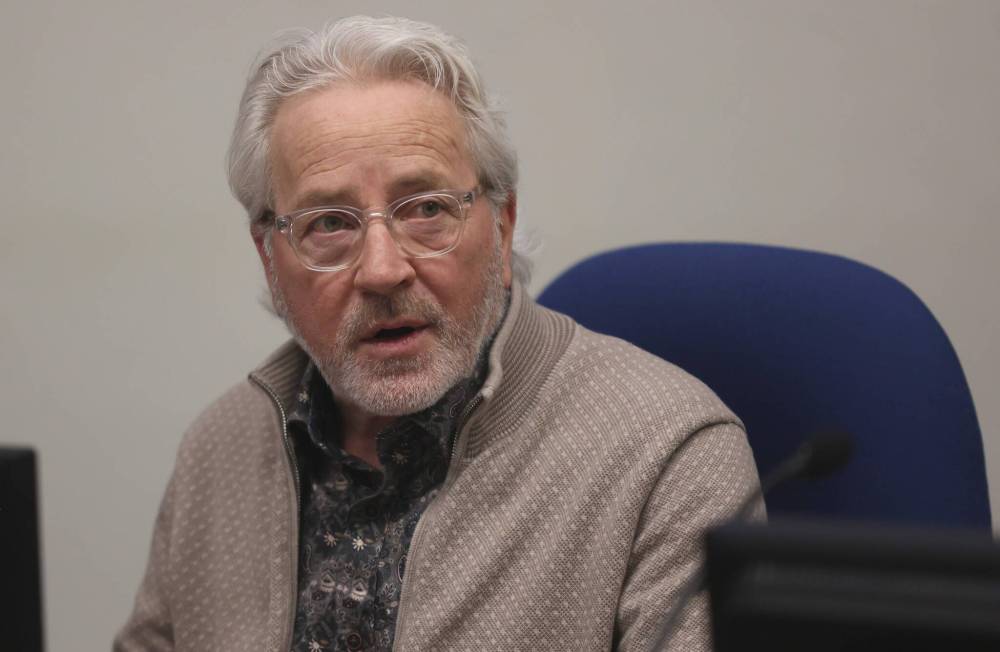
“I wish there was a mechanism for us to get decision-making done quicker and to act quicker.”
— Coun. Glen Parker (Ward 9)
One of the most often used tropes in political life is the complaint that “red tape” slows down progress, and prevents the forward momentum of a community, a policy or a business interest.
Canada is awash with elected officials who have referred, in some way, to the stifling nature of red tape, and its effect on the local economy.
From Prime Minister Mark Carney and Conservative Party of Canada Leader Pierre Poilievre, to provincial NDP Justice Minister Matt Wiebe and Winnipeg Mayor Scott Gillingham, there are numerous public examples where political leaders decry the lack of efficient decision making, at the risk of crippling business interests and economic growth. Former prime minister Stephen Harper even formed a red tape commission and passed the federal Red Tape Reduction Act in 2015.
This kind of populist rhetoric does not happen in a vacuum, or — in many cases — without just cause. The wheels of societal change and progress can move slowly at times, often hampered by layers of government bureaucracy. There are often good reasons to find ways to make decision making more efficient.
That said, not every speed bump in the way of economic progress is a public evil.
In 2011, the City of Brandon began annexing thousands of hectares of land from the RM of Cornwallis in the south and southwest quadrants of the city, as public officials signalled that the community was running out of land for expansion and development — a very real concern.
While this was not the first time the city has needed to plan for growth in its 143-year existence, complaints from the business community and developers about Brandon reaching its boundary limits for residential and industrial growth have been loud and clear over the last 15 years.
About six years later, Brandon announced that it was moving forward with the imposition of development charges to help pay for new infrastructure needs. These needs included drainage projects, off-site road construction, and several capital projects, such as sewer mains, forcemain and lift station construction.
But it would be July 2022 before city residents learned just how much some of these projects would cost the city, and how much new debt the city council was preparing to take on.
For example, in 2020 the Sun reported that the city was looking to build a single lift station to service Brandon’s southwest corner and areas annexed from Cornwallis for a total of $15 million. But when the issue came up at city council in 2022, the proposed design was for two lift stations, with council looking to borrow at least $30 million.
City administration argued that increases to the development fees levied on developers would help pay for this additional debt load. And we were told that growth would pay for growth.
At the same time, city council also authorized the borrowing of $40.67 million as Brandon’s share of a massive $125-million water treatment facility upgrade, pushing the city’s debt load to giddy new heights. And unlike the water plant project, which upgrades a city-wide service — certainly a defendable public good — the lift station project was increasingly viewed by public critics as a financial risk that would serve to mostly benefit private development.
(In spite of the fact that the project has been pushed through by council, that concern remains.)
The southwest lift station development project faced renewed scrutiny as a result, and city council faced increasing questions from the public — a fact that certainly slowed down passage of the borrowing bylaws.
Between the annexation of land in 2011 to the announced construction plans for the two lift stations in 2022, we can understand frustration over the length of time this project took to move forward — the pandemic-induced delays notwithstanding. With construction costs rising every year, Mr. Parker would not be wrong to suggest that these kinds of delays cost money. But we don’t think that’s what he was referring to.
Ultimately, city council felt it necessary to hold two informational sessions on the project as well as an open house to further explain to both residents — and in 2023, newly elected councillors — why the project was needed. As we recall, the Ward 9 councillor voted against holding the second hearing when the proposal was brought to the council floor in 2022, arguing instead that the project was essential for the city’s growth, and that delaying it would only drive up costs.
In hindsight, we still believe that further public consultation was warranted, particularly regarding projects that force our community to carry an excessively high debt load. Note that by August of last year, the total borrowing limit for the southwest wastewater project shot up to $40 million, and by the end of 2025, Brandon was expected to have more than $173 million of authorized debt — an amount that won’t be paid off until sometime around 2058.
Public scrutiny and council transparency are necessary for any council to be truly accountable to voters. They’re also necessary if municipal councils want public buy-in for big-ticket projects that have the potential for controversy.
Members of the next council would be wise to remember that.