
Pipeline appears to be far from a done deal
Advertisement
Read this article for free:
or
Already have an account? Log in here »
We need your support!
Local journalism needs your support!
As we navigate through unprecedented times, our journalists are working harder than ever to bring you the latest local updates to keep you safe and informed.
Now, more than ever, we need your support.
Starting at $15.99 plus taxes every four weeks you can access your Brandon Sun online and full access to all content as it appears on our website.
Subscribe Nowor call circulation directly at (204) 727-0527.
Your pledge helps to ensure we provide the news that matters most to your community!
To continue reading, please subscribe:
Add Brandon Sun access to your Free Press subscription for only an additional
$1 for the first 4 weeks*
- Enjoy unlimited reading on brandonsun.com
- Read the Brandon Sun E-Edition, our digital replica newspaper
*Your next Free Press subscription payment will increase by $1.00 and you will be charged $20.95 plus GST for four weeks. After four weeks, your payment will increase to $24.95 plus GST every four weeks.
Read unlimited articles for free today:
or
Already have an account? Log in here »
Premier Wab Kinew would be wise not to count his pipelines before they’re built.
Earlier this week, Kinew told the CBC that there is no opposition among Indigenous leaders in northern Manitoba to the construction of a liquefied natural gas pipeline to the Port of Churchill.
The premier said he wants the pipeline to be built as part of an effort to expand the port’s capabilities.
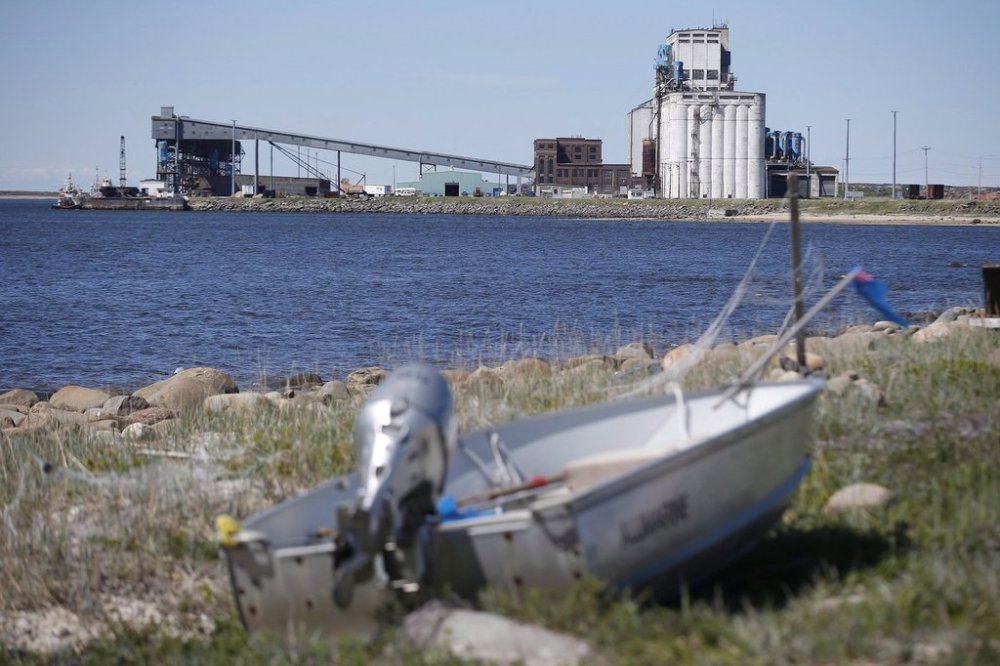
“No, I don’t think there is Indigenous opposition,” Kinew told the CBC News podcast “Front Burner” on Wednesday, adding that the northern Manitoba chiefs are well aware that the port expansion includes a liquefied natural gas pipeline. Included among those chiefs are the members of Port of Churchill owner Arctic Gateway Group.
“I think everyone is pretty well informed who’s been at the table engaging with us about the possibility of a pipeline,” Kinew later told reporters on Thursday.
Kinew’s comments did not sit well with a Winnipeg-based Cree activist named Clayton Thomas-Müller, who said Kinew has gotten ahead of himself. As Thomas-Müller said, consultations with affected First Nations have yet to begin — including within his home community of Mathias Colomb First Nation.
“There has been zero consultations on an LNG export terminal, on LNG pipelines or any other forms of energy to be exported out of Churchill,” he told CBC. “I think that the premier needs to hit the brakes a little bit with the rhetoric and stop talking about this project like it’s a done deal because it’s certainly not. There is Indigenous opposition.”
Manitoba Keeawtinowi Okimakanak (MKO), which represents 26 northern First Nations, has yet to express support for any pipeline project in the region. In a statement issued this week, MKO said that governments have to uphold their “constitutional obligations” to consult with Indigenous communities first.
So yes, there are still significant headwinds facing any pipeline project that seeks to build through First Nation territory. First Nation communities are not homogeneous entities. They all have their own local interests and concerns, and sometimes those interests conflict — with the government, the companies, and even each other.
A good example is what happened with the Trans Mountain pipeline project in British Columbia. From the start, the company had worked to bring First Nations onside with the project, offering Indigenous communities along the route confidential contracts designed to share the economic prosperity of the project. These included economic opportunities, training and potential employment, investment in the local community, and even the creation of roles for Indigenous monitors as environmental stewards in the area.
That effort paid off, with 120 of the 129 affected interior and inland First Nations communities along the TMX route supporting or not opposing the project. According to energynow.ca, that included the signing of 69 mutual benefit agreements with 75 Indigenous communities worth about $580 million in 2022.
But First Nation communities along the coast resisted the project over concerns that bitumen spills in the shipping corridor would destroy the local ecosystem and contaminate drinking aquifers.
So, too, the TransCanada’s Coastal GasLink natural gas pipeline project, a 670-kilometre natural gas pipeline that spans northern B.C. The line transports natural gas from the Dawson Creek area to Kitimat, and the LNG Canada facility where it’s liquefied and exported to global markets.
Though it was eventually completed in 2023, the project faced considerable opposition from the Wet’suwet’en hereditary chiefs and their supporters. The project had been approved by all 20 elected band councils along the pipeline route, but the hereditary chiefs claimed that the pipeline would run through environmentally sensitive traditional territories, and that any signed agreements between the company and First Nations violated their sovereignty and was done without their consent.
Unknowingly, TransCanada’s project ran headlong into a complex split between different Indigenous leadership structures and competing priorities.
When the RCMP then enforced an injunction to remove anti-pipeline camps from the area, railway blockades sprang up across the country, including here in Manitoba in February 2020, conducted in support of the Wet’suwet’en Nation.
Kinew’s comments may ultimately prove prophetic, and talks regarding construction of a pipeline to the Port of Churchill may go exceedingly smoothly.
But the history of pipeline construction in this country of late, particularly in ecologically sensitive regions, proves that nothing is ever as easy as it seems.