
Gerrymandering rears its ugly head
Advertisement
Read this article for free:
or
Already have an account? Log in here »
We need your support!
Local journalism needs your support!
As we navigate through unprecedented times, our journalists are working harder than ever to bring you the latest local updates to keep you safe and informed.
Now, more than ever, we need your support.
Starting at $15.99 plus taxes every four weeks you can access your Brandon Sun online and full access to all content as it appears on our website.
Subscribe Nowor call circulation directly at (204) 727-0527.
Your pledge helps to ensure we provide the news that matters most to your community!
To continue reading, please subscribe:
Add Brandon Sun access to your Free Press subscription for only an additional
$1 for the first 4 weeks*
- Enjoy unlimited reading on brandonsun.com
- Read the Brandon Sun E-Edition, our digital replica newspaper
*Your next Free Press subscription payment will increase by $1.00 and you will be charged $20.95 plus GST for four weeks. After four weeks, your payment will increase to $24.95 plus GST every four weeks.
Read unlimited articles for free today:
or
Already have an account? Log in here »
Those paying attention to recent headlines in the United States will note that the issue of gerrymandering has become a household word these days in states like Texas, California, Virginia and Florida.
Gerrymandering — the deliberate manipulation of electoral district boundaries that gives one political party or social group an unfair advantage in elections — has become a huge issue in the U.S. While there has long been some tampering with electoral boundaries in the U.S, the situation has become particularly fevered since the Trump administration came to power in 2025.
“We’re essentially moving to this world where whichever party has a majority will get closer and closer to winning all the seats in the state,” wrote Prof. Ben Schneer from the Harvard Kennedy School in Cambridge, Mass. “It’s both a much more majoritarian and biased translation of votes into seats. It’s departing from anything resembling proportionality.”
Allowing politicians and partisan hacks redraw electoral boundaries, particularly to their own benefit, is anathema to the nature of good governance and transparent elections. As the website Vox put it in 2014, “voters are supposed to choose their politicians. Gerrymandering lets politicians choose their voters.”
While it may not be part of our modern consciousness, Canada too has a history of playing rough and loose with electoral boundaries. Since the start of Confederation until the mid-1960s, politically controlled redistricting had created democratic distortions and toxic partisan warfare that ultimately angered voters and forced reform.
In fact, the idea of a fully independent, non-partisan boundary commission was first introduced in Manitoba by then-premier Douglas Campbell, whose progressive-conservative coalition government legislated the first Manitoba Electoral Divisions Boundaries Commission. The idea would later be championed at the federal level by former prime minister John Diefenbaker and then finalized by Liberal prime minister Lester Pearson in 1964.
Our American cousins have yet to adopt Canada’s system of independent and impartial boundary commissions that has thus far served Canadians generally well. But it seems some of Donald Trump’s gerrymandering habits are being adopted north of the border instead.
Last April, Alberta’s ruling United Conservative Party decided to entirely dismiss the results of the 2025-26 Electoral Boundaries Commission report, and instead handed the job over to a special committee of MLAs — the majority of whom are UCP members, with the remaining minority made up of opposition NDP MLAs.
While the original boundaries commission report recommended consolidating rural seats and adding urban seats, the two UCP-appointed members of the five-member independent commission offered up a minority report that would cut Alberta’s largest cities into pies of “rurban” ridings, with each new riding made up of a small portion of urban voters who are outnumbered by their rural counterparts.
Because Alberta uses a first-past-the-post election system, diluting urban votes — the majority of which lean progressive — with more conservative rural voting blocks only serves to swell the UCP’s seat count come the next election.
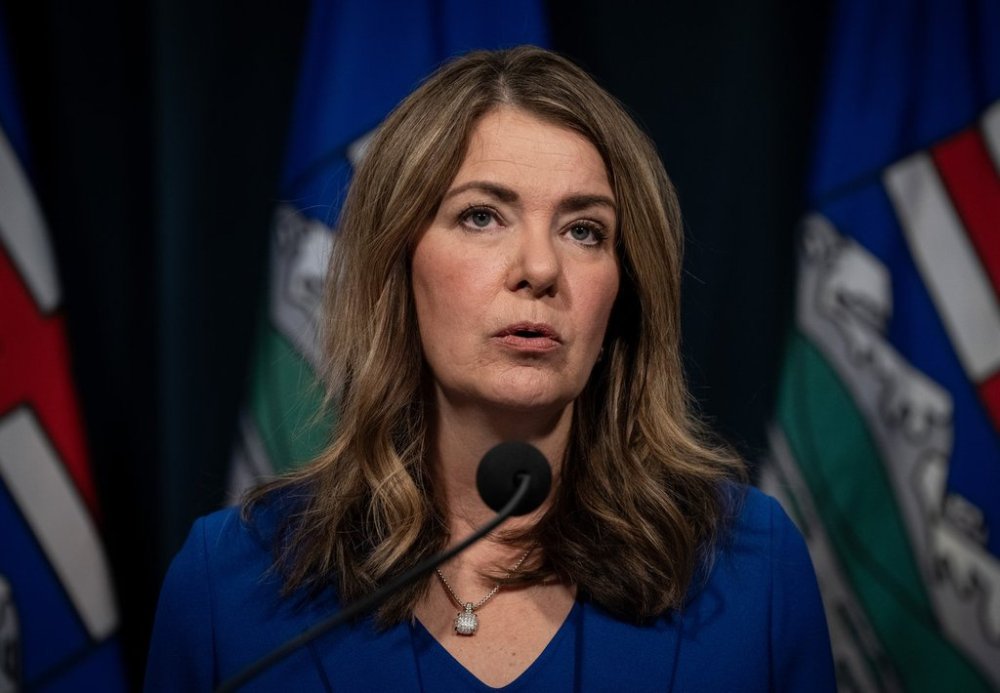
No one is under any illusions as to what this new boundary review is meant to do. It’s being conducted behind closed doors, and without public input, a situation just waiting for a constitutional challenge. Just this week, the New Democrats have accused Alberta’s UCP Premier Danielle Smith of tipping the scales in her party’s favour after UCP boundary committee members voted down motions made by their NDP counterparts.
What is happening in Alberta is a cynical move by an Alberta premier who is openly flouting voter expectations of fair and transparent government elections, and it provides a textbook example of how our FPTP election system remains vulnerable to partisan manipulation.
With gerrymandering making an infamous return to Canada — and before the idea starts to spread beyond Alberta — perhaps it’s time we give stronger consideration to other ways of holding elections in this country.
Alternative methods of voting exist that would discourage attempts to cheat the system. For example, one form of proportional representation includes mixed-member proportional in which a party’s final seat count matches the total percentage of the popular vote. In this system, any gerrymandering of local election boundaries is rendered mathematically useless because the proportional “top-up” nature of the system adjusts the final tallies.
There are others, of course, that may have a similar effect.
Moving to proportional representation wouldn’t fix the national problem of electoral riding inequality — smaller provinces with slower growth being overrepresented in the House of Commons due to the Representation Act of 1985. But it would at least begin to address concerns of small political parties that claim thousands of votes but no representation in Parliament, while ending any chance that other conservative-minded governments may think to follow Danielle Smith’s lead.