
Better ways to target relief for Manitobans
Advertisement
Read this article for free:
or
Already have an account? Log in here »
We need your support!
Local journalism needs your support!
As we navigate through unprecedented times, our journalists are working harder than ever to bring you the latest local updates to keep you safe and informed.
Now, more than ever, we need your support.
Starting at $15.99 plus taxes every four weeks you can access your Brandon Sun online and full access to all content as it appears on our website.
Subscribe Nowor call circulation directly at (204) 727-0527.
Your pledge helps to ensure we provide the news that matters most to your community!
To continue reading, please subscribe:
Add Brandon Sun access to your Free Press subscription for only an additional
$1 for the first 4 weeks*
- Enjoy unlimited reading on brandonsun.com
- Read the Brandon Sun E-Edition, our digital replica newspaper
*Your next Free Press subscription payment will increase by $1.00 and you will be charged $20.95 plus GST for four weeks. After four weeks, your payment will increase to $24.95 plus GST every four weeks.
Read unlimited articles for free today:
or
Already have an account? Log in here »
It’s becoming quite difficult to take the Kinew government seriously these days, at least when it comes to the province’s affordability policies.
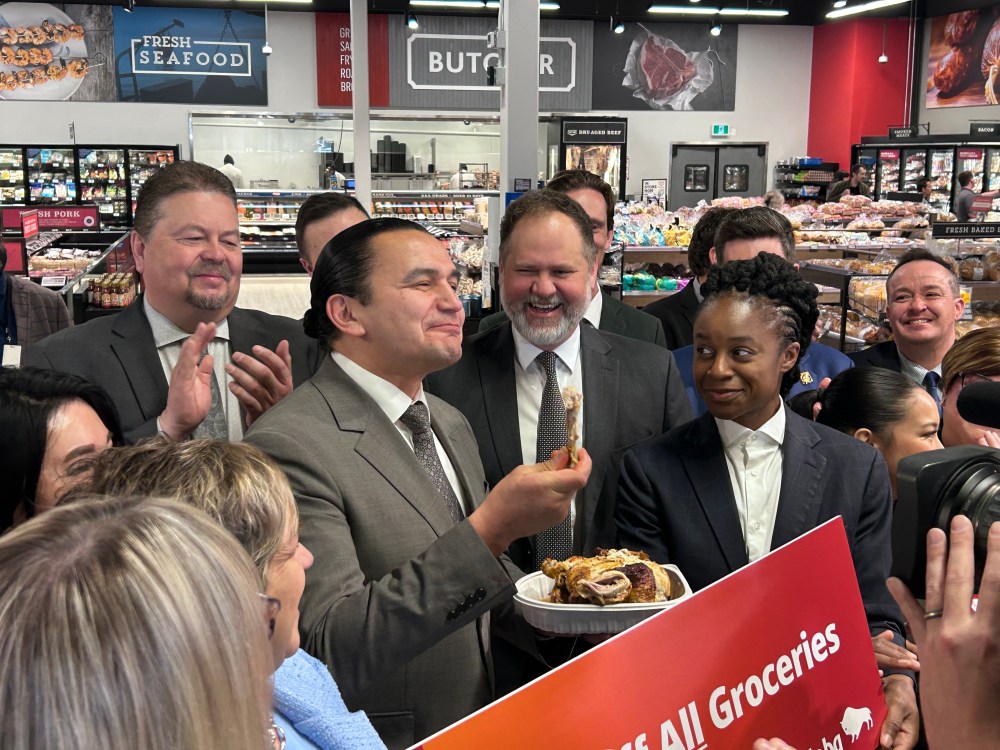
Back on March 25, Premier Wab Kinew pulled a little publicity stunt by eating a rotisserie chicken at a news conference held inside a grocery store in Winnipeg. The premier used the visual to promote his government’s announcement to remove the provincial sales tax from all food in grocery stores.
That cut on sales tax for store-bought food came into effect on July 1. While most groceries were already tax-exempt, the change removes the seven per cent PST from a variety of products, including ready-to-eat foods sold in-store such as soups and sandwiches, sushi, samosas, as well as snack foods, baked goods, fruit and vegetable platters and beverages.
The change is expected to save the average Manitoba family about $100 per year.
Yet the tax will still be charged at restaurants, bakeries and bars — a fact that has rankled business people in the food service industry.
In May, the premier refused to meet Restaurants Canada representatives who said the lack of consultation — or even a meeting — with the premier was “disappointing and concerning.”
“This policy creates a government-directed tax advantage for large grocery chains at the direct expense of local restaurants, their workers, and the communities they support,” said Kelly Kigginson, president and CEO of Restaurants Canada. “This is not a neutral affordability measure and it is not a tax cut on food. It is a tax shift between competitors.”
As Kigginson noted, the Manitoba food service industry employs about 42,000 Manitobans, with restaurants among the most labour-intensive sectors in the economy.
That’s not to say we don’t enjoy a good (and cheaper) store-bought rotisserie chicken, but the problem here is one of optics versus realities.
The premier’s decision to cut PST on some food items is an across-the-board saving for all Manitobans, regardless of their financial capabilities. The Progressive Conservatives have argued that the premier’s new PST cut on prepared foods also disproportionately subsidizes snack foods rather than tackling broader affordability issues.
While that is true, it’s difficult to see how any Tory worth the name would be criticizing a tax cut. We live in interesting times.
Perhaps that’s why this feels like more of a cynically populist strategy than a policy meant to help the financially vulnerable in this province. This transparent attempt to appeal to a broader swath of Manitobans has certainly kept the premier more popular in public opinion polls, but there is a lack of depth here.
The same can be said about the premier’s decision to remove the gas tax on fuel for 2024 when the NDP first came into power, and then decided to return it at a lower rate of 12.5 cents per litre.
If the NDP government really wanted to better target relief for Manitobans who are facing financial difficulties due to the rising cost of living, there are some options they could try instead.
They could cap or reduce Manitoba Hydro rates to provide a universal cost saving that would aid low-income households without sacrificing provincial tax revenue on luxury food items.
They could offer direct income-tested rebates — think of it like a cost-of-living tax credit — that specifically targets lower-income families.
The province could also look to increase funding for social programs, like directly investing in subsidized child care or pharmacare expansion.
And then there’s the argument we’ve made before — reinstating the 50-50 public transit funding for cities like Brandon and Winnipeg, which could lower long-term living expenses for people who often use the bus to get around.
These are all good ideas — at least we think so. They just don’t get the public attention that a photo-op stunt with a rotisserie chicken does.
Too bad, that.