
A whack-a-mole approach to a complex problem
Advertisement
Read this article for free:
or
Already have an account? Log in here »
We need your support!
Local journalism needs your support!
As we navigate through unprecedented times, our journalists are working harder than ever to bring you the latest local updates to keep you safe and informed.
Now, more than ever, we need your support.
Starting at $15.99 plus taxes every four weeks you can access your Brandon Sun online and full access to all content as it appears on our website.
Subscribe Nowor call circulation directly at (204) 727-0527.
Your pledge helps to ensure we provide the news that matters most to your community!
To continue reading, please subscribe:
Add Brandon Sun access to your Free Press subscription for only an additional
$1 for the first 4 weeks*
- Enjoy unlimited reading on brandonsun.com
- Read the Brandon Sun E-Edition, our digital replica newspaper
*Your next Free Press subscription payment will increase by $1.00 and you will be charged $20.95 plus GST for four weeks. After four weeks, your payment will increase to $24.95 plus GST every four weeks.
Read unlimited articles for free today:
or
Already have an account? Log in here »
The Winnipeg Police Service has produced a report that details the results of a recent 10-day crackdown on open drug use and trafficking. Unfortunately, and to the detriment of both the community and police service, they just won’t show it to anyone.
This week, a WPS spokeswoman confirmed no decision has been made “regarding reporting, future activities or the release of results” from the drug sweep. As the operation was ongoing, WPS did say that it “interacted” with more than 100 people and arrested 25, with most of those related to warrants and breaches of court orders, not open drug use or trafficking.
These very preliminary results prompted criticism that the WPS had failed to adequately collaborate with social service agencies that help the homeless and those suffering from addictions and mental health.
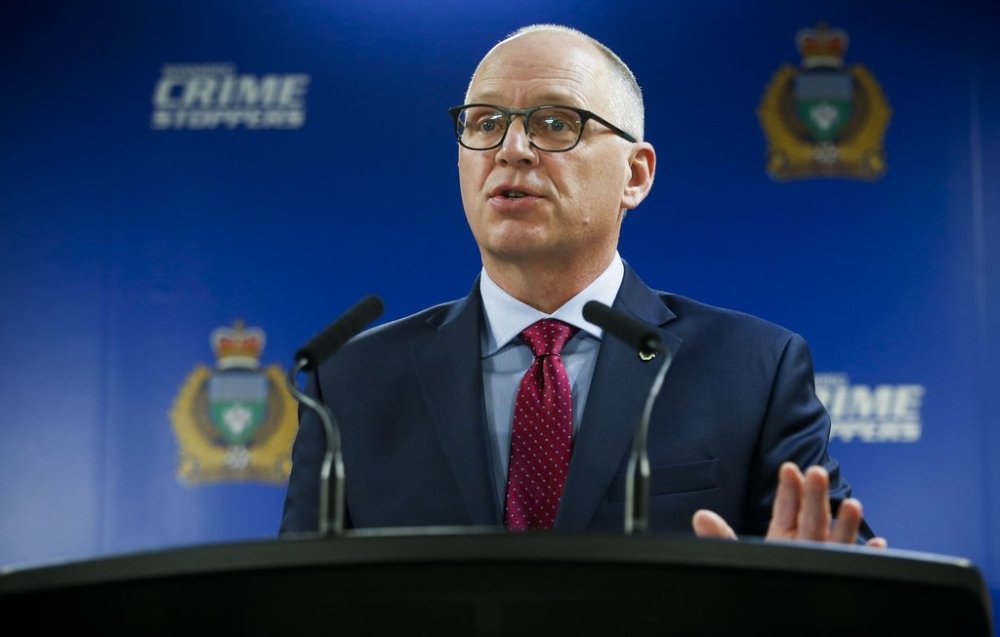
A detailed report on the results of the sweep, along with commentary from the police about lessons learned, is essential if police are to engage in this kind of initiative again. In fact, it would be hard to see how police could ever unleash a similar operation without some sort of accounting of the impacts — both good and bad — of the first effort.
Mayor Scott Gillingham, a strident supporter of the sweep, said he would like to see the final report but added that neither he nor council are empowered to compel the WPS to release its findings. Gillingham said that, anecdotally, there seem to be fewer people using drugs openly in an area of Main Street that was swept by police, but the Winnipeg Free Press has anecdotally observed that there are still many people in bus shelters and alcoves of the buildings on these blocks.
The key question here — and one that can only be answered with something other than anecdotal evidence — is how to effectively cut down on vagrancy and open drug use in parts of downtown Winnipeg. The traditional model, used by police in its most recent drug sweep, is to roust the homeless and the addicts and force them to go somewhere else.
“Where” is not a key concern of an operation like this. The imperative is to move them from an area that has become a public concern with an “out of sight, out of mind” approach. The fact that rousting these people only results in them relocating to another part of the city doesn’t really play a role in the thought processes of those doing the sweep.
The most frustrating part is that by engaging in this kind of police operation, the WPS is cultivating a belief that sweeps are the only effective way of addressing homelessness and open drug use. True to that notion, residents and businesses of the west end of that city — an area with its own open drug use and homeless problems — want WPS to conduct a similar sweep for them on the basis that if it worked on Main Street, perhaps it could work on Portage or Ellice avenues.
The reality is that sweeps do not solve the problem, they push it to other areas of the city. “Better” might have been in the cards if the WPS collaborated with social service and health agencies. But they didn’t.
As other parts of Winnipeg clamour for help, we are edging dangerously close to a game of homeless and addictions whack-a-mole, whereby we roust vulnerable people from one part of the city, only to see them pop up somewhere else.
WPS must release the data on its initial sweep — examining what worked and how it worked — so that everyone involved in trying to reduce homelessness and addictions can gather together to come up with a lasting solution.
Otherwise, we’re just kicking an enormous social problem from one Winnipeg neighbourhood to another.
» Winnipeg Free Press