
Drug treatment courts show promising results
Advertisement
Read this article for free:
or
Already have an account? Log in here »
We need your support!
Local journalism needs your support!
As we navigate through unprecedented times, our journalists are working harder than ever to bring you the latest local updates to keep you safe and informed.
Now, more than ever, we need your support.
Starting at $15.99 plus taxes every four weeks you can access your Brandon Sun online and full access to all content as it appears on our website.
Subscribe Nowor call circulation directly at (204) 727-0527.
Your pledge helps to ensure we provide the news that matters most to your community!
To continue reading, please subscribe:
Add Brandon Sun access to your Free Press subscription for only an additional
$1 for the first 4 weeks*
- Enjoy unlimited reading on brandonsun.com
- Read the Brandon Sun E-Edition, our digital replica newspaper
*Your next Free Press subscription payment will increase by $1.00 and you will be charged $20.95 plus GST for four weeks. After four weeks, your payment will increase to $24.95 plus GST every four weeks.
Read unlimited articles for free today:
or
Already have an account? Log in here »
“The best chance of long-term protection of the public is the rehabilitation of offenders, and at the end of the day, I think that’s what this is all about — trying to get down to those root causes of crime and hopefully helping people break the cycle. At the end of the day, hopefully the community is safer for it.”
— Brandon provincial court Judge Shauna Hewitt-Michta
The criminal justice system has long been very good at punishing people for the consequences of addiction. It has been considerably less successful at addressing the addiction itself.
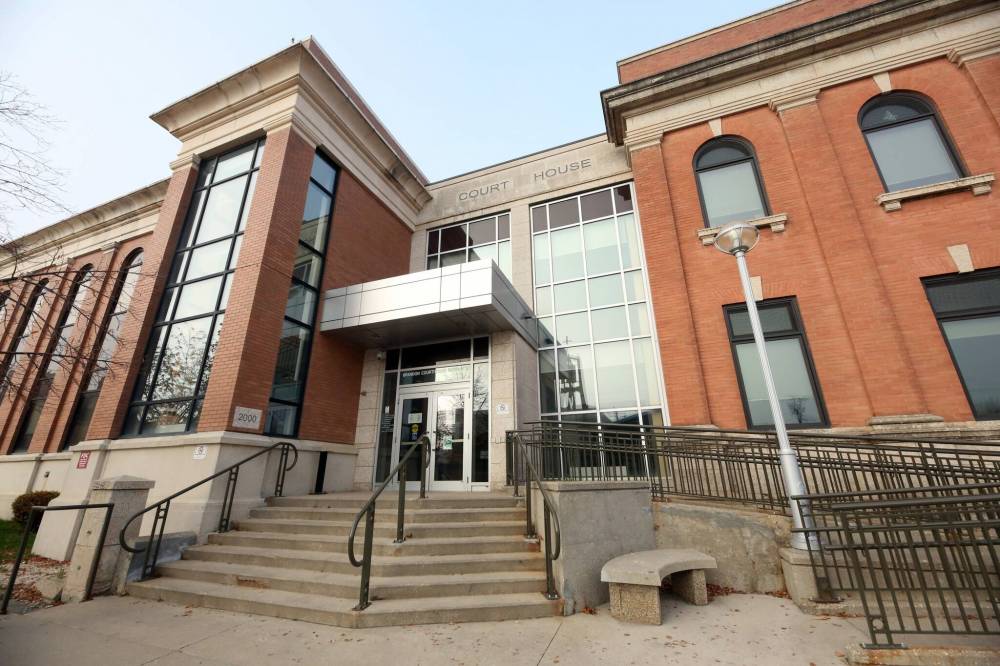
The Brandon courthouse entrance on 11th Street. (Matt Goerzen/The Brandon Sun files)
That is why the success of Manitoba’s drug treatment courts deserves far more attention.
The Westman drug treatment court, which began in 2019, is built around a simple but important premise: If substance abuse is driving criminal behaviour, the best way to protect the public may not always be to put someone in jail for two years or less.
Sometimes, the more effective response is an intensive, closely supervised effort to help that person break the cycle.
Judge Shauna Hewitt-Michta, who presides over the Brandon drug treatment court, spoke to The Brandon Sun recently about some of its accomplishments.
Participants plead guilty and, if accepted, enter a program that can last from 12 to 24 months. They are subject to frequent drug testing, counselling, educational programs, court appearances and close supervision.
They may be required to find work, volunteer, attend appointments and learn basic life skills. Case managers can be in contact with them several times a week.
This is not about being “soft on crime.” Anyone who’s followed court cases in Brandon over the last decade knows that Judge Hewitt-Michta has a long-standing reputation for being tough on those convicted of dangerous driving, and a habit of refusing to release high-risk offenders.
But Hewitt-Michta has also long advocated for rehabilitation as the most effective method for long-term community safety. And the point of the Brandon drug treatment court, like its predecessor in Winnipeg, is about getting better results from a criminal justice system that often perpetuates cycles of addiction and unlawful behaviour.
It is an intensive intervention that demands far more from participants than simply serving time in a provincial jail.
The results are encouraging. Graduates of the Winnipeg and Brandon drug treatment courts had a zero per cent recidivism rate. The rate for non-graduates was 17 per cent.
Drug courts are not a silver bullet. Some 37 per cent of participants do not graduate. Addiction is complicated, and recovery is rarely a straight line.
But the results do suggest that the justice system can achieve better outcomes when it addresses the causes of crime rather than simply imposing punishment after the fact.
People with addictions often become trapped in a cycle involving substance use, mental-health challenges, cognitive problems, poverty, criminal behaviour, jail and release — only to start over again.
A jail sentence may temporarily remove someone from the community. But if the underlying addiction remains untreated, the public-safety problem has not necessarily been solved.
Two years in jail can pass and a person can emerge with the same addiction, the same problems and perhaps even fewer supports.
Drug treatment courts offer a different approach. They wrap services around people who, in many cases, have been failed by the traditional system.
That does not mean jail should be eliminated as a consequence of crime. Serious violent offences must continue to be treated seriously, and public safety must remain the justice system’s primary responsibility.
But public safety also means reducing the likelihood that people will commit crimes again. That is where rehabilitation becomes more than a slogan. If an intensive program can help a person overcome addiction and avoid returning to the criminal justice system, it is arguably doing more to protect the public than another short jail sentence that leaves the underlying problem untouched.
The traditional justice system tends to ask: What did you do, and how should you be punished? Therapeutic courts ask a second question: Why did it happen, and what can be done to prevent it from happening again?
That is an important shift.
Drug treatment courts will not solve addiction, crime or homelessness on their own. But they are showing that a justice system focused on rehabilitation, accountability and intensive support can produce better results than one that relies too heavily on incarceration.
The future of criminal justice should not be about being softer on crime. It should be about being smarter about what actually makes communities safer.
» Winnipeg Free Press & The Brandon Sun