
Telcom giants must address 911 outages
Advertisement
Read this article for free:
or
Already have an account? Log in here »
We need your support!
Local journalism needs your support!
As we navigate through unprecedented times, our journalists are working harder than ever to bring you the latest local updates to keep you safe and informed.
Now, more than ever, we need your support.
Starting at $15.99 plus taxes every four weeks you can access your Brandon Sun online and full access to all content as it appears on our website.
Subscribe Nowor call circulation directly at (204) 727-0527.
Your pledge helps to ensure we provide the news that matters most to your community!
To continue reading, please subscribe:
Add Brandon Sun access to your Free Press subscription for only an additional
$1 for the first 4 weeks*
- Enjoy unlimited reading on brandonsun.com
- Read the Brandon Sun E-Edition, our digital replica newspaper
*Your next Free Press subscription payment will increase by $1.00 and you will be charged $20.95 plus GST for four weeks. After four weeks, your payment will increase to $24.95 plus GST every four weeks.
Read unlimited articles for free today:
or
Already have an account? Log in here »
“There have been entirely too many of these incidents in the last number of months, and we’re deeply concerned about it. We’re really anxious to ensure Manitobans can be confident 911 service is there when they need it.”
— Manitoba Innovation and New Technology Minister Mike Moroz
Imagine the frustration and fear that would follow if you faced an emergency situation and the response to your desperate 911 call was … nothing.
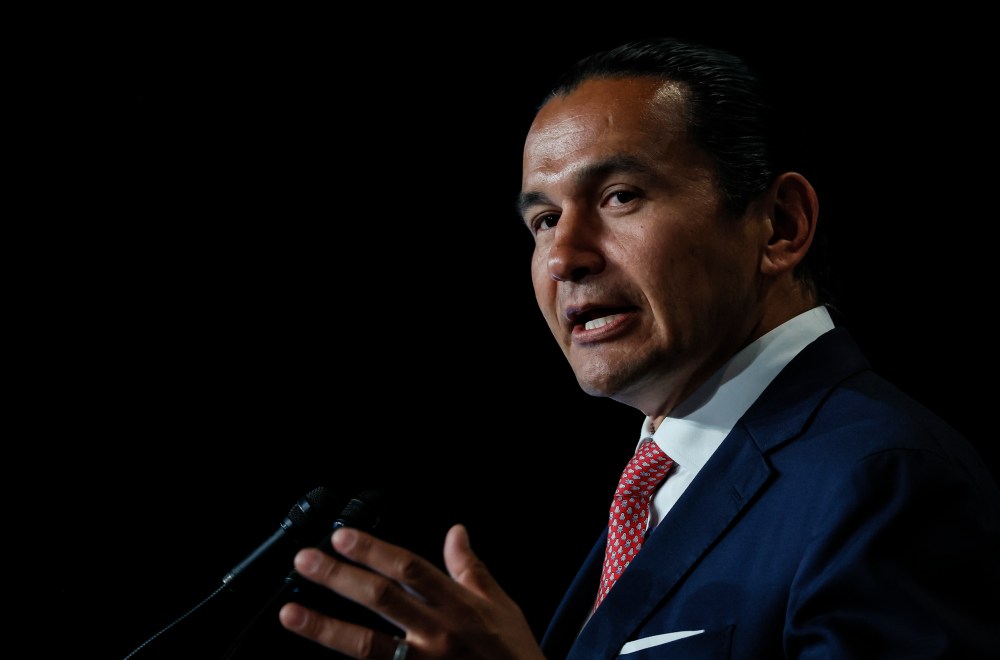
For a number of Manitobans — too many, regardless of what the actual total turns out to be — this harrowing prospect has not been a hypothetical; rather, they have been failed by the 911 system that is supposed to provide an anytime/anywhere connection to critical police, fire or ambulance services.
The most recent occurrence was on July 22, when 911 service suddenly became unavailable to Manitobans who live outside the city of Winnipeg. According to Bell Canada, which provides 911 service in this province, the outage — which lasted from 1 p.m. to shortly after 4 p.m. — was caused by a “third-party cable cut” during construction near Winnipeg; a fibre-optic line was severed, disrupting calls routed to the public safety answering point in Brandon. Nearly 90 emergency calls were affected, according to an official at the Brandon facility.
Thankfully, the RapidSOS software used by the public safety communications centre here in Brandon provided staff with the phone numbers for about half of these calls, even if callers couldn’t get through. But the rest were potentially made from a landline, which does not register on the RapidSOS system.
Either way, the situation is highly problematic.
An alert sent out to some mobile customers during the event referred to “a province-wide 911 service disruption impacting Manitoba, excluding the City of Winnipeg,” and directed users to try 911 first, but if they were unable to get through, to “call your local 10-digit emergency numbers for fire, police and ambulance.”
A Bell spokesperson said backup systems that reroute 911 calls when an outage occurs due to equipment damage also experienced “issues” during the outage, and blamed Manitoba’s “legacy architecture” — which presumably means outdated equipment — that does not support the failsafes newer systems have.
Bell is currently in the process of upgrading the province’s network to “next generation” digital 911 by the end of this year.
If the system improvement — which the federal telecommunications regulator directed all of Canada’s telecom providers to complete by March 31, 2027 — brings an end to 911 service outages in this province, it will be an upgrade that has long been overdue.
More than 50 callers were unable to access 911 services during a Bell MTS service outage on April 28 of this year. And back in March 2025, the family of Fisher Branch resident Dean Switzer, unaware their Telus service was temporarily disrupted, was unable to get through to 911 after he suffered a heart attack that proved fatal.
Telus, which has denied any responsibility for the man’s death, blamed that outage on a failure on the Bell equipment that is part of the network on which Telus and Bell interconnect to send 911 calls.
Other examples of 911 service disruption are not difficult to find. In the wake of this most recent incident, Manitoba Premier Wab Kinew called the too-frequent outages unacceptable and added he raised the issue with Prime Minister Mark Carney last Thursday during a meeting of first ministers in Charlottetown.
This much seems clear: whatever pressure can be exerted, by multiple levels of government, to force the telecom companies that control telephone and cellular communication (and therefore 911 services) in this country to solve these connectivity issues should be immediately and continually brought to bear.
The telecom giants’ apparent reluctance to prioritize people — in other words, their inflated-rate-paying customers — over profits has been a source of endless irritation for Canadians who find themselves paying among the highest prices on the planet for service that seems something decidedly less than world-class.
That part of the personal technology experience is annoying. But when substandard performance leads to lapses in critical communications such as 911, interruptions and outages can become literally a matter of life and death.
The companies entrusted with this responsibility must do better — if not voluntarily, then in a manner propelled by the full weight of government and regulatory policy.
» Winnipeg Free Press and The Brandon Sun