
Fighting tariffs with the power of boycotts
Advertisement
Read this article for free:
or
Already have an account? Log in here »
We need your support!
Local journalism needs your support!
As we navigate through unprecedented times, our journalists are working harder than ever to bring you the latest local updates to keep you safe and informed.
Now, more than ever, we need your support.
Starting at $15.99 plus taxes every four weeks you can access your Brandon Sun online and full access to all content as it appears on our website.
Subscribe Nowor call circulation directly at (204) 727-0527.
Your pledge helps to ensure we provide the news that matters most to your community!
To continue reading, please subscribe:
Add Brandon Sun access to your Free Press subscription for only an additional
$1 for the first 4 weeks*
- Enjoy unlimited reading on brandonsun.com
- Read the Brandon Sun E-Edition, our digital replica newspaper
*Your next Free Press subscription payment will increase by $1.00 and you will be charged $20.95 plus GST for four weeks. After four weeks, your payment will increase to $24.95 plus GST every four weeks.
Read unlimited articles for free today:
or
Already have an account? Log in here »
Speaking last week about an important deadline for a renewal of the Canada-U.S.-Mexico agreement on trade, Manitoba Premier Wab Kinew promised that Manitoba will continue to keep American booze off the shelves of government liquor stores if a fair deal cannot be reached.
“No CUSMA, no booze-ma,” Kinew said with poetic flair.
Manitoba is not alone in this threat.
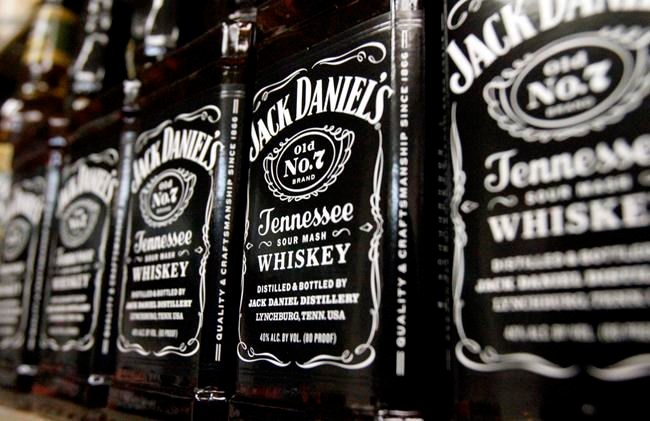
Although he lacks Kinew’s poetry, Ontario Premier Doug Ford said he was only willing to allow U.S. wine, beer and spirits back onto the shelves of government liquor stores if the U.S. scaled back the 50 per cent tariffs on steel, aluminum and autos U.S. President Donald Trump has threatened to impose on Aug. 19.
Why mention the booze ban? Remarkably, the decision to stop selling American alcohol has become a hugely important bargaining chip for Canadian negotiators seeking to avoid Trump’s newest tariffs. Canada is dangling the end of the booze ban as one of several incentives to get lower tariffs.
Although some of the numbers pale in comparison to the billions of dollars Trump is seeking to exact from Canadian exporters, the impact of the provincial alcohol boycott has been significant. All told, American wine, spirit and beer makers lost a collective $700 million in the first year of the boycott, which began with Ontario pulling U.S. booze from its shelves in February 2025. Manitoba and a host of other provinces followed the next month.
Prior to the boycott, Canada was the world’s single largest purchaser of American booze, consuming up to 30 per cent of all U.S. exports. Along with the grassroots campaign to eschew travel to the U.S., Canadians have put a dent in the Trump tariff policies and generated more than a little anxiety among lobbyists and industry organizations representing the alcohol and hospitality sectors.
In other words, the impact of the booze and tourism boycotts by Canadians — which are high profile and easy for Americans to see — is much greater than its dollar value.
(On a side note, it should be noted the booze ban could have been even more effective if Alberta and Saskatchewan had joined in. Although both provinces briefly participated in the national boycott, they both welcomed American booze back within a few weeks. Given that the boycott has become a hugely important bargaining chip in trade negotiations, both Alberta and Saskatchewan should hang their heads in shame at not making one of the strongest cards in Canada’s trade negotiation hand a little bit stronger.)
Booze or no booze-ma, the stakes heading into the Aug. 19 deadline for a renewal of CUSMA could not be higher. If Trump follows through with his threatened tariffs, there would be catastrophic impacts on both sides of the border.
A recent report from the Canadian American Business Council by Oxford Economics estimated that Canada would lose more than 100,000 jobs if CUSMA is not renewed. The U.S. would also suffer blow-back from Trump’s refusal to renew; the same report suggests the U.S. would lose 214,000 jobs.
Analysis like that would prompt rational leaders to rethink their trade policies. Lamentably, rational thought is not necessarily one of the features of Trump’s uber-aggressive trade policy. And that means two things will happen: Canada will not be able to negotiate a reasonable compromise on tariffs; and most Canadians will continue to go without California wine and Kentucky bourbon.
Although that outcome would trigger a bleak scenario for our economy, Canada can still hold its head up high with the knowledge that when we were challenged by a bully, we hit back.
» Winnipeg Free Press