
Health care needs long-term planning
Advertisement
Read this article for free:
or
Already have an account? Log in here »
We need your support!
Local journalism needs your support!
As we navigate through unprecedented times, our journalists are working harder than ever to bring you the latest local updates to keep you safe and informed.
Now, more than ever, we need your support.
Starting at $15.99 plus taxes every four weeks you can access your Brandon Sun online and full access to all content as it appears on our website.
Subscribe Nowor call circulation directly at (204) 727-0527.
Your pledge helps to ensure we provide the news that matters most to your community!
To continue reading, please subscribe:
Add Brandon Sun access to your Free Press subscription for only an additional
$1 for the first 4 weeks*
- Enjoy unlimited reading on brandonsun.com
- Read the Brandon Sun E-Edition, our digital replica newspaper
*Your next Free Press subscription payment will increase by $1.00 and you will be charged $20.95 plus GST for four weeks. After four weeks, your payment will increase to $24.95 plus GST every four weeks.
Read unlimited articles for free today:
or
Already have an account? Log in here »
If there’s been a throughline in the past 30 years of Manitoba politics — apart from the fact the electorate has bounced between NDP and Progressive Conservative governments — it’s that the state of provincial health care is almost always in the headlines.
Remember the “hallway medicine” catchphrase used by Gary Doer’s New Democrats in the 1999 provincial election campaign? It’s not that far removed from the “ER bottlenecks” that Manitobans, especially Winnipeggers, must deal with today.
In a recent Winnipeg Free Press examination of emergency room medicine (Condition critical, Aug. 22), Dr. Alecs Chochinov, a former director of emergency medicine at St. Boniface Hospital, attributed the bottleneck problem to “access block,” meaning that more personal-care home beds and home-care services are needed to free up acute-care hospital beds and enable patients to move more quickly through emergency rooms.
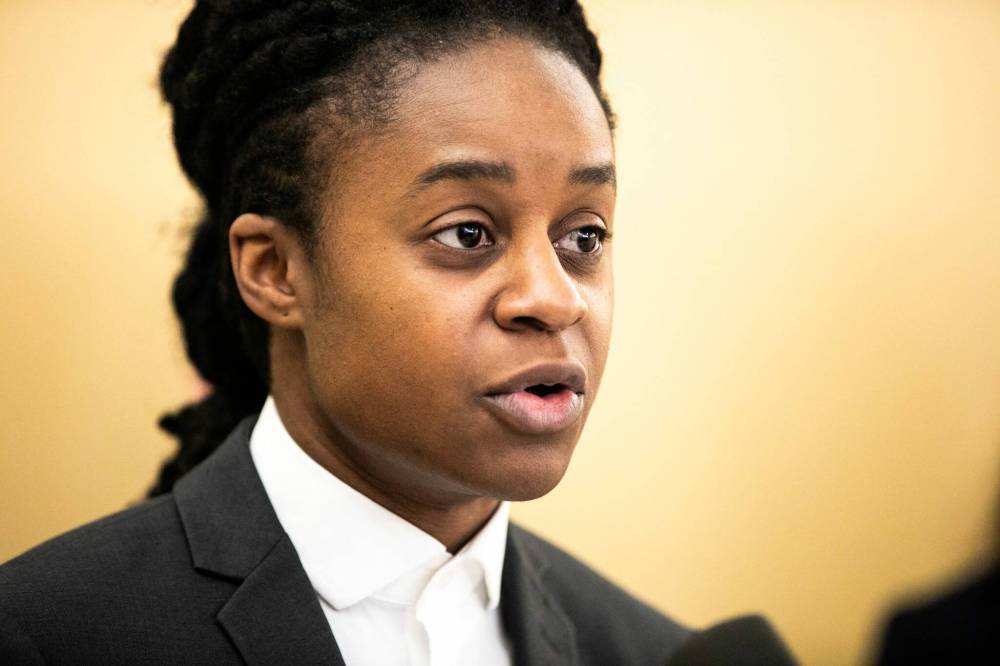
So, how should access block be addressed, and who should direct the implementation of long-term investment and solutions?
Well, the vehicle for doing so already exists.
Shared Health is, according to its mandate, the agency “with the responsibility for provincial health planning, health service delivery and operational support across all areas of the provincial health system.” All five regional health agencies fall under its wing, as do CancerCare Manitoba, the Health Sciences Centre and most other health agencies, departments and programs.
However, it is apparent that Shared Health, created by Brian Pallister’s PC government in 2018 to consolidate disparate, non-aligned regional bureaucracies, has not been able to fully grasp its mandate. The COVID-19 pandemic and its complications put extreme pressure on the health-care system, and the fallout of its effects are still being felt. Unforeseen, but not the best time to bring a newly-created central health agency online.
Then the government changed in October 2023, with Wab Kinew’s new NDP majority having run on a promise to “fix health care” for Manitobans — even threatening to dismantle Shared Health.
Almost immediately after taking office, the Kinew government contracted Deloitte and MNP to review Shared Health and all but one of its five regional health authorities (Southern Health). As a result, Lanette Siragusa, the Shared Health CEO hired to replace Adam Topp in 2023, was let go in February 2025, as was Mike Nader, then-CEO of the Winnipeg Regional Health Authority.
“If the disease in our health-care system is a culture of dysfunction, then the symptom of the disease is financial mismanagement,” Manitoba Health Minister Uzoma Asagwara said at the time.
Fast-forward 18 months, and the signs are that Shared Health is still not completely cured. The CEOs of both Shared Health and the WRHA are still “interim.” Just over a week ago, the Free Press reported that three senior executives, including the chief financial officer, had left the organization, meaning the agency is looking for its fourth CFO since 2023.
The NDP government clearly sees value in centralized, province-wide health-care planning, or it would have begun to dismantle Shared Health in early 2025. But if Shared Health is ever to fully meet its mandate, it must be empowered to do so with long term, structural and systemic change in mind.
In addition to meeting all the immediate requirements of the system as it exists today, Shared Health must be given the means to manage issues such as access block, and to address the health-care needs of the next five, 10, 20 years and beyond.
How this will happen is up to the government and Shared Health leadership, but they must embrace big-picture policy and set long-term goals that will survive election cycles (Manitobans go back to the polls next year). That includes legislating long-term capital funding commitments that will enable Shared Health to plan and act on infrastructure investment.
Because today’s access block is yesterday’s lack of planning.
» Winnipeg Free Press