
Mental health needs extend beyond capital
Advertisement
Read this article for free:
or
Already have an account? Log in here »
We need your support!
Local journalism needs your support!
As we navigate through unprecedented times, our journalists are working harder than ever to bring you the latest local updates to keep you safe and informed.
Now, more than ever, we need your support.
Starting at $15.99 plus taxes every four weeks you can access your Brandon Sun online and full access to all content as it appears on our website.
Subscribe Nowor call circulation directly at (204) 727-0527.
Your pledge helps to ensure we provide the news that matters most to your community!
To continue reading, please subscribe:
Add Brandon Sun access to your Free Press subscription for only an additional
$1 for the first 4 weeks*
- Enjoy unlimited reading on brandonsun.com
- Read the Brandon Sun E-Edition, our digital replica newspaper
*Your next Free Press subscription payment will increase by $1.00 and you will be charged $20.95 plus GST for four weeks. After four weeks, your payment will increase to $24.95 plus GST every four weeks.
Read unlimited articles for free today:
or
Already have an account? Log in here »
“We want to make sure Manitobans can get care for their mental health when they need it. Too often, people in crisis end up in the emergency room because they have nowhere else to turn. By hiring new psychiatrists, we’re improving access to care for patients.”
— Manitoba Premier Wab Kinew
The provincial government’s announcement Friday that it has hired 17 new psychiatrists in Manitoba this year should be positive news. And it is — if you live within or near Winnipeg and Selkirk.
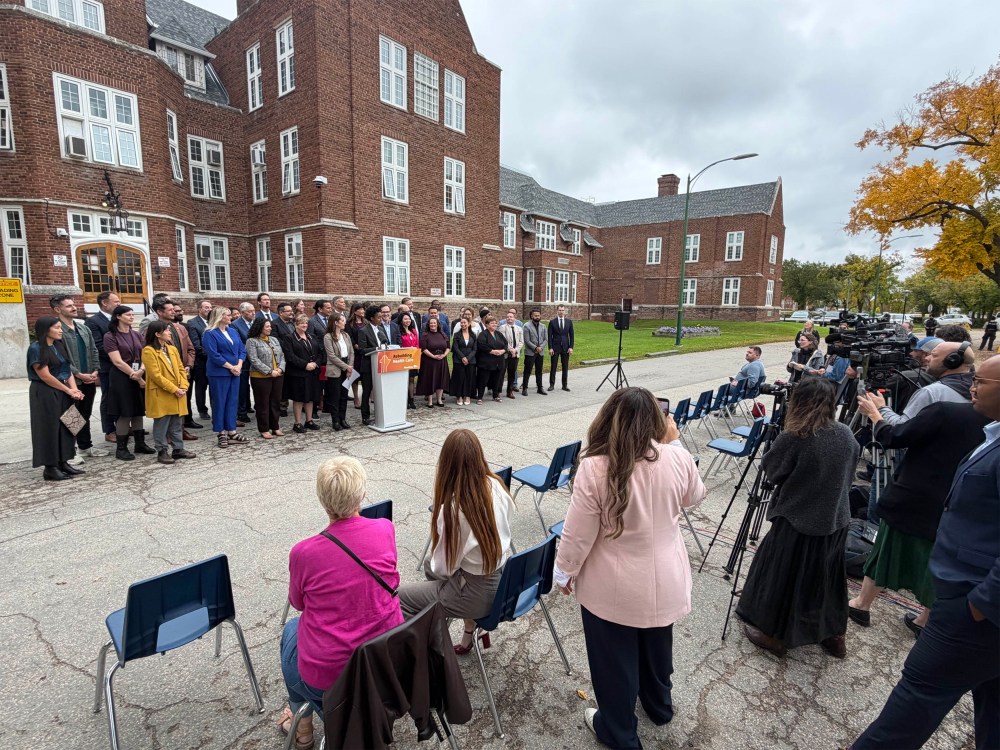
The allocation of these physicians reveals a familiar geographic disparity. Of the 17 new doctors, 14 will work primarily in Winnipeg and three will be stationed in Selkirk. Brandon will receive none.
The question, however, is not so much whether we need a flood of new psychiatrists operating in Brandon. Rather, this distribution of resources ignores the explicit needs of Manitoba’s second-largest city, and by extension, the needs of western Manitoba.
Last November, the Association of Manitoba Municipalities passed a resolution calling for an overhaul of the Mental Health Act and the expansion of Mobile Crisis Response Teams in the province. It also called upon the government to limit the requirement for police to remain at health facilities with non-violent patients and to expand mental health support programs in rural and northern communities.
The goal was clear — reduce the burden on police officers who have become the default responders for mental health crises.
To be fair — in Brandon’s case, at least, the province has responded.
Last January, the Kinew government announced ongoing annual funding more than $290,000 to Prairie Mountain Health to support the recently created PMH-BPS Collaborative Crisis Response Unit in Brandon. In this arrangement, police officers are paired with active mental health workers as part of a crisis response unit that would respond specifically to mental health calls.
While this is certainly meeting the need for those who are in immediate crisis, the longer term needs of Brandon and western Manitoba have not been met.
A year ago, the Brandon Police Service in its Downtown Public Safety Strategy summary report had noted a lack of access to detox beds, mental health assessment beds and long-term stabilization options in Brandon.
Among the actions brought forward in the report was a call to reallocate and decentralize social services to reduce over-concentration, to increase psychiatric staffing and nurse availability, and to offer tax breaks for developers and landlords building micro-suites or income-based housing downtown.
And as we reported then, BPS also called for the development of a dedicated mental health hospital or recovery centre for this city. They were essentially advocating for a dedicated, specialized intake and crisis centre that would be independent of the Brandon Regional Health Centre’s Centre for Adult Psychiatry — a facility that, by design, is already reserved strictly for clinical stabilization of individuals in acute psychosis or immediate severe distress.
One year on, and we are unfortunately no closer to realizing a solution to this need.
This week, Premier Wab Kinew stated that the new hires aim to stop patients in crisis from ending up in emergency departments. Health Minister Uzoma Asagwara added that patients deserve the right care, “whether that is in their community or in a hospital.”
Two years ago, the province announced an additional $2 million in annual operational funding to create nine new psychiatry positions in Winnipeg and Selkirk, while expanding the University of Manitoba’s five-year residency training program in psychiatry to place more trainees in rural and northern Manitoba. That new funding allowed the program to increase from 12 trainees in 2023 to 15 in 2024, and then 17 trainees in 2025, according to a Global News report — 13 in Winnipeg and four in rural and northern Manitoba.
This year, however, 100 per cent of new psychiatric doctor hires were routed to Winnipeg and Selkirk. It would appear the province is failing to deliver on that promise for rural Manitoba. A systemic provincial crisis cannot be solved by focusing resources almost exclusively on the capital region.
Decades ago, the provincial government understood that distance from health resources was a difficult hurdle for many cancer patients. In response, the province created the Western Manitoba Cancer Centre in Brandon to provide specialized cancer treatment closer to home for residents in the western part of the province.
The creation of the Brandon cancer centre made this city the first community outside of Winnipeg to offer radiation therapy, serving hundreds of local residents every year who previously had to commute to the capital.
That has been a blessing for countless families.
While there are nominal mental health resources in western Manitoba, there is a similar need for the province to re-examine how mental health care coverage operates in rural Manitoba, and how resources are allocated beyond Winnipeg.
And unfortunately, that need continues to grow.