
Make education sessions public
Advertisement
Read this article for free:
or
Already have an account? Log in here »
We need your support!
Local journalism needs your support!
As we navigate through unprecedented times, our journalists are working harder than ever to bring you the latest local updates to keep you safe and informed.
Now, more than ever, we need your support.
Starting at $15.99 plus taxes every four weeks you can access your Brandon Sun online and full access to all content as it appears on our website.
Subscribe Nowor call circulation directly at (204) 727-0527.
Your pledge helps to ensure we provide the news that matters most to your community!
To continue reading, please subscribe:
Add Brandon Sun access to your Free Press subscription for only an additional
$1 for the first 4 weeks*
- Enjoy unlimited reading on brandonsun.com
- Read the Brandon Sun E-Edition, our digital replica newspaper
*Your next Free Press subscription payment will increase by $1.00 and you will be charged $20.95 plus GST for four weeks. After four weeks, your payment will increase to $24.95 plus GST every four weeks.
Read unlimited articles for free today:
or
Already have an account? Log in here »
“8.1 An Education Session may be held for the purpose of providing Council with information, orientation, training, or other educational presentations relevant to municipal governance and operations. No resolutions, decisions, or direction shall be made at an Education Session, except for procedural matters necessary to conduct the session. An Education Session is for information sharing purposes only, does not constitute a meeting of Council for the purpose of conducting municipal business, does not require quorum, and is not open to the public.”
— The wording of proposed bylaw No. 6634 now in front of Brandon city council
At first glance, the city’s newly proposed education session bylaw looks like harmless administrative housekeeping.
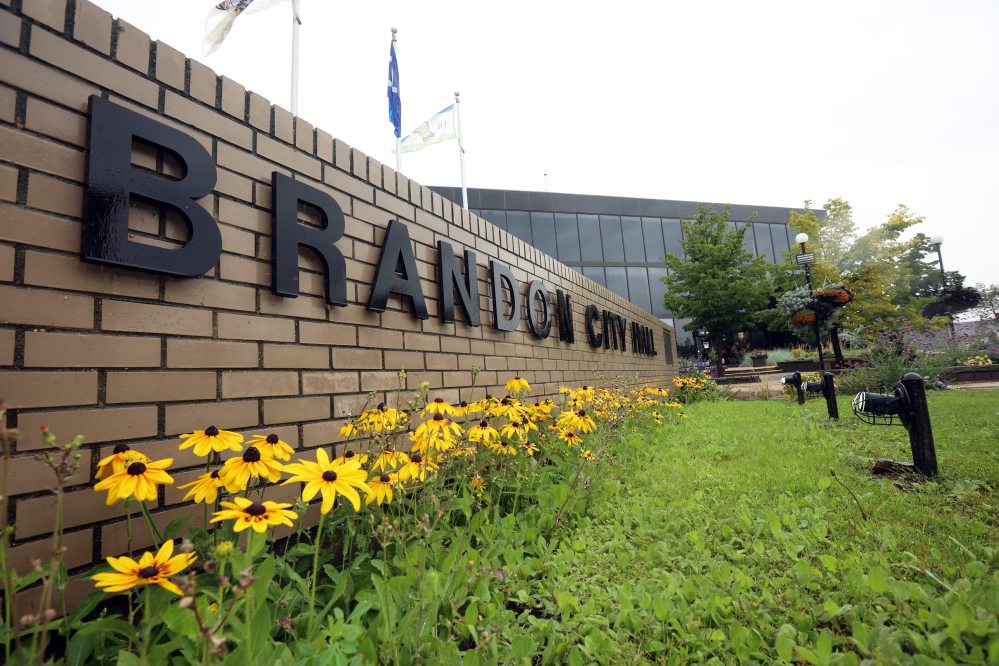
According to Section 8.1, currently under debate by Brandon city council, these proposed “Education Sessions” are simply meant to provide council with “information, orientation, training, or other educational presentations.” It promises that no official decisions or resolutions will be made, framing the whole initiative as a harmless, private-sector-style onboarding exercise.
But the benign phrasing should not put anyone at ease.
By embedding these meetings into a formal bylaw, it’s our view that council isn’t just holding a one-off workshop — it is carving out a permanent, legally sanctioned blind spot where the public cannot look. It’s an attempt to retroactively legitimize the exact backroom culture we have been trying to expose.
The fundamental flaw in Bylaw 6634 is the naive assumption that politicians can sit in a closed room, absorb targeted information on municipal operations and somehow remain entirely objective until the public cameras switch on.
In municipal politics, information shapes policy. And when city staff brief councillors on complex legislative updates, technical details or operational hurdles behind closed doors, they are framing the narrative the way they want council to see it.
In practice, it is incredibly difficult for our elected officials to sit in a room together, receive information on a local issue and not state their opinions or begin forming some kind of consensus. Even checking the temperature of the room.
And by the time the issue reaches an official public meeting, the actual debate has effectively already happened behind closed doors, leaving the public vote that happens in regular council more theatrical than real.
As we attend council on a regular basis, to us, this is the real danger. Repeated use of closed-door meetings would be ripe for abuse.
Across Canada, provincial ombudsmen and commissions have repeatedly warned and cracked down on municipal councils attempting to use “workshops” and “educational retreats” as a loophole to evade open-meeting laws.
Last December for example, municipal councils in New Brunswick were told by that province’s Local Governance Commission that they would be violating provincial law if they meet in private to discuss complaints against their members.
According to a report by the CBC, the commission released an advisory against the practice after it was discovered that many municipal councils were discussing code of conduct or conflict of interest complaints in closed-door meetings.
The same kind of closed-door meetings that Brandon is attempting to enshrine into bylaw.
Manitoba’s Municipal Act is clear — council business must be conducted in public, with narrow, legally defined exceptions for matters like land sales, personnel or legal action. Labelling a gathering of councillors an “Education Session” does not magically exempt it from provincial oversight. If a quorum of councillors meets to learn information that directly impacts how they will eventually vote on city business, there is a danger that provincial watchdogs may find Brandon in violation of the law.
A healthy democracy relies on a level playing field. If the public is barred from the very briefings council requires to make decisions, ordinary Brandonites will be left at a disadvantage.
How can community groups, local business owners or everyday taxpayers question their representatives or counter administrative assumptions when they don’t even know what information council was given?
This lack of transparency breeds deep public cynicism. It sends a message that the administration views the public not as partners in civic governance, but as an inconvenience to be managed after the facts have been privately processed.
Keep in mind what Brandon Coun. Greg Hildebrand (Ward 5) said during Wednesday’s candidates debate. He told panelists that closed-door meetings allow him to “ask extreme questions” and “test the water” before the topic reaches the public eye.
Brandon councils have a history of thinking this way. Recall that in 2022, it took a series of stories and columns by Brandon Sun writers on the unofficial “secret meetings” going on at council before city council would even admit to having that kind of meeting. And it was only after the current council was installed that the city began taking minutes on these closed-door meetings.
Nevertheless, the City of Brandon has held 78 committee of the whole meetings — most of which were closed to the public — since the current city council took office in October 2022.
Frankly, the city’s track record on transparency in this regard is not great.
No one denies that city councillors — especially those newly elected — need training and technical briefings. But there is absolutely no reason these sessions cannot be open to the public.
And no, protecting a politician’s ego is never a valid reason to lock out the taxpayer.
In an era where livestreaming is cheap and expected, Brandon should be broadcasting these educational workshops. Making these sessions public would actually serve the dual purpose of educating the council and the electorate at the same time. If a piece of information is important enough to shape a councillor’s viewpoint, it also belongs to the citizens who put them there.
In the pursuit of administrative convenience, our elected officials must not sacrifice the very transparency that gives them the legitimacy to govern.
» Matt Goerzen, editor