
Provincial directive sets appropriate boundaries
Advertisement
Read this article for free:
or
Already have an account? Log in here »
We need your support!
Local journalism needs your support!
As we navigate through unprecedented times, our journalists are working harder than ever to bring you the latest local updates to keep you safe and informed.
Now, more than ever, we need your support.
Starting at $15.99 plus taxes every four weeks you can access your Brandon Sun online and full access to all content as it appears on our website.
Subscribe Nowor call circulation directly at (204) 727-0527.
Your pledge helps to ensure we provide the news that matters most to your community!
To continue reading, please subscribe:
Add Brandon Sun access to your Free Press subscription for only an additional
$1 for the first 4 weeks*
- Enjoy unlimited reading on brandonsun.com
- Read the Brandon Sun E-Edition, our digital replica newspaper
*Your next Free Press subscription payment will increase by $1.00 and you will be charged $20.95 plus GST for four weeks. After four weeks, your payment will increase to $24.95 plus GST every four weeks.
Read unlimited articles for free today:
or
Already have an account? Log in here »
Most Manitoba teachers are responsible, caring professionals who work hard to support their students and would never dream of abusing their positions of trust by sending inappropriate private messages to students.
They understand the importance of maintaining professional boundaries and putting students’ safety first.
But there are some who have crossed that line, with troubling consequences. That is why the provincial government’s decision last week to prohibit teachers and other school staff from texting or using social media to contact students is an important and necessary step to protect children.
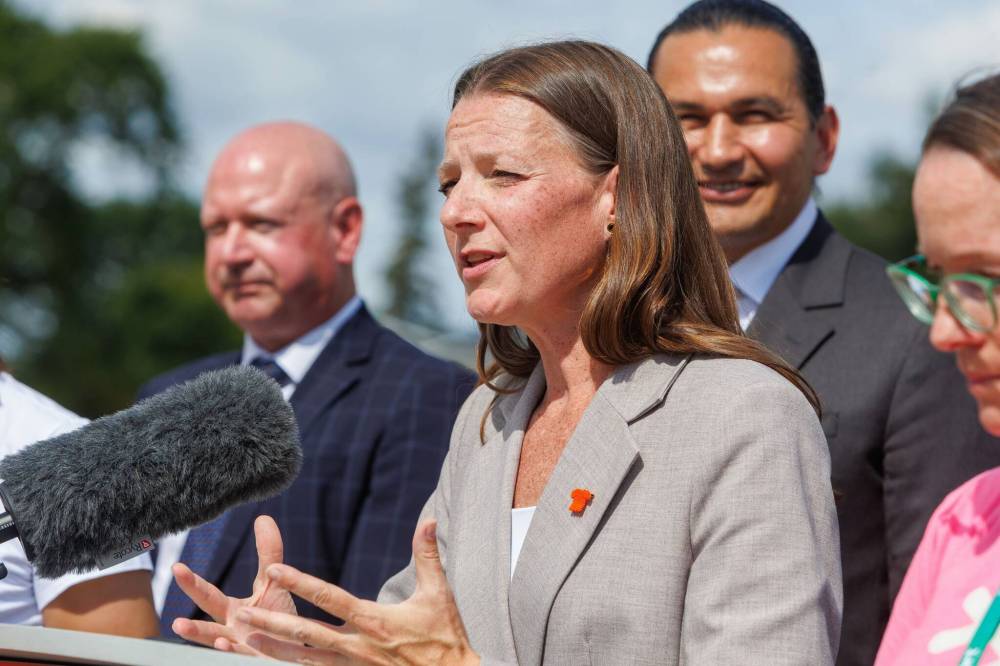
Education Minister Tracy Schmidt’s directive draws a sensible line between legitimate educational communication and private interactions that can create unacceptable risks. (Mike Deal/Winnipeg Free Press files)
The new rules, announced Friday by Education Minister Tracy Schmidt, prohibit school employees from initiating remote communications with students or responding to messages through unauthorized platforms. That includes texting, personal social media accounts and private messaging applications, regardless of whether a teacher is contacting a student during school hours or while coaching a sports team or supervising extracurricular activities.
The principle is straightforward — communications between teachers and students should be transparent, accountable and conducted through approved channels. There should be no need for private, unmonitored conversations that leave students vulnerable and parents in the dark.
Until now, Manitoba school divisions have operated under a patchwork of policies governing direct communications between staff and students. That inconsistency has created unnecessary grey areas around what constitutes acceptable professional conduct.
Schmidt is right to eliminate the ambiguity.
“There is never a reason for those communications to be happening in private,” the minister said Friday, adding that communications should take place on monitored platforms and, ideally, with parents’ consent and direct involvement.
This new clarity was welcomed by Brandon Teachers’ Association president Sandra Thompson following the minister’s announcement.
“I stress the importance of using divisional platforms for communication,” Thompson told the Sun. “I feel this move provides transparency for parents and helps teachers avoid compromising situations.”
Schmidt’s directive should not be interpreted as an indictment of the teaching profession. Most educators are dedicated professionals who take their responsibilities seriously. They deserve the trust and respect of the communities they serve.
But that trust cannot be allowed to obscure the reality that some adults have abused their authority and the confidence children place in them. Establishing clear rules is not an expression of mistrust of every teacher. It is a recognition that the consequences of misconduct can be serious and that safeguards are needed to protect students.
Recent disciplinary cases demonstrate why.
Manitoba’s independent teacher commissioner, Noni Classen, has cancelled three teaching certificates since the beginning of the school year in cases involving employee misconduct related to inappropriate after-hours messaging with minors.
One particularly troubling case involved Robert Gregoire, who used a messaging platform approved by the River East Transcona School Division to contact a girl when she was in grades 8, 9 and 10.
According to a report published on the provincial teacher registry, Gregoire used Microsoft Teams at all hours of the day, called the student pet names such as “princess” and made other inappropriate remarks.
The case highlights an important point — even an approved communications platform is no guarantee against misconduct. Monitoring, clear expectations and meaningful enforcement remain essential.
The new directive is a starting point, not a complete solution.
School divisions must ensure their approved platforms are properly monitored and that inappropriate conduct is reported and investigated promptly. Teachers and administrators should receive regular training on professional boundaries, online communications and the warning signs of grooming behaviour. Students and parents must understand how the rules work and where to report concerns.
The government has given school governing boards until the end of the year to submit updated policies, but Schmidt expects the ban to be enforced immediately. That is appropriate. There is no compelling reason to delay basic safeguards.
Schmidt’s directive draws a sensible line between legitimate educational communication and private interactions that can create unacceptable risks. Now the province must ensure that line is enforced consistently in every school.
» Winnipeg Free Press and The Brandon Sun