
Look past rhetoric for what’s causing U.S.-Canada friction
Advertisement
Read this article for free:
or
Already have an account? Log in here »
We need your support!
Local journalism needs your support!
As we navigate through unprecedented times, our journalists are working harder than ever to bring you the latest local updates to keep you safe and informed.
Now, more than ever, we need your support.
Starting at $15.99 plus taxes every four weeks you can access your Brandon Sun online and full access to all content as it appears on our website.
Subscribe Nowor call circulation directly at (204) 727-0527.
Your pledge helps to ensure we provide the news that matters most to your community!
To continue reading, please subscribe:
Add Brandon Sun access to your Free Press subscription for only an additional
$1 for the first 4 weeks*
- Enjoy unlimited reading on brandonsun.com
- Read the Brandon Sun E-Edition, our digital replica newspaper
*Your next Free Press subscription payment will increase by $1.00 and you will be charged $20.95 plus GST for four weeks. After four weeks, your payment will increase to $24.95 plus GST every four weeks.
Read unlimited articles for free today:
or
Already have an account? Log in here »
Continental defence apparently now hinges on whether American military brass can grab a coffee with their Canadian counterparts without filing paperwork first.
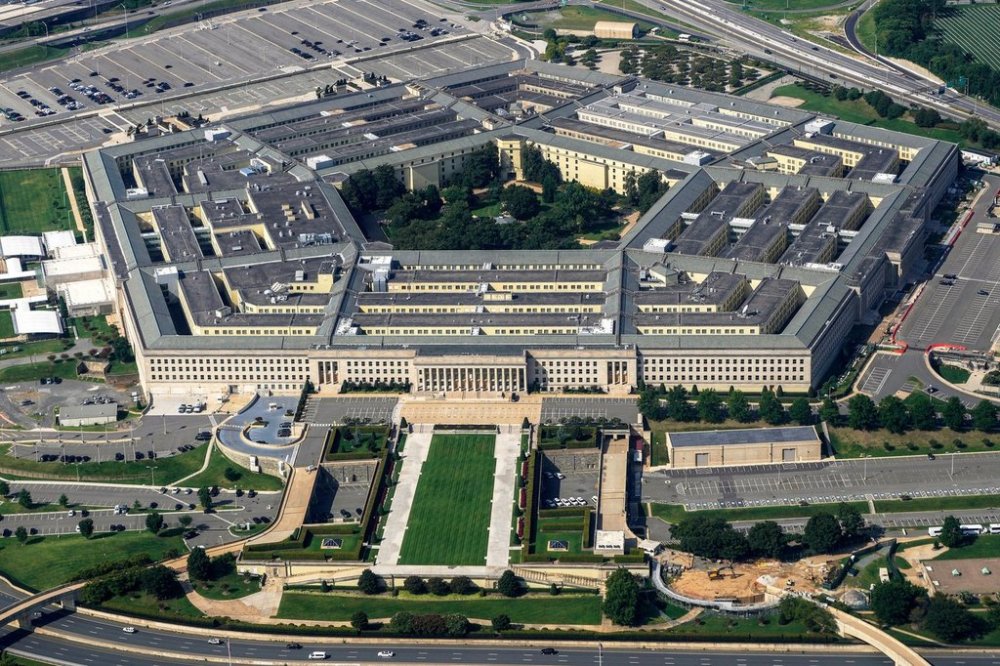
Following reports late last week from The Washington Post and The Independent, details have emerged about a classified memo circulated by U.S. Defense Secretary Pete Hegseth restricting informal socializing and think-tank appearances with Canadian military officials.
While core operations — including NORAD, NATO, and Five Eyes intelligence sharing — remain untouched, general and flag officer meetings have been narrowed strictly to advancing tangible U.S. defence objectives.
According to Republican Sen. Mike Rounds, who spoke at the Halifax International Security Forum, the directive was drafted months ago but signed recently as a pressure tactic against Canada.
The goal is to nudge U.S. personnel away from unsanctioned hangouts until Prime Minister Mark Carney’s government makes more progress on defence purchases and co-operation.
To drive that message home after the memo leaked, the Pentagon released an unusually blunt public “fact sheet” on Monday that took direct aim at Canada’s military readiness and spending.
“Unfortunately, Canada has yet to make the hard decisions and tradeoffs needed to put it on track to fulfill its NATO Defense Investment Pledge and become a credible partner in the defense of our shared continent,” the document states. “Canada’s defense shortfalls speak for themselves.”
In a pointed swipe at Ottawa, the document highlights operational deficits across air, land and sea, accusing Canadian political leaders of prioritizing “parochial economic and commercial interests over military optimization.”
As the Globe and Mail reports, the document accuses Canada of having no concrete plan to increase defence spending to five per cent of GDP by 2035, and slams Ottawa for taking nearly 20 years to honour its previous NATO commitment of two per cent of GDP.
It also suggests that Canadian military capability falls short when it comes to the defence of North America.
“Underinvestment in defence has atrophied the Canadian Armed Forces and limited Canada’s ability to contribute to the defense of North America,” the document says.
If we look past all the pettiness, there is a valid critique here. The fact is, Canada only started ramping up its military capabilities and properly meeting the needs of its soldiers — and its obligations to NATO — since Mark Carney took office last year.
And while the Carney government has moved swiftly and deftly to address our country’s obligations, there is still much to be done.
But it would be easier to look past the way these grievances were undiplomatically communicated if the Trump administration wasn’t trying to force Canada to “buy American.”
Behind all the tough U.S. rhetoric, what’s really causing friction between the two countries is the politics of hardware and procurement. Ottawa’s ongoing political review of its Lockheed Martin F-35 fighter jet order remains a major sticking point in Washington, alongside Canada’s decision in May to buy early warning planes from Sweden’s Saab instead of Boeing.
As former Conservative leader Erin O’Toole told The Canadian Press, the F-35 deal is “a major issue for them and a leverage point for us” — though he added that the Pentagon’s assessment reads like a one-sided summary that ignores Canada’s recent defence commitments.
“This is like someone was asked to prepare a one-sided, negative summary without acknowledging any of the changes made in the last 18 months,” O’Toole said.
In reality, Ottawa actually hit NATO’s two per cent GDP spending target for the first time in 2025 at $63.4 billion. And November’s federal budget mapped out a climb toward four per cent by the end of the decade — including new submarines and aircraft — as NATO pushes toward a broader five per cent benchmark for member states by 2035.
On the ground, meanwhile, the diplomatic chill looks a lot less dramatic. Canadian Defence Minister David McGuinty summed up the practical reality to reporters in Halifax by calling it “business as usual,” noting he hadn’t even seen the memo.
Clearly it’s hard to stage a cinematic standoff when the other side is still politely holding the door open and asking if you need anything from the Tim Hortons up the street.
Ties between Washington and Ottawa have already been rattled by trade friction, CUSMA renewal pressures, annexation rhetoric, and the Pentagon’s decision in May to pause the Permanent Joint Board on Defence — a bilateral advisory forum dating back to 1940.
Still, treating military small talk as a high-stakes lever feels like petty office politics, not grand American statecraft. And radar screens and intelligence networks don’t care who skipped the mixer.
If North American security holds steady despite a memo about socializing, the biggest casualty may just be a few awkward silences in the coffee line.