
Tech issues point to future breakdowns
Advertisement
Read this article for free:
or
Already have an account? Log in here »
We need your support!
Local journalism needs your support!
As we navigate through unprecedented times, our journalists are working harder than ever to bring you the latest local updates to keep you safe and informed.
Now, more than ever, we need your support.
Starting at $15.99 plus taxes every four weeks you can access your Brandon Sun online and full access to all content as it appears on our website.
Subscribe Nowor call circulation directly at (204) 727-0527.
Your pledge helps to ensure we provide the news that matters most to your community!
To continue reading, please subscribe:
Add Brandon Sun access to your Free Press subscription for only an additional
$1 for the first 4 weeks*
- Enjoy unlimited reading on brandonsun.com
- Read the Brandon Sun E-Edition, our digital replica newspaper
*Your next Free Press subscription payment will increase by $1.00 and you will be charged $20.95 plus GST for four weeks. After four weeks, your payment will increase to $24.95 plus GST every four weeks.
Read unlimited articles for free today:
or
Already have an account? Log in here »
What if the whole thing breaks?
The internet, that is.
It seems like a far-fetched concept, but then again, it has been an unusual couple of weeks.
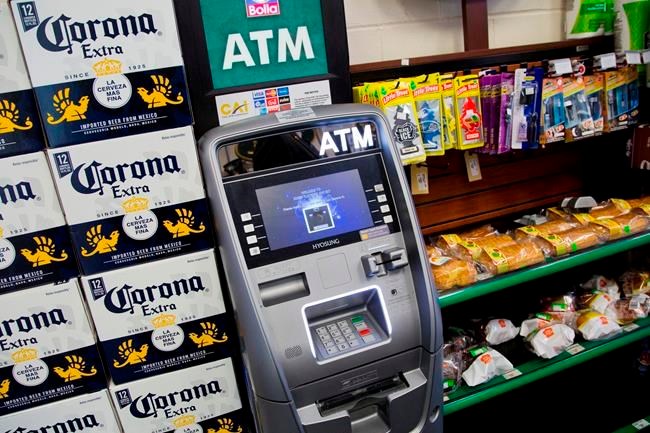
Things are breaking or being broken more frequently. A variety of tech issues have made that point: the temporary shutdown of Microsoft products, the also-temporary ground stop of all U.S. commercial flights, problems in accessing bank accounts through some U.S. banks, the halt of Apple products. And the list goes on.
The causes have been different, but the message seems to be the same: the digital systems we’ve all grown to depend on may not be as dependable as we thought.
And, in fact, some of the problems may be the result of quick fixes brought about by AI review of flaws in widely used existing programs.
Enter a concept known as “technical debt.” It’s what happens when weaknesses are part of quickly built technology or software, and then aren’t repaired as developers move on to new projects. The holes are left behind, and increasingly, AI can find them.
“The amount of technical debt that most companies will allow and live with is unforgivable,” Juan Andrés Guerrero-Saade, a distinguished fellow for security and AI research at the cyber-security firm SentinelOne, told the New York Times. “Folks have been riding until the wheels fall off when it comes to technology. There’s always money in releasing, and there’s no money in maintaining.”
The same Times article cites comments by retired Gen. Paul M. Nakasone, who was head of the NSA and U.S. Cyber Command, at a recent conference in Washington: “Industries and agencies are trying to rapidly modernize and at the same time defend themselves … AI is driving all of this — the opportunities and the challenges … We are in an era where we’ve got to think differently about how we’re going to be more resilient.”
And concern about digital issues is also starting to rattle governments.
Two U.S. senators, Maria Cantwell and M. Michael Rounds, wrote to the U.S. Director of National Intelligence with a blunt warning that action was needed: “The fundamental problem is that AI can discover software weaknesses and help attackers exploit them faster than many organizations can respond …
“At the same time, autonomous AI agents capable of writing code, accessing sensitive systems and taking actions independently are introducing new security risks. We cannot meet these threats with yesterday’s cybersecurity infrastructure or rely on individual companies to solve a problem that spans the entire digital economy.”
The senators aren’t just grandstanders: Cantwell, a Democrat, is a ranking member of the U.S. Senate Committee on Commerce, Science and Transportation, while Rounds, a Republican, is the co-chair of the Senate Artificial Intelligence Caucus. In their letter, they highlighted issues in banking access, cyberattacks in Japan, and a specific vulnerability in what’s known as PHP — more formally, PHP-hypertext preprocessor, which is an open-source scripting language used in website development. It’s used in millions of websites — globally, up to 70 per cent of all websites.
The general consensus in the tech industries? That we’re going to be in for a rough few years, both when dealing with the weaknesses that AI is identifying in existing systems, and dealing with the potential threat of AI being used to actively criminally exploit those weaknesses.
It’s worth asking ourselves a simple question, one the Red Cross regularly points out when it comes to natural disasters: be ready to fend for yourself for a minimum of 72 hours without essential services.
Stop and think how you would get by without tap credit cards, without ATM bank withdrawals, without emails and text messaging.
Not because digital systems will fail — but because suddenly, it seems possible they could.
» Winnipeg Free Press