
‘Lib-Dip Deal’ pushes centralization
Advertisement
Read this article for free:
or
Already have an account? Log in here »
We need your support!
Local journalism needs your support!
As we navigate through unprecedented times, our journalists are working harder than ever to bring you the latest local updates to keep you safe and informed.
Now, more than ever, we need your support.
Starting at $15.99 plus taxes every four weeks you can access your Brandon Sun online and full access to all content as it appears on our website.
Subscribe Nowor call circulation directly at (204) 727-0527.
Your pledge helps to ensure we provide the news that matters most to your community!
To continue reading, please subscribe:
Add Brandon Sun access to your Free Press subscription for only an additional
$1 for the first 4 weeks*
- Enjoy unlimited reading on brandonsun.com
- Read the Brandon Sun E-Edition, our digital replica newspaper
*Your next Free Press subscription payment will increase by $1.00 and you will be charged $20.95 plus GST for four weeks. After four weeks, your payment will increase to $24.95 plus GST every four weeks.
Read unlimited articles for free today:
or
Already have an account? Log in here »
Hey there, time traveller!
This article was published 30/03/2022 (1663 days ago), so information in it may no longer be current.
There’s an intergovernmental battle over health care coming your way. It will be a very Canadian conflict. Dueling news releases will unleash words of mass distraction. Demands for face-to-face negotiations will flounder over the shape of the virtual or in-person table. Red lines will be drawn and erased.
In the end, federal money, bolstered by three years of newly secured power ahead, will prevail.
This is the result of last week’s Liberal-New Democratic Party Supply and Confidence Agreement. Since that’s a mouthful, and columns like these have a word cap, let’s call it the Lib-Dip (for NDP “Dippers”) Deal.
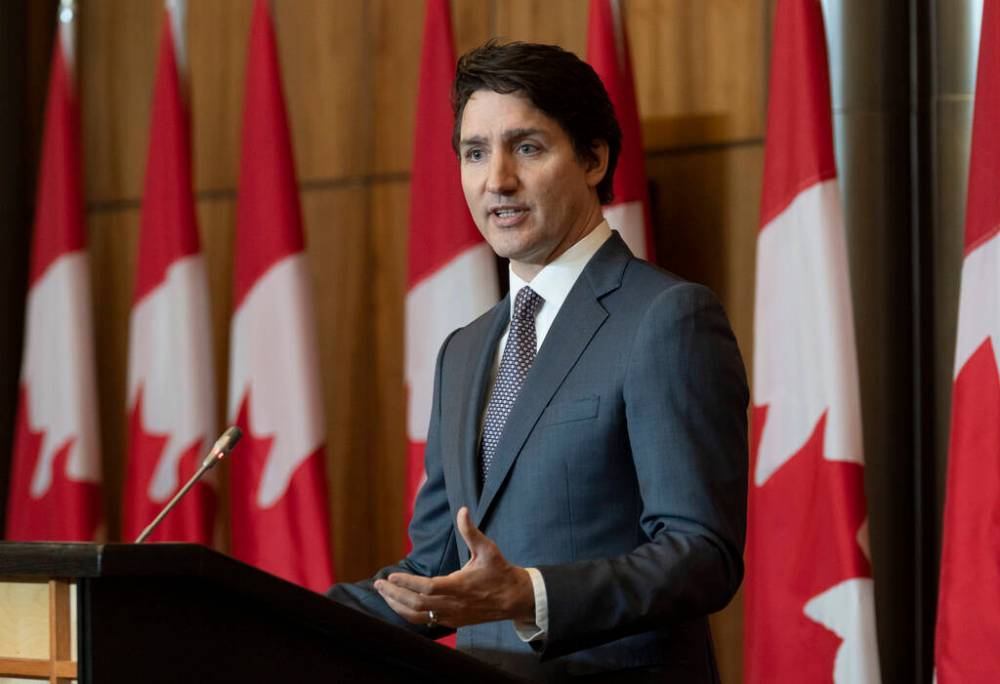
Politics aside, behind the plaudits for national pharmacare and dental care is a decisive entrenchment (a familiar constitutionalism) of federal overreach in areas of provincial jurisdiction. The Lib-Dip Deal has cemented a clear interventionist and expansionist pattern in Prime Minister Justin Trudeau’s practice of intergovernmental relations. After six years in power, Ottawa’s rinse-and-repeat features are obvious:
First, set national goals to build political demand. From carbon pricing to child care, and from the pandemic Safe Restart agreement to infrastructure and what’s coming with pharmacare and dental care, all are predicated on a set of national goals formulated by Ottawa.
Provinces have flexibility, but only at the margins of what they can do instead. There is no opt-out unless it meets these federal goals and standards. National goals incite national demand.
Second, devalue provinces as constitutional partners. The federal intergovernmental affairs minister’s formal mandate letter places provinces, territories, municipalities and Indigenous partners all on the same constitutional footing. Where provinces and territories were once privileged partners as an “order of government,” this federal government eschews constitutional niceties by dealing directly with municipalities, which are creatures of provincial governments.
Indeed, the minister is explicitly instructed to ensure “that the priorities of municipalities are reflected in our agenda,” reflective of the Liberals’ political representation from urban Canada. Big-city mayors are empowered to directly challenge premiers for projects and cash.
Third, spend lots of money. The most powerful intergovernmental tool in Ottawa’s arsenal is federal spending power. Wielding it causes big things to happen, such as federal-provincial-territorial agreements on child care. No premier can long resist “free” federal money, even if it skews provincial priorities.
The best you can do is lobby for prevailing local circumstances (as Manitoba did with an age threshold of six rather than five years with its child-care deal, but couldn’t accomplish with carbon pricing). Pharmacare and dental care will face the same dynamic to cement a national arrangement to federal liking.
Fourth, carve out Quebec. Canada’s “distinct society” is alive and well in Justin Trudeau’s constitutionalism, despite the concept never having been constitutionalized. More prosaically known as “asymmetric federalism,” Ottawa was quick to recognize Quebec’s existing cap-and-trade carbon pricing regime and child-care program by not touching the former and handing over cash equivalents for the latter.
This allowed Ottawa to say its plan was “pan-Canadian” rather than “national,” proving that intergovernmental officials are the most adept “wordsmiths” in any public service. Either way, this enables the federal government to advance nation-building plans with Quebec appeased or acquiesced.
After 150 years, Canada’s original watertight constitutionalism of the British North America Act is as leaky as Alberta Premier Jason Kenney’s office. Health is not formally mentioned in the Constitution, but is widely accepted as falling mostly, if not exclusively, in provincial jurisdiction. The Supreme Court ruled in 1982 that the topic was “amorphous…depending on the circumstances.” So, while Ottawa would likely not be allowed to legally deliver hospital care in a province, it can fund some or all of that hospital care via the province. And it can set conditions for the related health-care funding, which it will.
Now, with pharmacare and dental care in play courtesy of the Lib-Dip Deal, provinces can expect stronger conditionality to accompany these two new programs as well as any CHT increase.
Based on past practice, we can expect premiers to react to type. Protestation will give way to permission, as Ottawa strikes bilateral deals with one province after the other. A cascade into another new national (oops, pan-Canadian) program will ensue.
Meanwhile, the original constitutional expression of two equal but different orders of government mutates further into an increasingly one-sided partnership, as provinces leach authority to the central government one intergovernmental agreement at a time.
Such is the pragmatic nature, or even “bug,” of Canadian federalism. Past constitutional battles were won with words, not weapons. We have no tradition of erecting barricades to demand provincial rights. Our battlefields have been the courts, not the streets.
But make no mistake, for better or worse, with each such step Canada becomes more centralized and nationalized. This Liberal prime minister is boldly remaking the federation in a way that premiers have proven powerless to resist.
So, tune in. An intergovernmental battle is coming to a province in which you live. But don’t worry if you miss it; the results are already in.
David McLaughlin was Clerk of the Executive Council in the government of Manitoba in 2020-21. He was campaign manager for the PC Party of Manitoba in the 2016 and 2019 elections.