Use of force unevenly applied in prisons

Black, Indigenous or people of colour are involved in nearly 60 per cent of use-of-force incidents in Canada’s federal prisons. Yet, inmates from those racialized groups only make up 44 per cent of the prison population.

Read this article for free:

or

Already have an account? Log in here »

We need your support!
Local journalism needs your support!

As we navigate through unprecedented times, our journalists are working harder than ever to bring you the latest local updates to keep you safe and informed.

Now, more than ever, we need your support.

Starting at $15.99 plus taxes every four weeks you can access your Brandon Sun online and full access to all content as it appears on our website.

Subscribe Now

or call circulation directly at (204) 727-0527.

Your pledge helps to ensure we provide the news that matters most to your community!

To continue reading, please subscribe:

Add Brandon Sun access to your Free Press subscription for only an additional

$1 for the first 4 weeks*

  • Enjoy unlimited reading on brandonsun.com
  • Read the Brandon Sun E-Edition, our digital replica newspaper
Start now

*Your next Free Press subscription payment will increase by $1.00 and you will be charged $20.95 plus GST for four weeks. After four weeks, your payment will increase to $24.95 plus GST every four weeks.

Opinion

Hey there, time traveller!
This article was published 16/02/2022 (1612 days ago), so information in it may no longer be current.

Black, Indigenous or people of colour are involved in nearly 60 per cent of use-of-force incidents in Canada’s federal prisons. Yet, inmates from those racialized groups only make up 44 per cent of the prison population.

That was a key finding revealed last week by Canada’s Correctional Investigator Ivan Zinger in his latest annual report.

Mr. Zinger has released several reports in recent years on the overrepresentation of Indigenous and Black people in federal penitentiaries. He has published data that show Indigenous and Black inmates serve higher proportions of their sentences behind bars than white inmates. He has also revealed how Indigenous inmates are disproportionately classified as high risk and placed in maximum-security institutions, while spending more time in solitary confinement.
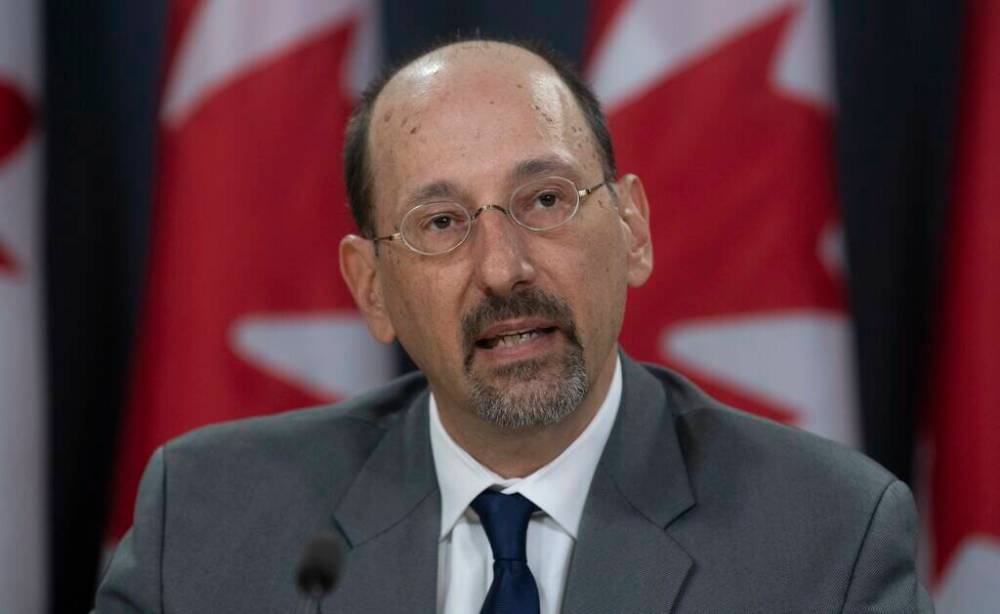
Black, Indigenous or people of colour are involved in nearly 60 per cent of use-of-force incidents in Canada’s federal prisons, Correctional Investigator of Canada Ivan Zinger found. (Adrian Wyld / The Canadian Press files)

In his most recent analysis, Mr. Zinger found that physical force used in prisons, including physical handling, use of batons, pepper spray and restraints, is higher among BIPOC inmates.

If you’re a white inmate in Canadian prisons you get treated one way; if you’re BIPOC, the evidence shows you get treated differently.

This should be a wake-up call for Correctional Service Canada, Mr. Zinger wrote.

“This finding provides compelling evidence to suggest that force is applied to Indigenous and Black individuals disproportionately, and possibly because of race, above and beyond more legitimate reasons,” Mr. Zinger wrote. “Put simply, race alone should not be a ‘risk factor’ for exposure to uses of force.”

The investigation examined nearly 10,000 occurrences of use-of-force between 2015 and 2020. Indigenous inmates in particular were overrepresented, accounting for 39 per cent of those involved in use-of-force incidents, while making up 28 per cent of the prison population.

Corrections officers have broad authority to use force in response to disruptive inmate behaviour. However, it should only be used in limited circumstances and with strict parameters, the report says. Without those controls, use-of-force is “vulnerable to the influence of implicit and explicit bias,” the report states.

Mr. Zinger has made recommendations to CSC in the past on the need to adopt more non-physical interventions, including de-escalation techniques. Despite those recommendations, use-of-force has been on the rise in Canadian prisons in recent years and BIPOC inmates have been disproportionately affected.

In his latest report, Mr. Zinger recommends that CSC develop an action plan to address the relationship between use-of force and “systemic racism” against BIPOC inmates. He said “actionable changes” should be made and reported to the public.
THE CANADIAN PRESS
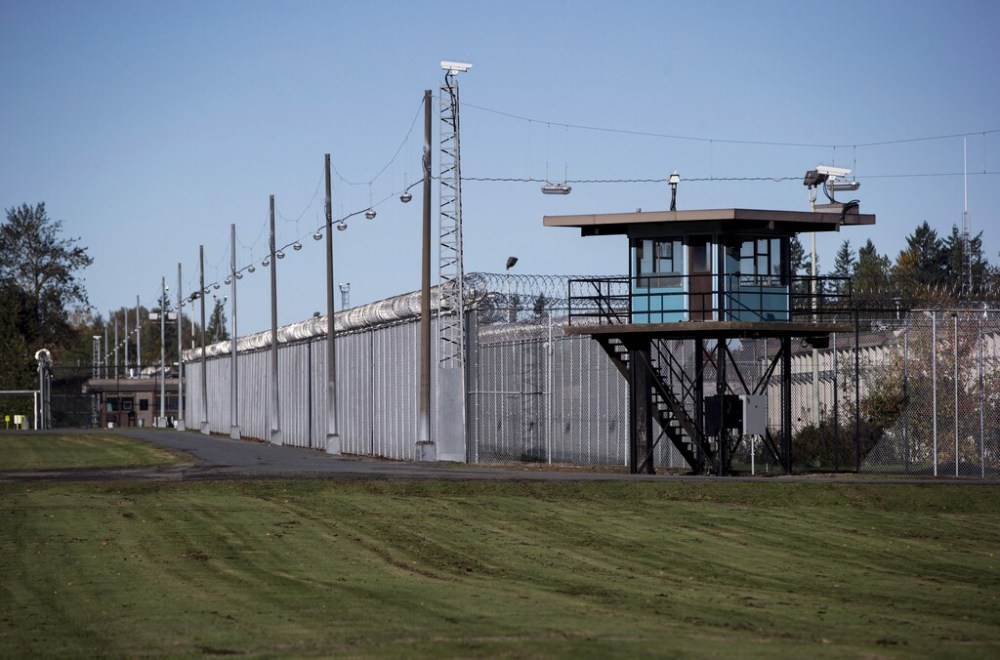
The investigation examined nearly 10,000 occurrences of use-of-force between 2015 and 2020. Indigenous inmates were overrepresented, accounting for 39 per cent of those involved in use-of-force incidents, while making up 28 per cent of the prison population. (Darryl Dyck / The Canadian Press files)
THE CANADIAN PRESS The investigation examined nearly 10,000 occurrences of use-of-force between 2015 and 2020. Indigenous inmates were overrepresented, accounting for 39 per cent of those involved in use-of-force incidents, while making up 28 per cent of the prison population. (Darryl Dyck / The Canadian Press files)

The analysis is a damning indictment of what goes on behind prison walls in Canada. It is further evidence that not only are Indigenous and Black people incarcerated at disproportionately higher rates than white people, their treatment differs based on race. In addition to being a human-rights violation, it undermines CSC’s rehabilitative objectives and perpetuates the cycle of incarceration in BIPOC communities.

Despite numerous recommendations from the Office of the Correctional Investigator to address systemic racism in prisons, little has changed. In fact, the overrepresentation of Indigenous and Black people in prison has worsened over the years. Political will among federal politicians to push for meaningful reform has been almost non-existent.

The federal government should change that. It should make it a priority to ensure those who serve time behind bars are treated humanely and equitably and are not discriminated based on race, gender, sexual orientation or any other individual characteristic.

Those are fundamental rights under Canada’s Charter of Rights and Freedoms — rights which apply to everyone, inside and outside of prison walls.


Report Error Submit a Tip

More Stories

Hospital closure causes fear, frustration

By Tessa Adamski 6 minute read Preview

Hospital closure causes fear, frustration

By Tessa Adamski 6 minute read 10:02 PM CDT

A 78-year-old woman with stage 4 lung cancer says she is feeling “frustrated and scared” knowing the hospital in Dauphin may not reopen for up to a year, requiring her to travel for treatment.

“I know it’s affected a lot of people, probably worse than me, but in my personal case, it couldn’t happen at a worse time,” said Janice Nybo, who lives on a farm a few kilometres south of Dauphin.

“I’ve been using that hospital quite a bit in the last three months.”

Severe flooding in the basement of the Dauphin Regional Health Centre due to a massive amount of rainfall in late June caused a power outage and damage to its HVAC system. The building was evacuated on Canada Day with 54 patients sent to nearby health centres, including 24 patients who were transferred to Brandon.

Read
10:02 PM CDT

U19 Magic skip provincials for final road trip

Perry Bergson 6 minute read Preview

U19 Magic skip provincials for final road trip

Perry Bergson 6 minute read 9:41 PM CDT

In their first year back after some time away, the under-19 Westman Magic are defining success a little bit differently than normal.

The team, which is coached by Hailey Clark and Landon Desjardin, decided to skip provincials this weekend and instead enter the Red River Rage tournament in Fargo, N.D., with one last weekend of AAA softball for the graduating players.

“Landon and I’s biggest goal was just to give girls time on the diamond,” Clark said. “We’ll keep showing up, and whoever wants to come and get the reps for whatever comes next, we’ll be here for them.

“It was huge for the Magic to have a team again this year. It’s super exciting.”

Read
9:41 PM CDT

Bring your ‘Sweet Tooth’ to festival

By Skye Anderson 4 minute read Preview

Bring your ‘Sweet Tooth’ to festival

By Skye Anderson 4 minute read 9:53 PM CDT

If you’re looking for a refreshing drink to quench your thirst at the Salamander Summer Music Festival in Brandon this weekend, you’re in luck.

The Sweet Tooth of Brandon announced on Facebook that it will set up a booth from today through Sunday to sell three of the local business’s signature drink options — dalgona coffees, dirty sodas and dirty Alanis.

Having never tried any of these intriguing drinks, I thought I would have a taste of each.

I went to The Sweet Tooth’s business at 2-839 18th St. and started my order with a dalgona plain iced coffee, which I was very excited to get my hands on as an avid coffee drinker.

Read
9:53 PM CDT

Denialism should not be tolerated

5 minute read Preview

Denialism should not be tolerated

5 minute read 9:44 PM CDT

It was supposed to be a watershed moment for Canada.

When Prime Minister Stephen Harper stood before the House of Commons in 2008 to offer an historic apology to the survivors of Indian residential schools, he was unequivocal.

“The government of Canada built an educational system in which very young children were often forcibly removed from their homes, often taken far from their communities,” Harper said. “Many were inadequately fed, clothed and housed. All were deprived of the care and nurturing of their parents, grandparents and communities.

“First Nations, Inuit and Métis languages and cultural practices were prohibited in these schools. Tragically, some of these children died while attending residential schools and others never returned home.

Read
9:44 PM CDT

Heavy rainfall keeps city crews hopping

By Alex Lambert 2 minute read Preview

Heavy rainfall keeps city crews hopping

By Alex Lambert 2 minute read Updated: 9:52 PM CDT

City of Brandon crews were busy pumping rainwater on Thursday after a storm dumped nearly 27 millimetres on the city overnight and on Wednesday.

Despite the deluge, the Assiniboine River continued to recede on Thursday, measuring at 1,178.25 feet at 10:15 a.m. — more than a foot lower than the 1,179.49-foot crest early Monday morning.

“Last night we received a thunderstorm that came through the city, and when people woke up this morning, there was water accumulating and pocketing in many areas on the inside of the dike,” emergency co-ordinator Tobin Praznik said on Thursday.

Pumps were running in low-lying areas of the city in the morning, moving water back into the river.

Read
Updated: 9:52 PM CDT

Pantelas thankful for time in Brandon

Perry Bergson 7 minute read Preview

Pantelas thankful for time in Brandon

Perry Bergson 7 minute read 9:42 PM CDT

While Gio Pantelas decided he wanted to spend his final Western Hockey League season closer to family with the Penticton Vees, that doesn’t in any way diminish his time with the Brandon Wheat Kings.

The 18-year-old defenceman from Victoria, who was dealt on Wednesday to British Columbia so he could live with his mother and younger brother, said it was still an agonizing decision to ask for a trade.

“I had an amazing two years there,” Pantelas said. “I just want to get that out there. I’m so grateful for everything that Brandon has done for me, not only the Wheat Kings but the community as a whole. Being able to spend every day was just amazing. I would never take any of those days back.

“That was the whole reason for the decision, just being closer to home. Being out in Brandon, especially living in Victoria, it’s a long ways away. I spent two long, fun years there but I was getting a little homesick and missing my parents quite a bit.”

Read
9:42 PM CDT